

Chevrolet K3500 Distributor Ignition Pickup Guide (1988-1995)
Solve your 1988-1995 K3500's no-spark or stalling issues by understanding and replacing the distributor ignition pickup.
- A no-spark condition where the engine cranks but won't start is the #1 symptom of a failed pickup coil.
- Replacement requires removing the entire distributor, making it a moderately difficult job. Mark the distributor's position before removal to avoid having to re-time the engine.
- Since the distributor must be removed and disassembled, consider replacing the entire distributor assembly or, at a minimum, the ignition control module (ICM) at the same time.
- Choose a quality aftermarket brand like Delphi or Standard Ignition; avoid cheap, no-name parts for this critical component.
Is Your K3500 Cranking But Not Starting?
A dead engine that cranks but never fires is a classic sign of a bad distributor ignition pickup on the 1988-1995 Chevy K3500. This part is a common failure point due to its location inside the distributor, where it's exposed to years of engine heat. When it fails, it stops sending the timing signal needed to create spark. You might also experience the engine stalling suddenly, sometimes after it gets hot, and then refusing to restart until it has cooled down. However, be aware that this heat-related stalling is also a primary symptom of a failing ignition control module (ICM), which is located in the same area.
Choosing the Right Aftermarket Pickup Coil
For these GMT400 trucks, you don't need to hunt down an expensive original GM part. Quality aftermarket brands provide reliable performance. The key is to choose a reputable manufacturer and avoid the cheapest options, as a failure will leave you stranded.
- Delphi: Delphi is a well-known OE (Original Equipment) supplier for General Motors and is trusted for its quality. Choosing a Delphi pickup coil is a solid bet for a reliable, long-lasting repair that meets factory standards.
- Standard Ignition (SMP): Standard Ignition is a highly respected aftermarket brand that has been around for decades. Owners and mechanics often consider their parts to be equivalent to or better than original equipment. They are a dependable choice for ignition components on these trucks.
Pro Tip: The most common issue with this repair is the labor involved. Replacing the pickup coil requires completely removing the distributor. Because of this, many mechanics and experienced owners recommend replacing the entire distributor assembly, which comes with a new pickup coil, ignition module, cap, and rotor already installed. This often costs more in parts but can save significant time and prevent future failures of the other old components.
Distributor Ignition Pickup Replacement Cost
The part itself is inexpensive. The majority of the cost is the labor, whether you do it yourself or pay a shop, because the distributor must be removed and disassembled.
| Part or Service | Estimated Cost |
|---|---|
| New Aftermarket Pickup Coil | $28.95 - $29.83 |
| Shop Labor | $150 - $250 |
Common Mistake: Before you unbolt the distributor, you MUST mark its position relative to the engine manifold and also mark the direction the rotor is pointing. If you fail to do this, you will have to re-time the engine from scratch, which is a much more complex job.
Frequently Asked Questions (FAQ)
Can I replace just the pickup coil myself?
Yes, but it is a moderately difficult job. While unbolting the distributor is straightforward, you must mark its position carefully. The real work happens on the workbench, where you need a hammer and punch to drive out the roll pin holding the distributor gear on, allowing you to pull the shaft and access the coil. If you are not comfortable with this or with setting engine timing, it may be best to leave it to a professional.
Should I replace the ignition control module (ICM) at the same time?
It's a smart idea. The ICM and pickup coil live in the same hot environment and often fail around the same time. Since you already have the distributor out, replacing the ICM adds very little extra labor and can save you from doing the job all over again in the near future.
Is there a recall for the distributor or pickup coil on my K3500?
No. A search of the National Highway Traffic Safety Administration (NHTSA) database shows no recalls for the distributor ignition pickup or related ignition components for the 1988-1995 Chevrolet K3500. Major GM recalls for ignition *switches* in the 2010s were for different parts on much newer vehicles and do not apply here.
What's the difference between a pickup coil and an ignition coil?
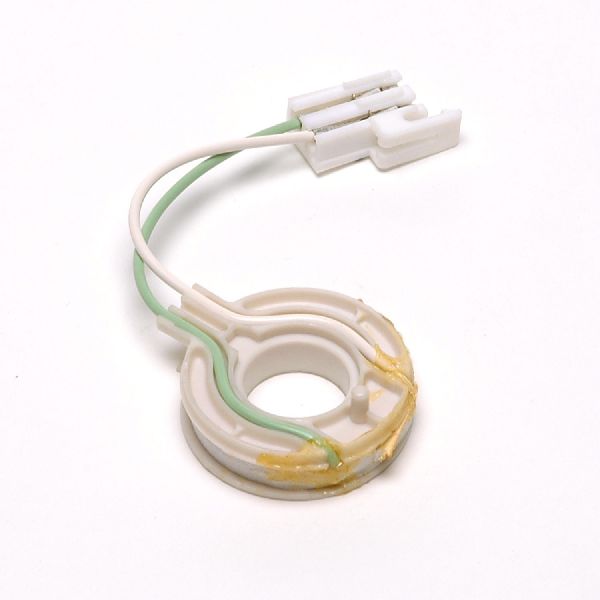
They are two different parts. The pickup coil is a small sensor *inside* the distributor that sends a low-voltage timing signal. The ignition coil is a larger part, mounted externally on a bracket, that receives this signal (via the ICM) and transforms 12-volt battery power into the 40,000+ volts needed to create a spark.
Technical Specifications
Located inside the distributor assembly. Functions as a magnetic pulse generator.
We Have This Part in Stock


The information in this article is provided for general reference and educational purposes only. Vehicle specifications, procedures, and part compatibility can vary by production date, trim level, and region. Always consult your vehicle's factory service manual and verify part numbers before purchasing or performing repairs. Safety-critical components such as airbags, seat belts, and braking systems should be installed by a qualified professional.
- Chevrolet K3500: