

Guide to the Distributor Ignition Pickup for the 1988-1995 GMC Jimmy
Address stalling and no-start problems by understanding, diagnosing, and replacing your Jimmy's distributor ignition pickup.
- A no-start condition where the engine cranks normally is the top symptom of a failed pickup coil.
- Replacement requires removing the distributor from the engine and disassembling it on a workbench.
- You MUST reset the engine's ignition timing with a timing light after the repair is complete.
- Delphi is considered a more reliable, OEM-quality brand, while Standard Ignition is a budget alternative with some user-reported quality concerns.
Is Your 1988-1995 GMC Jimmy Stalling or Not Starting? It Could Be the Distributor Pickup Coil
If your GMC Jimmy cranks but won't start, or if it stalls unexpectedly while driving, a faulty distributor ignition pickup could be the culprit. This small component plays a huge role in your truck's ignition system. When it fails, it leaves you stranded. This guide will walk you through the symptoms, part choices, and what to expect when replacing it.
Symptoms of a Failing Distributor Pickup Coil
A bad pickup coil often fails due to heat and age, causing the internal wiring to break down. The symptoms can be intermittent at first but will eventually lead to a complete no-start condition.
- No-Start Condition: The most common symptom is an engine that cranks over normally but never starts. This happens because the pickup coil is not sending a signal to the ignition module, so there is no spark.
- Engine Stalling: The engine may start and run fine, but then stall suddenly once it warms up. After cooling down for a while, it might start again. This points to a heat-related failure within the coil.
- Rough Running and Misfiring: Before it fails completely, a weak pickup coil can send an erratic signal, causing the engine to misfire, hesitate, or run rough.
- Single Spark on Key-Off: In some diagnostic cases, you might see a single spark from the ignition coil only when you turn the key from 'crank' back to 'run', indicating a failure in the ignition trigger circuit.
Choosing the Right Aftermarket Pickup Coil
For a vehicle from this era, finding a brand-new OEM part from GM is unlikely. The market is served by quality aftermarket manufacturers. Your choice comes down to balancing brand reputation with price.
Brand Tiers
- OEM-Quality (Delphi): Delphi was an original equipment manufacturer for General Motors and is widely regarded as a top-tier choice for ignition components. Owners generally report that Delphi parts are well-made, fit correctly, and offer reliable performance, making them a safe bet for this critical component.
- Standard Aftermarket (Standard Ignition): Standard Motor Products (SMP) is a well-known aftermarket brand that offers a more budget-friendly option. While many have success with SMP parts, some forum users have reported receiving a bad pickup coil out of the box, leading to troubleshooting headaches. If choosing this option, be prepared for the possibility of a defective part.
Distributor Pickup Coil Replacement Cost
The cost to replace the pickup coil involves the part itself and the labor to install it. Since the distributor must be removed and disassembled, the labor cost is more than the part cost.
| Item | Estimated Cost |
|---|---|
| New Aftermarket Pickup Coil | $28.95 - $29.83 |
| Shop Labor | $120 - $200 |
| Total Estimated Cost | $149 - $230 |
Cost estimates are for the part and labor only and do not include taxes, shop fees, or costs for other related repairs.
Frequently Asked Questions (FAQ)
Can I replace just the pickup coil, or do I need a whole new distributor?
You can replace just the pickup coil, which is much cheaper than buying a complete new distributor. However, the job requires removing the distributor from the engine and taking it apart on a workbench. If your distributor's shaft has excessive play or other components like the ignition module are also old, replacing the entire distributor assembly might be a better long-term repair. A complete distributor replacement can cost between $274 and $859.
What's the difference between an ignition pickup coil and an ignition coil?
The distributor pickup coil is a sensor inside the distributor that generates a low-voltage timing signal. The ignition coil is a transformer, usually mounted on the engine's intake manifold, that takes this signal (via the ignition module) and steps up 12 volts to the 20,000+ volts needed to create a spark at the spark plugs.
Do I have to set the engine timing after replacing the pickup coil?
Yes, absolutely. Because you must remove the distributor to access the pickup coil, you will disrupt the engine's timing. After reinstalling the distributor, you must use a timing light to correctly set the ignition timing according to your vehicle's specifications. Failure to do so will result in poor performance, failed emissions, and potential engine damage.
Are there any recalls for the ignition system on my 1988-1995 Jimmy?
No. While GM had a very famous and widespread recall for faulty ignition *switches* in the 2010s, it affected much newer vehicles like the Chevrolet Cobalt and Saturn Ion. The 1988-1995 GMC Jimmy was not part of that recall, and searches of the NHTSA database did not find any recalls or technical service bulletins (TSBs) specifically for the distributor ignition pickup on this vehicle.
Technical Specifications
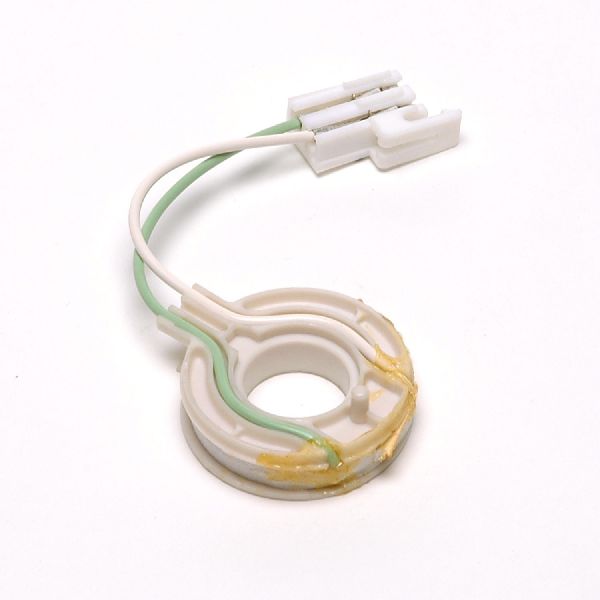
This part is located inside the ignition distributor assembly. It is a magnetic pulse generator with a two-wire connector that plugs into the ignition control module.
We Have This Part in Stock


The information in this article is provided for general reference and educational purposes only. Vehicle specifications, procedures, and part compatibility can vary by production date, trim level, and region. Always consult your vehicle's factory service manual and verify part numbers before purchasing or performing repairs. Safety-critical components such as airbags, seat belts, and braking systems should be installed by a qualified professional.
- GMC Jimmy: