

Ford F-Super Duty Intake Air Temperature Sensor (1988-1997): A Complete Guide
Fix poor fuel economy and rough running in your 1988-1997 Ford F-Super Duty by understanding and replacing a faulty Intake Air Temperature Sensor.
- A bad IAT sensor commonly causes poor gas mileage, rough idling, and hesitation in your F-Super Duty.
- The sensor's location varies: check the intake manifold runners on older models and the air filter box on newer ones.
- This is a very easy and affordable DIY repair that usually takes less than 30 minutes.
- A quality aftermarket brand like Standard Ignition is a reliable choice, as OEM parts are likely unavailable.
Is Your F-Super Duty's IAT Sensor Failing?
A failing Intake Air Temperature (IAT) sensor can cause noticeable problems with how your truck runs, but it might not always trigger a check engine light right away. As the sensor gets dirty with oil and grime, its readings become inaccurate, confusing the engine's computer. This can lead to a gradual decline in performance and fuel efficiency.
Symptoms of a Bad IAT Sensor
- Poor Fuel Economy: One of the most common signs. The engine's computer gets bad information and injects the wrong amount of fuel.
- Rough Idle: The truck may idle unevenly or shake, especially when cold.
- Hard Starting: A bad sensor can make it difficult to start the engine, particularly in cold weather.
- Engine Hesitation or Sluggish Acceleration: Your truck may feel weak or slow to respond when you press the gas pedal.
- Black Smoke from Exhaust: This indicates a rich fuel mixture, where too much gasoline is being burned, often caused by the sensor incorrectly telling the computer the air is very cold.
- Check Engine Light: A completely failed sensor will usually trigger a check engine light with codes like P0112 or P0113 on OBD-II trucks (1996-1997) or equivalent codes on earlier OBD-I models.
Choosing the Right Aftermarket Sensor
For a truck in the 1988-1997 year range, original Ford (OEM) parts are often discontinued and hard to find. The aftermarket is your go-to source. The good news is that this sensor is a simple, non-moving part, and quality aftermarket versions are reliable.
Aftermarket Brand Quality Tiers
| Brand | Quality Assessment |
|---|---|
| Standard Ignition (Standard Motor Products) | A well-known and respected brand often used by professional mechanics. They produce parts that meet or exceed original specifications and are known for their reliability and direct fit. This is a trusted choice for a dependable repair. |
| True Tech | This appears to be a budget-friendly or private-label brand. There is very little information available about them as a parts manufacturer, with most search results pointing to repair shops with the same name. While it may function correctly, its long-term durability is not as well-documented as Standard Ignition. |
Pro Tip: Before you replace the sensor, try cleaning it. Sometimes, oil from the crankcase ventilation system or aftermarket air filters can coat the sensor tip, causing bad readings. A quick spray with dedicated mass airflow sensor cleaner and a gentle wipe might solve your problem.
Typical Replacement Costs
Replacing the IAT sensor is one of the cheaper and easier repairs you can do on your F-Super Duty.
| Part/Service | Estimated Cost |
|---|---|
| New Aftermarket Sensor | $15 - $36 |
| Shop Labor | $50 - $100 |
| DIY Total | $15 - $36 |
| Shop Repair Total | $65 - $136 |
Frequently Asked Questions
Where is the IAT sensor located on my 1988-1997 F-Super Duty?
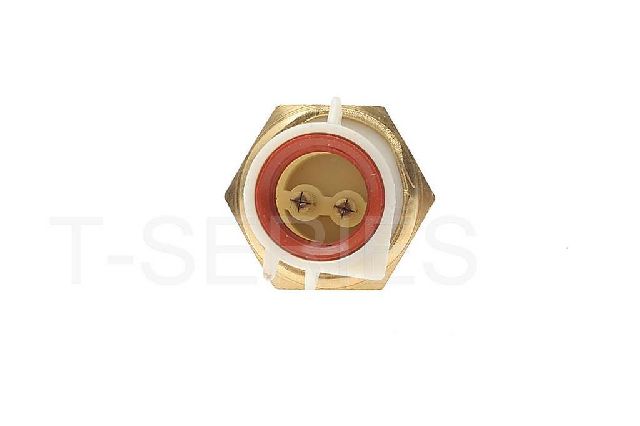
The location depends on your engine and year. For many earlier models with the 7.5L (460) or 5.8L (351) engines, it's a brass sensor screwed into a runner of the lower intake manifold, often on the driver's side. On some later models (around 1994+), Ford moved it to the plastic air intake tubing or the air filter box. For 7.3L Power Stroke engines, it is typically located in the center of the intake manifold's Y-pipe. Always look for a small, two-wire sensor in the path of the intake air.
Can I drive with a bad IAT sensor?
Yes, you can usually still drive the vehicle. However, you will experience poor performance, bad fuel mileage, and potentially hard starting. The engine's computer will use a default value, which is a safe but inefficient guess, leading to the engine running too rich or too lean. It's best to replace it to avoid wasting fuel and ensure smooth operation.
Is this a difficult part to replace myself?
No, this is a great DIY job for beginners. It is typically held in by threads (like a bolt) or a plastic clip. You simply unplug the electrical connector, unscrew or unclip the old sensor, install the new one, and reconnect the wiring. The hardest part is usually just reaching it. The entire job should take less than 30 minutes.
Are there any recalls or TSBs for this part?
There are no known recalls or widespread Technical Service Bulletins (TSBs) for the Intake Air Temperature sensor on the 1988-1997 Ford F-Super Duty. Any issues are typically due to the age and normal wear and tear of the part.
Technical Specifications
OEM Part Numbers: F62F-12A697-AA 9C1Z12A697B DY-1159
This is a two-wire thermistor sensor. Its electrical resistance changes in response to the temperature of the air passing over it. It typically has a threaded brass or plastic body and a plastic electrical connector.
We Have This Part in Stock


The information in this article is provided for general reference and educational purposes only. Vehicle specifications, procedures, and part compatibility can vary by production date, trim level, and region. Always consult your vehicle's factory service manual and verify part numbers before purchasing or performing repairs. Safety-critical components such as airbags, seat belts, and braking systems should be installed by a qualified professional.
- Ford F-Super Duty: