

Toyota Camry Coolant Temperature Sensor Guide (1988-2006)
Is your Camry running rough, getting bad gas mileage, or overheating? Your coolant temperature sensor might be the culprit.
- A failing sensor causes poor fuel economy, rough running, and potential overheating.
- For best results, choose an aftermarket sensor from Denso, the original Toyota supplier.
- This is a simple DIY replacement that requires a 19mm deep socket and about 30 minutes.
- Don't confuse the two-wire ECT sensor (for the computer) with the one-wire temperature sender (for the gauge).
What the Coolant Temperature Sensor Does in Your Camry

Think of the Engine Coolant Temperature (ECT) sensor as a key advisor to your Camry's main computer, the ECU. It constantly measures the temperature of the engine coolant. This single piece of information influences several critical functions. When the engine is cold, the sensor tells the ECU to enrich the fuel mixture for a smooth start and idle. As the engine warms up, the ECU adjusts the fuel and ignition timing for better fuel economy and lower emissions. It also determines when to switch on the radiator fans to prevent overheating. A faulty sensor can misinform the ECU, leading to a range of engine problems.
Top 4 Signs of a Failing Coolant Temperature Sensor

A bad coolant sensor can make your reliable Camry act up. Here are the most common symptoms owners experience:
- Poor Fuel Economy: If the sensor incorrectly tells the ECU the engine is always cold, the computer will continuously send extra fuel. This causes your gas mileage to drop noticeably.
- Check Engine Light: A faulty sensor will often trigger a Check Engine Light. Common trouble codes include P0115, P0116, P0117, and P0118, which point to a problem in the sensor's circuit.
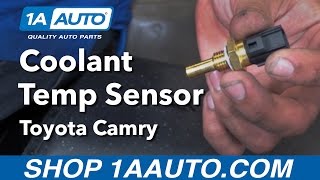
- Engine Overheating or Running Rough: The sensor might fail to signal the cooling fans to turn on, leading to overheating. Conversely, a wrong signal can cause a rough idle, hesitation, or even stalling 🎬 Watch how a new sensor fixes poor engine idle because the fuel mixture and timing are incorrect.
- Black Smoke from Exhaust: An overly rich fuel mixture, caused by a sensor stuck on a "cold" reading, may not burn completely. This unburnt fuel then burns in the exhaust, producing black smoke.
Sensor vs. Sender: A Common Mistake
Many Toyota Camrys have two similar-looking parts: the ECT sensor for the computer (ECU) and the coolant temperature sender for the dashboard gauge. They are not interchangeable. The sensor discussed here has two wires and affects engine performance, while the sender usually has one wire and only controls the needle on your temperature gauge. Make sure you are replacing the correct part for the problem you're having.
Choosing the Right Aftermarket Sensor for Your Camry

When it comes to sensors for Toyota engines, quality matters. While you can go to a dealer for a Genuine Toyota part, the aftermarket offers excellent alternatives that can save you money.
OEM-Quality Aftermarket (Best Choice):
- Denso: Denso is the original equipment manufacturer (OEM) for many Toyota parts, including this sensor. Choosing a Denso-branded sensor from the aftermarket often gets you the exact same quality as the dealer part, but at a lower price. This is the most recommended option for reliability.
Reputable Aftermarket Brands (Good Choice):
- Standard Motor Products (SMP): SMP is a well-regarded brand that produces reliable replacement sensors designed to meet or exceed OEM specifications. Owners generally report good experiences with their quality.
- NTK: NTK is another major OEM supplier known for its sensors, offering a dependable alternative to a dealer part.
For a critical sensor like this, it's best to stick with known, reputable brands like Denso, NTK, or Standard Motor Products. While budget-friendly options exist, some forum users have reported that cheaper, unbranded sensors can have inaccurate readings, leading to persistent performance issues.
| Part Type | Estimated Cost |
|---|---|
| New OEM (Dealer) | $68 - $98 |
| New Aftermarket (Replacement) | $17 - $35 |
| Shop Labor | $50 - $100 |
Pro Tip: Easy DIY Replacement
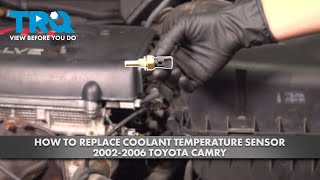
Replacing the ECT sensor is a straightforward job for most DIY mechanics. It's usually located on the engine block or cylinder head near the thermostat housing. The job requires basic tools like a 19mm deep socket. You will lose a small amount of coolant, so have some fresh Toyota-compatible coolant on hand to top it off. Always perform this repair on a completely cool engine to avoid burns.
Frequently Asked Questions

Where is the coolant temperature sensor located on my Camry?
On 4-cylinder models, it's typically on the driver's side of the engine, on or near the thermostat housing where the radiator hose connects. On V6 models, it's also near the thermostat housing, but the exact position can vary slightly. 🎬 See this guide for V6 sensor and thermostat replacement It will be a small brass or plastic sensor threaded into the engine with a two-wire electrical connector.
Can I drive with a bad coolant temperature sensor?
You can, but it's not recommended for long. A bad sensor can lead to poor fuel economy, stalling, and potentially cause the engine to overheat without warning, which can result in severe engine damage.
Are there any recalls for this part on my Camry?
There are no specific recalls for the coolant temperature sensor itself on 1988-2006 Toyota Camrys. Some newer model years had recalls related to coolant leaks from engine casting, but this does not apply to the sensor on these specific year ranges.
What tools do I need to replace the sensor?
You will typically need a 19mm deep socket, a ratchet with an extension, and a drain pan to catch any spilled coolant. It's also a good idea to have some fresh coolant and a funnel to top off the system after the replacement.
Helpful Videos

Technical Specifications
OEM Part Numbers: 89422-20010 89422-35010 89422-33030 89422-12010
Typically features a 2-pin blade connector and threads into the engine block or thermostat housing.

The information in this article is provided for general reference and educational purposes only. Vehicle specifications, procedures, and part compatibility can vary by production date, trim level, and region. Always consult your vehicle's factory service manual and verify part numbers before purchasing or performing repairs. Safety-critical components such as airbags, seat belts, and braking systems should be installed by a qualified professional.
- Toyota Camry: