

A Comprehensive Guide to the 1989-1993 Mercury Cougar Ignition Coil
If your Cougar is running rough, stalling, or won't start, a failing ignition coil could be the culprit.
- Symptoms like stalling, rough idle, and misfiring point strongly to a failing ignition coil or the related TFI module.
- A critical safety recall exists for the ignition *switch*, which can cause a fire. Verify this has been fixed on your car.
- Replacing the coil is an easy, DIY-friendly job that takes less than an hour with basic tools.
- For reliability, choose a trusted brand like Motorcraft or a quality aftermarket option like Delphi or NGK over the cheapest parts available.
Is Your Cougar's Ignition Coil Failing?
A bad ignition coil on the 1989-1993 Cougar will cause noticeable engine problems. Because it uses a single coil for all cylinders, a failure affects the entire engine, not just one cylinder like in modern cars. Watch for these common signs:
- Engine Misfires: The car may jerk, sputter, or hesitate during acceleration.
- Rough Idle: You might feel excessive shaking or vibration when stopped at a light. The engine may even stall.
- No-Start or Hard Starting: The engine may crank but struggle to fire up, or it may not start at all.
- Loss of Power: Acceleration will feel sluggish, and the car may struggle to get up to highway speed.
- Worse Fuel Economy: When the engine isn't burning fuel efficiently, your gas mileage will suffer.
- Backfiring: Loud bangs from the tailpipe can occur when unburned fuel ignites in the exhaust system.
Important Recall Information: Ignition SWITCH
While not the ignition coil, there was a major safety recall for the ignition switch on 1988-1993 Mercury Cougars. A faulty switch could short circuit and cause a fire, even when the vehicle is parked and turned off. It is critical to ensure this recall work has been performed on your vehicle. Contact a Ford or Lincoln/Mercury dealership with your VIN to check its status.
Choosing the Right Aftermarket Ignition Coil
When shopping for a replacement, you'll find several tiers of aftermarket brands. The original factory part is made by Motorcraft, and it's widely considered a high-quality, reliable option. However, many aftermarket brands offer a good balance of price and quality.
Brand Quality Tiers
- Premium/Performance (e.g., Accel, MSD): These brands are designed for enthusiasts looking for a hotter spark and potential performance gains. They often claim higher voltage output, which can improve throttle response. However, for a stock engine, the performance difference may not be noticeable, and their higher cost may not be justified for daily driving.
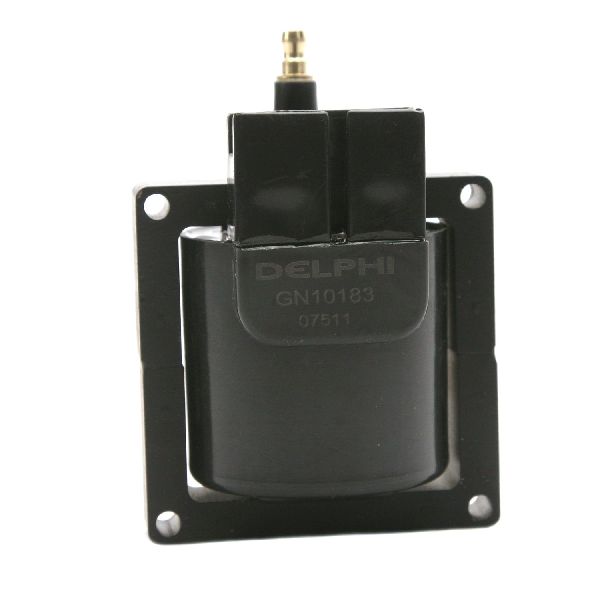
- Standard OE-Quality (e.g., Delphi, NGK, Standard Ignition): Brands like Delphi are known for engineering their parts to meet or exceed original specifications, often addressing common failure points found in the factory design. They offer reliability that is comparable to the OEM part but usually at a better price. Many owners and mechanics trust these brands for dependable, long-lasting repairs.
- Economy (e.g., DriveWire, Skyward, Global Parts): These are the most budget-friendly options. While they will get your car running, their long-term durability and performance consistency can be a gamble. For a critical component like the ignition coil, spending a little more for a standard-quality brand is often a wise investment to avoid being stranded later.
Don't Forget the TFI Module
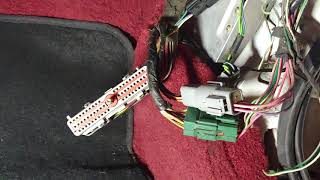
The ignition coil works with a part called the Thick Film Ignition (TFI) module, which is mounted on the distributor. This module is a very common failure point on these Fords and can cause the exact same symptoms as a bad coil, especially stalling when the engine gets hot. If you replace your coil and the problem persists, the TFI module is the next part to inspect.
🎬 See this guide on TFI module symptoms and replacement| Part Type | Estimated Cost |
|---|---|
| New Aftermarket | $22.57 - $121.89 |
| New OEM (Motorcraft) | $90 - $120 |
| Shop Labor | $50 - $100 |
Frequently Asked Questions
Is the ignition coil the same as the TFI module?
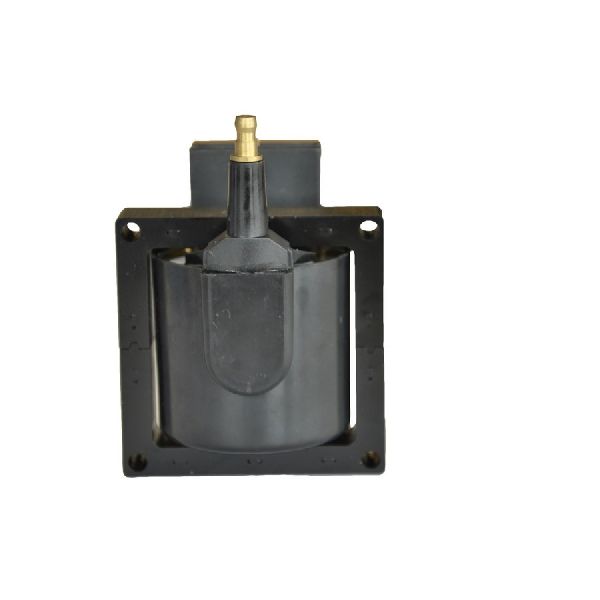
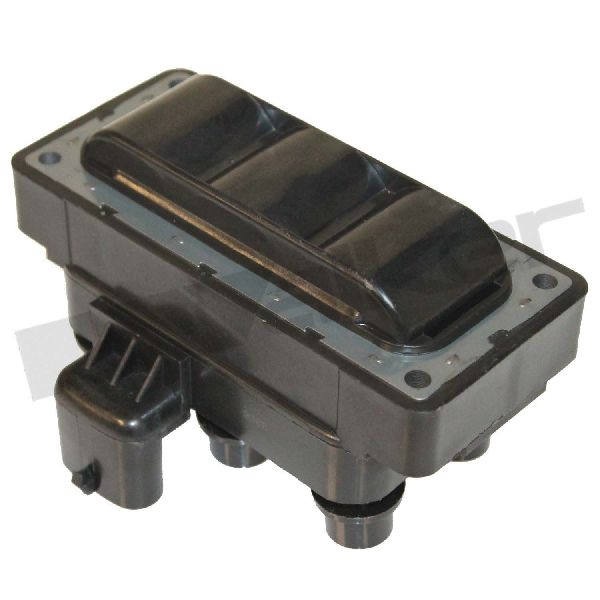
No. The ignition coil is the canister-shaped part that generates high voltage. The TFI module is a small electronic box, usually gray, mounted to the side of the distributor that controls when the coil fires. They work together but are separate parts.
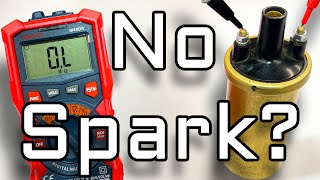
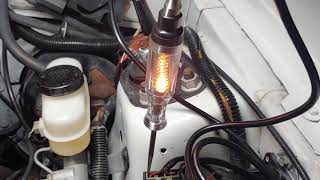
How can I test my ignition coil? 🎬 Watch: How to test your ignition coil with a multimeter
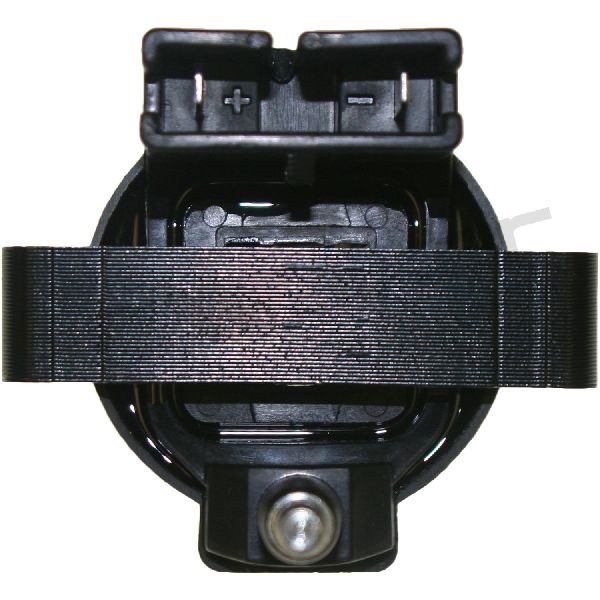
A basic test can be done with a multimeter to check the resistance between the coil's terminals. The primary resistance (between the two small terminals) should be very low, typically 0.3 to 1.0 ohm, while the secondary resistance (between a small terminal and the large high-voltage tower) should be much higher, around 8,000 to 11,500 ohms. If the readings are far outside this range, the coil is likely bad.
🎬 Watch: A step-by-step walkthrough for testing Ford TFI coilsIs it difficult to replace the ignition coil myself?
No, this is a very easy job for a DIYer. The coil is mounted externally on the engine and is held in place by a bracket with a few bolts. The replacement involves disconnecting the battery, unplugging two electrical connectors, and swapping the part. The entire job can usually be done in under 30 minutes with basic hand tools.
Will a performance coil give my Cougar more horsepower?
While performance brands like MSD claim a hotter, more efficient spark can improve performance and fuel economy, the gains on a stock engine are usually minimal. A high-output coil is most beneficial on modified engines with other performance upgrades. For a standard daily driver, a quality OE-replacement coil is more than sufficient.
Helpful Videos
Technical Specifications
OEM Part Numbers: DG-535
This vehicle uses a single, external TFI-style (E-Core) ignition coil that supplies spark to a distributor. It is not a coil-on-plug system.
We Have This Part in Stock


The information in this article is provided for general reference and educational purposes only. Vehicle specifications, procedures, and part compatibility can vary by production date, trim level, and region. Always consult your vehicle's factory service manual and verify part numbers before purchasing or performing repairs. Safety-critical components such as airbags, seat belts, and braking systems should be installed by a qualified professional.
- Mercury Cougar: