

Ford Mustang Engine Oil Pressure Switch Guide (1989-1997)
Understanding the oil pressure switch in your Fox Body or SN95 Mustang and how to choose the right replacement.
- The factory oil pressure gauge is not a precise instrument; it's an 'idiot gauge' that shows 'normal' with very little actual pressure.
- An erratic gauge or a reading of zero at idle is the most common symptom of a failing switch, not necessarily a failing engine.
- The switch is located on the driver's side of the engine near the oil filter and is a simple DIY replacement.
- For reliable performance, using the OEM Motorcraft replacement part is highly recommended by the Mustang community.
Is Your Mustang's Oil Pressure Switch Failing?

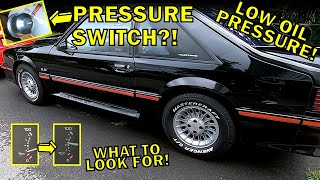
A bad oil pressure switch can be alarming, but it's often a simple fix. Because the factory gauge isn't a true measure of pressure, the first sign of trouble is usually an erratic reading. 🎬 Watch how one owner resolved these erratic oil pressure issues. Don't immediately assume your engine is failing; the switch itself is a common weak point.
Common Symptoms of a Bad Switch:
- Flickering or Bouncing Gauge: The needle on the oil pressure gauge jumps around, especially when the engine's electrical load changes (like when the cooling fan kicks on).
- Gauge Reads Zero or Low at Idle: The gauge drops to zero when you're stopped at a light but may rise to a normal position when you accelerate.
- Oil Leak: The switch itself can develop leaks. You may see oil on the sensor or dripping from the area around the oil filter.
First, Verify the Pressure
If your gauge shows low oil pressure, it's wise to verify the engine's actual oil pressure with a mechanical gauge before driving the car extensively. This will confirm whether you have a simple bad switch or a more serious internal engine problem that requires immediate attention.
Choosing the Right Aftermarket Switch

When it comes to sensors for Ford vehicles, many experienced owners and mechanics have a strong preference. Here’s a breakdown of the available brands.
Tier 1: OEM Quality
- Motorcraft: This is Ford's own brand and the original equipment manufacturer (OEM). For critical sensors, Motorcraft is highly recommended by the Mustang community to ensure accurate readings and long-term reliability. Choosing Motorcraft means you are getting the part that was designed for your car, reducing the risk of compatibility issues or premature failure.
Tier 2: Reputable Aftermarket
- Standard Ignition (SMP): A very common and widely available aftermarket brand. It's a budget-friendly option that often gets the job done. However, some users across various forums report a shorter lifespan compared to OEM.
- Hella: A well-known German brand, primarily famous for lighting but also produces a range of other automotive components. They are generally considered a quality aftermarket choice.
Tier 3: Value Brands
- Facet, Global Parts, Rostra Powertrain: These brands offer a value-oriented choice. Facet is marketed as an OE-equivalent from Europe. Rostra is known for transmission parts but also makes sensors. While they can be a good way to save money, there is less community feedback available for them on this specific application.
A Note on "Switches" vs. "Senders"
For these Mustangs, the factory part is a "switch" that works with the "idiot gauge." Some aftermarket parts may be listed as "senders," which are designed for true, variable pressure gauges. Using the wrong type can result in incorrect gauge readings. For a stock dash, it's best to use a direct replacement switch.
Typical Replacement Costs
The cost of the part itself is low, and labor is minimal if you have a shop do the work.
| Item | Cost Range |
|---|---|
| New Aftermarket Switch | $7.35 - $44.36 |
| New OEM (Motorcraft) Switch | $15 - $50 |
| Shop Labor | $50 - $100 |
Frequently Asked Questions (FAQ)

Where is the oil pressure switch located on a 1989-1997 Mustang?
The oil pressure switch is located on the engine block, on the driver's side, near the oil filter. On 5.0L V8 models from 1990 onwards, it is often on a small extension tube, making it easier to access. On earlier Fox Bodies and 4-cylinder models, it threads directly into the block and can be in a tighter spot.
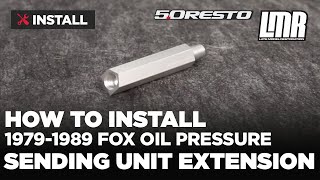
🎬 See how to install an extension tube for easier sensor access.Can I replace the oil pressure switch myself?
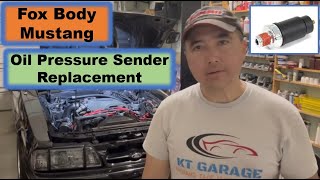
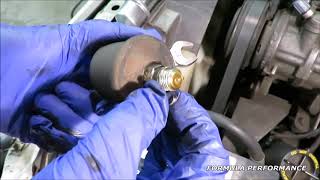
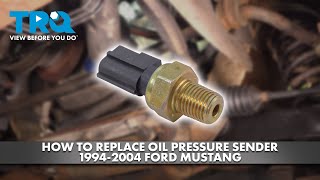
Yes, this is a very DIY-friendly job. It typically takes less than an hour with basic tools. 🎬 Follow this step-by-step walkthrough to replace the sender yourself. You will need a wrench or a special oil pressure switch socket (usually 1 1/16"). Access is the main challenge, but it does not require extensive mechanical knowledge.
Is a flickering oil light always a bad switch?
Not always. While the switch is the most common culprit, a flickering light or dropping gauge can also be a sign of a low oil level, diluted oil, or a serious mechanical issue causing low pressure. It is crucial to check your oil level immediately and, if possible, verify the pressure with a mechanical gauge to be safe.
Do I need sealant on the new switch?
Most new switches, especially from brands like Motorcraft, come with a thread sealant already applied. If your new switch does not have sealant on the threads, it is a good idea to apply a small amount of thread sealer (not thread locker) to prevent leaks. Do not use Teflon tape, as pieces can break off and enter the oil passages.
Helpful Videos
Technical Specifications
OEM Part Numbers: SW1547B
Type: Switch (for factory gauge) Thread Size: 1/4-18 NPT Connector: 1-Pin Blade
We Have This Part in Stock


The information in this article is provided for general reference and educational purposes only. Vehicle specifications, procedures, and part compatibility can vary by production date, trim level, and region. Always consult your vehicle's factory service manual and verify part numbers before purchasing or performing repairs. Safety-critical components such as airbags, seat belts, and braking systems should be installed by a qualified professional.
- Ford Mustang:
- 🎬 Helpful Videos
- 🛍️ Shop This Part
- Is Your Mustang's Oil Pressure Switch Failing?
- Common Symptoms of a Bad Switch:
- First, Verify the Pressure
- Choosing the Right Aftermarket Switch
- Tier 1: OEM Quality
- Tier 2: Reputable Aftermarket
- Tier 3: Value Brands
- A Note on "Switches" vs. "Senders"
- Typical Replacement Costs
- Frequently Asked Questions (FAQ)
- 🎟️ Get 5% Off