

A Geo Tracker Owner's Guide to Universal Joint Replacement (1989-1997)
That clunking or vibrating from under your Tracker is likely a bad U-joint; here's how to choose the right replacement.
- A clunk when shifting or a vibration at speed are the most common signs of a bad U-joint on a Geo Tracker.
- For durability and off-road use, choose a high-quality non-greasable brand like Dana Spicer.
- Replacement is a feasible DIY job if you have a bench vise and basic mechanic's tools.
- Always mark your driveshaft's orientation before removal to prevent vibration issues after installation.
Symptoms of a Failing Universal Joint
A worn-out U-joint gives several warning signs. Ignoring them can be dangerous, as a complete failure can cause the driveshaft to detach from the vehicle. Listen and feel for these common symptoms:
- Clunking Noise: The most common sign is a loud "clunk" or "bang" when you shift from Park into Drive or Reverse. This is caused by excessive play in the worn joint.
- Vibrations: A vibration that you can feel through the floor of the truck is a classic symptom. This vibration often starts at moderate speeds (around 25-35 mph) and gets worse as you go faster. It can feel similar to an unbalanced tire.
- Squeaking or Chirping: A rhythmic squeaking noise that matches the speed of your driveshaft (not your wheels) often points to a dry, failing U-joint. This usually happens at lower speeds.
- Visible Rust or Grease: If you look under your Tracker, you might see rust-colored dust or dark grease streaks around the U-joint's bearing caps. This indicates the seals have failed and the internal needle bearings are deteriorating.
Choosing the Right Aftermarket U-Joint
For a 1989-1997 Geo Tracker, the original factory U-joints are long out of production. Aftermarket parts are your only real option, but quality varies significantly. Your choice depends on your budget and how you use your Tracker.
Aftermarket Brand Tiers
| Tier | Brands | Quality & Use Case |
|---|---|---|
| Best / Heavy-Duty | Dana Spicer | Spicer is widely considered the gold standard and an OEM-quality equivalent. Their non-greasable joints are forged for maximum strength and are preferred for off-roading or heavy use. If you frequently use 4WD or have lifted your Tracker, this is the recommended choice. |
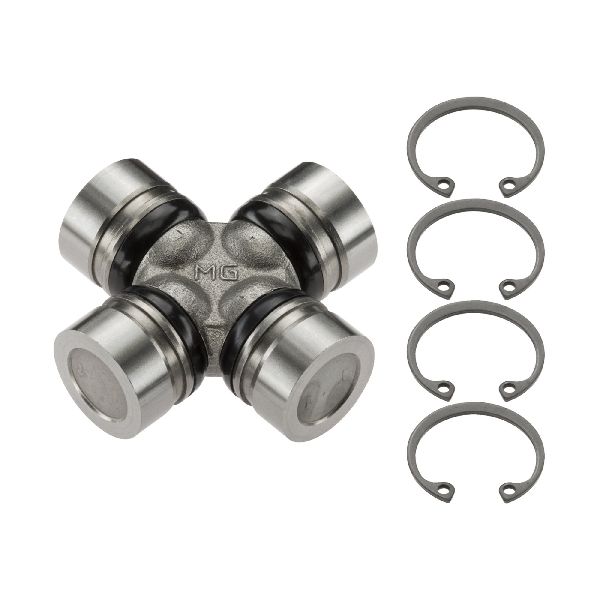
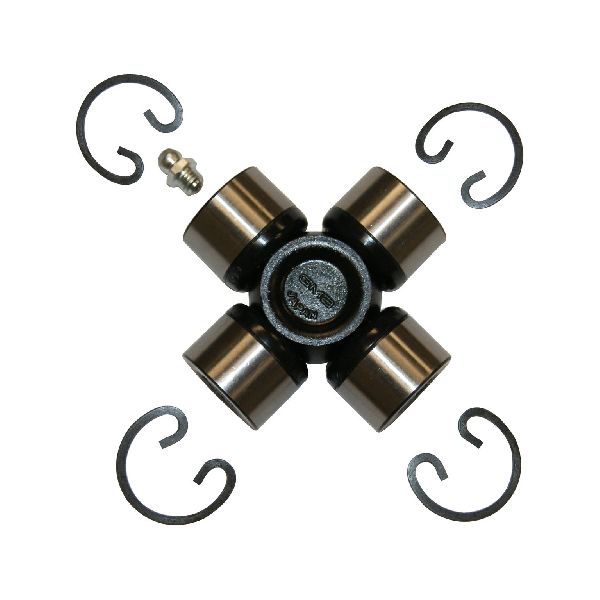
| Good / Standard Replacement | Moog, GMB | Moog and GMB are popular standard replacement brands. Moog quality can be inconsistent according to some users, but they are generally acceptable for daily driving. GMB is a reliable budget-friendly option. Both brands often feature greasable fittings (zerks), which require periodic maintenance but can extend life if serviced regularly. |
A Note on Greasable vs. Non-Greasable U-Joints
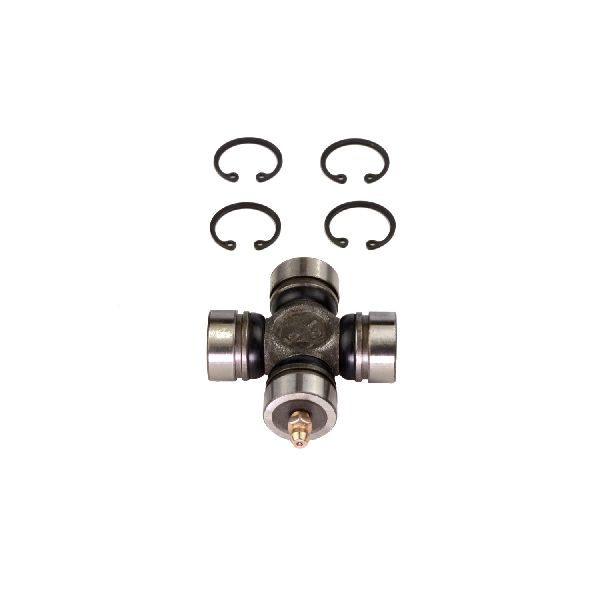
Non-greasable (sealed) U-joints, like many from Spicer, are typically stronger because the cross is solid metal, not drilled out for grease channels. Greasable joints are easier to maintain but are not as strong. For the best durability on a Tracker, especially one that sees off-road use, a non-greasable Spicer is the top choice.
Known Issues, Recalls, and Bulletins
There are no official recalls or Technical Service Bulletins (TSBs) from NHTSA specifically for universal joints on the 1989-1997 Geo Tracker. However, U-joint failure is a common maintenance issue for these vehicles due to age and use, as discussed frequently in owner forums.
🎬 Watch: Common U-joint problems on 1989-1998 TrackersFrequently Asked Questions (FAQ)
How many U-joints does my Geo Tracker have?
A 4WD Geo Tracker has a total of four universal joints. There are two on the rear driveshaft and two on the front driveshaft. The rear joints tend to wear out faster as they are always in use. The front joints only see wear when four-wheel drive is engaged.
Is replacing a U-joint a DIY job?
Yes, for someone with moderate mechanical skill. The main challenge is removing the old joint from the driveshaft yoke, which requires a good bench vise and a combination of sockets and a hammer, or a dedicated U-joint press tool. 🎬 Learn how to replace U-joints using basic hand tools If you don't have these tools, a local auto shop can do the job.
Do I need to get my driveshaft balanced after replacing the U-joints?
Usually, no, as long as you reinstall the driveshaft in the same orientation it came out. Use a paint marker to mark the position of the driveshaft flange in relation to the differential flange before you unbolt it. However, if you have a vibration after installation, it may be due to improper seating of the U-joint caps or an out-of-balance shaft, which would then need to be checked by a driveshaft shop.
Are the front and rear U-joints the same part number?
Yes, for the 1989-1997 Geo Tracker, the U-joints used on the front and rear driveshafts are typically the same size. However, it is always best to verify the part number for your specific vehicle 🎬 See expert tips for Suzuki and Tracker U-joint replacement before ordering to avoid mistakes.
Helpful Videos


Technical Specifications
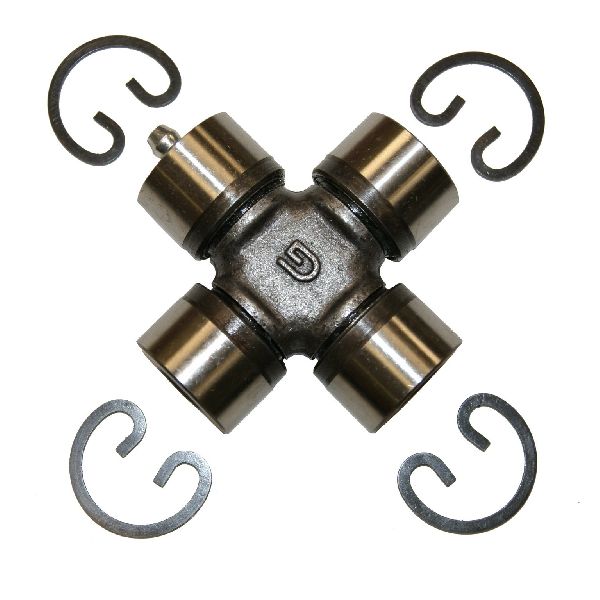
The 1989-1997 Geo Tracker uses outside snap ring style universal joints for both front and rear driveshafts.
We Have This Part in Stock

The information in this article is provided for general reference and educational purposes only. Vehicle specifications, procedures, and part compatibility can vary by production date, trim level, and region. Always consult your vehicle's factory service manual and verify part numbers before purchasing or performing repairs. Safety-critical components such as airbags, seat belts, and braking systems should be installed by a qualified professional.
- Geo Tracker: