

Buick Roadmaster Transmission Control Solenoid Guide (1991-1996)
Solve your shifting problems by understanding the transmission solenoids in your 1991-1996 Roadmaster.
- First, confirm if your Roadmaster has the 4L60 (1991-93) or 4L60-E (1994-96) transmission to buy the correct parts.
- Symptoms like harsh shifting or a P1870 code on 94-96 models can also be caused by a worn valve body, not just a bad solenoid.
- Always check transmission fluid level and condition before assuming a solenoid has failed; low or burnt fluid can cause similar issues.
- Since the transmission pan must be removed, consider replacing all solenoids and the internal wiring harness at the same time to prevent future repairs.
Is Your Roadmaster Shifting Strangely?
A bad transmission solenoid in your 1991-1996 Buick Roadmaster can cause a range of frustrating issues. Because these parts control how and when your transmission shifts, a failure can make the car feel unpredictable or even leave it stuck in one gear. Symptoms often start small and get worse, so addressing them early is key.
Understanding Your Roadmaster's Transmission
It is critical to know which transmission your Roadmaster has before buying parts. The 1991-1996 generation spans two different transmission types:
- 1991-1993 Models: These cars have the hydraulically controlled 4L60 (also known as the THM700-R4) transmission. The main solenoid you'll deal with is the Torque Converter Clutch (TCC) lock-up solenoid.
- 1994-1996 Models: These later models feature the electronically controlled 4L60-E transmission. This version has multiple solenoids, including the 1-2 Shift Solenoid (A), 2-3 Shift Solenoid (B), and a TCC solenoid, which may be a Pulse-Width Modulated (PWM) type.
Common Ordering Mistake
Make sure you order the correct solenoid(s) for your specific year. A shift solenoid for a 1995 Roadmaster will not work in a 1992 model, and vice-versa. Always verify the part fitment for your exact year and transmission type (4L60 or 4L60-E).
Choosing the Right Aftermarket Solenoid
For an older vehicle like the Roadmaster, aftermarket parts are often the only option and provide good value. The quality difference between a premium aftermarket brand and an OEM part (if you can find one) is minimal for this component. Here's a breakdown of the brands available:
- Standard Ignition (SMP): Often considered a top-tier aftermarket brand, Standard Ignition provides quality replacement parts that meet or exceed original specifications. They are a reliable choice for electronic components like solenoids.
- ATP (Automatic Transmission Parts): ATP is a well-known brand specializing in transmission components. They offer a wide range of solenoids and are a solid, budget-friendly option for a standard repair.
- Pioneer Cable: While known for cables, Pioneer also offers transmission solenoids. Reviews for their parts are generally positive, citing good fitment, though some users have noted minor quality differences from original parts.
Pro Tip: Before you replace any solenoids, check your transmission fluid. Low, old, or burnt fluid can cause symptoms that mimic solenoid failure, such as harsh shifting or slipping. A fluid and filter change is much cheaper and easier than dropping the transmission pan to replace solenoids.
Known Issues, Recalls, and TSBs
Searches of the National Highway Traffic Safety Administration (NHTSA) database did not reveal any specific recalls for transmission solenoids on the 1991-1996 Buick Roadmaster. However, a Technical Service Bulletin (TSB) for the 4L60-E transmission (found in 1994-1996 models) mentions that wear in the valve body where the TCC solenoid sits can cause harsh 1-2 shifts and set a P1870 trouble code. This is often mistaken for a bad solenoid when the valve body itself is the problem. There was also a recall in 1995 for an improperly adjusted transmission shift control linkage, but this is unrelated to the internal solenoids.
Typical Replacement Costs
The cost to replace transmission solenoids depends on whether you do it yourself or hire a professional. The job requires draining the fluid and removing the transmission pan to access the valve body where the solenoids are located.
| Part or Service | Estimated Cost |
|---|---|
| New Aftermarket Solenoid(s) | $49 - $142 |
| Shop Labor | $200 - $400 |
| Total Professional Repair | $250 - $550 |
Frequently Asked Questions (FAQ)
How do I know if I have a bad transmission solenoid?
Common symptoms include harsh or delayed shifts, the transmission getting stuck in one gear (limp mode), failure to downshift, and the Check Engine Light coming on with codes like P0751, P0756, or P1870.
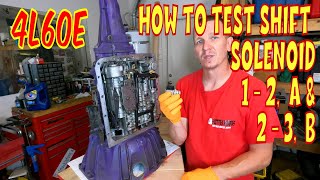
🎬 Watch this guide to test your 4L60-E shift solenoids.Can I replace just one solenoid?
Yes, but it's often recommended to replace them as a set, especially on the 4L60-E. The labor to access them is the same, and if one has failed due to age and heat, the others may not be far behind. Many brands sell complete kits for this reason.
Is replacing a transmission solenoid a DIY job?
If you are comfortable with draining fluids, removing the transmission pan, and working in tight spaces, this is a manageable DIY job. It requires careful handling of electrical connectors and ensuring the new solenoids are seated correctly. The difficulty is moderate, and it can be messy.
Do I need to replace the wiring harness at the same time?
It's a good idea to inspect the internal wiring harness for brittle plastic, cracked wires, or corroded connectors when you have the pan off. The high-temperature environment can degrade the harness over time. If it looks damaged, replacing it along with the solenoids is a smart move to prevent future issues.
Helpful Videos
Technical Specifications
OEM Part Numbers: 24230298 10478120
Fits 4L60 (TH700-R4) for 1991-1993 models and 4L60-E for 1994-1996 models. Solenoids are located inside the transmission pan, attached to the valve body.
We Have This Part in Stock


The information in this article is provided for general reference and educational purposes only. Vehicle specifications, procedures, and part compatibility can vary by production date, trim level, and region. Always consult your vehicle's factory service manual and verify part numbers before purchasing or performing repairs. Safety-critical components such as airbags, seat belts, and braking systems should be installed by a qualified professional.
- Buick Roadmaster: