

Dodge Stealth Horn Replacement and Diagnosis (1991-1996)
If your horn is silent, weak, or only works sometimes, this guide will help you find the right aftermarket replacement.
- Always check the horn fuse and relay before assuming the horn unit itself has failed.
- If the horn works intermittently with steering wheel movement, suspect a failing clock spring, which also affects the airbag system.
- Aftermarket horns from brands like Standard Ignition are a cost-effective and reliable alternative to discontinued OEM parts.
- Accessing the horns on a Stealth typically requires removing the front bumper cover, which is the most time-consuming part of the job.
Is Your Dodge Stealth Horn Failing?
A problem with your horn isn't always as simple as complete silence. Because the Dodge Stealth shares its platform with the Mitsubishi 3000GT, it has similar electrical components, and failures can show up in a few different ways. Pay attention to these signs.
- Silent Horn: The most obvious symptom. Pressing the horn button does nothing.
- Weak or Muffled Sound: If the horn sounds quiet, tired, or like it's underwater, one or both of the horn units may have failed or have a bad connection.
- Intermittent Operation: The horn might work only when the steering wheel is in a certain position. This often points to a problem with the clock spring inside the steering column rather than the horn itself.
- A Single, Tinny Tone: The Stealth originally came with a high and low-tone horn pair. If one fails, you'll be left with a single, less powerful-sounding horn.
Clock Spring Warning
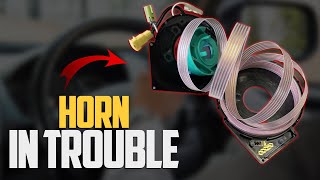
A common issue on the Stealth/3000GT platform is the failure of the clock spring in the steering column. This part allows the steering wheel to turn while maintaining electrical connections for the horn and the driver's airbag. If your horn only works when you turn the wheel, or if your airbag (SRS) light is on, the clock spring is the likely culprit and should be inspected by a professional immediately.
Before You Buy: Simple Diagnosis
Don't rush to buy a new horn until you've checked the simple things first. The problem might be elsewhere in the circuit.
🎬 Watch this guide on troubleshooting common horn electrical issues.- Check the Fuse: The horn is on a dedicated fuse. Look in your fuse box (located in the driver's side footwell) for a blown fuse. This is the easiest and cheapest fix.
- Test the Relay: The horn relay handles the high current needed to power the horns. You can often test it by swapping it with an identical relay from a non-critical system (like the fog lights) in the fuse box. If the horn works, you just need a new relay.
- Check for Power: If the fuse and relay are good, the issue could be the horn unit itself or the wiring. A mechanic can use a multimeter to see if power is reaching the horn's electrical connector when the button is pressed.
Choosing the Right Aftermarket Horn
For a vehicle like the 1991-1996 Dodge Stealth, finding a brand new OEM horn from Mopar can be difficult and expensive, as they are often discontinued. Aftermarket horns are an affordable and reliable alternative.
Brand Tiers
- Replacement Brand: This is your most budget-friendly option. These horns are designed to be a direct, functional replacement to get your vehicle to pass a safety inspection. The main trade-off is often the sound; they can have a more generic or "tinny" tone compared to the original dual-note setup.
- Standard Ignition (SMP): A well-known aftermarket manufacturer that produces parts designed to meet or exceed original equipment (OE) specifications. A Standard Ignition horn is a quality choice that offers a good balance of price and reliability, with materials and construction intended for longevity.
| Brand Tier | Estimated Price Range |
|---|---|
| Replacement | $36.29 - $45.00 |
| Standard Ignition | $45.00 - $57.52 |
Pro Tip: Many aftermarket horns are sold individually (high or low tone). For the best sound, it's a good idea to replace both horns as a set if your budget allows.
Frequently Asked Questions (FAQ)
Where are the horns located on a 1991-1996 Dodge Stealth?
The horns are typically mounted together on a bracket at the very front of the vehicle, behind the front bumper cover and in front of the radiator. Accessing them usually requires removing the front bumper cover or the plastic splash shield underneath the engine.
Is it difficult to replace the horn myself?
The replacement itself is very easy. It involves unplugging an electrical connector and removing one or two bolts. 🎬 See a demonstration of how to swap out Dodge horns. The main difficulty is accessing the horns, which may require removing other parts like the bumper. If you are comfortable with basic hand tools and removing body panels, it is a feasible DIY job.
If my horn is quiet, does it need to be replaced?
Usually, yes. A weak or muffled sound often means the internal diaphragm of the horn has failed or there is corrosion on the electrical connection. After checking that the connection is clean and tight, if the sound is still weak, the horn unit itself needs replacement.
Can I install a louder, universal aftermarket horn?
Yes, many owners choose to upgrade to louder horns for more presence on the road. Universal horns like those from Hella or Fiamm are popular. However, they may require you to modify the wiring or create a new mounting bracket, as they may not be a direct plug-and-play fit.
Helpful Videos
Technical Specifications
OEM Part Numbers: MB530847 (High Note) MB881527 (High Note - 3000GT) MB881524 (Low Note - 3000GT)
12V Electrical System, High and Low Tone Pair
We Have This Part in Stock


The information in this article is provided for general reference and educational purposes only. Vehicle specifications, procedures, and part compatibility can vary by production date, trim level, and region. Always consult your vehicle's factory service manual and verify part numbers before purchasing or performing repairs. Safety-critical components such as airbags, seat belts, and braking systems should be installed by a qualified professional.
- Dodge Stealth: