

1991-1996 Ford Escort Ignition Control Module Replacement Guide
Solving stalling, no-start, and rough running issues in your Ford Escort.
- A failing ignition module is a common cause of stalling and no-start issues in 1991-1996 Escorts, often related to engine heat.
- Before buying, verify your 1996 model has a separate module; some later models may have it integrated into the main computer (PCM).
- Replacement is simple, but you MUST apply thermal grease to the new module to prevent it from overheating and failing prematurely.
- Standard Ignition is a well-regarded aftermarket brand for this part, offering a reliable alternative to the discontinued OEM module.
Symptoms of a Failing Ignition Control Module
The ignition control module in the 1991-1996 Ford Escort, often called a TFI module, is known to be sensitive to heat. Failures often start small and get worse. A common sign is when the engine stalls after it has warmed up, but then starts again after cooling down. 🎬 Watch: See how a failing module causes engine stalling. Here are the most common symptoms you'll experience:
- Engine Stalling: The engine may cut out unexpectedly, especially when hot.
- No-Start Condition: The engine cranks but will not start. This can be intermittent at first.
- Rough Running or Misfiring: The engine may shake, hesitate, or feel down on power because the spark plugs are not firing correctly.
- Check Engine Light: A failing module can trigger the check engine light, though not always.
Choosing the Right Aftermarket Module
For a vehicle like the 1991-1996 Escort, finding a new OEM ignition module from Ford is highly unlikely. The aftermarket is your primary source for this part. The only brand listed in our inventory is Standard Ignition (Standard Motor Products).
Brand Quality: Standard Ignition
Standard Motor Products (SMP) has been a major player in aftermarket ignition parts for a long time. Historically, their parts for domestic vehicles like Ford were considered very good quality. Forum discussions from mechanics and DIYers suggest that while the company's manufacturing has changed over the years, it is still generally seen as a reliable brand for ignition components. When choosing a Standard part, it's best to stick with their standard red box line, as their economy lines may not have the same durability. For an older vehicle like the Escort, a quality aftermarket part from a known brand like Standard is a practical and reliable choice.
Pro Tip: Use Dielectric Grease
The ignition module generates a lot of heat. The original part uses a special thermal grease between the module and its mounting surface to help transfer heat away. When you install your new module, it is critical to apply a fresh layer of dielectric or thermal grease to the metal back of the new part. Failing to do this will cause the new module to overheat and fail quickly.
Cost of Replacing the Ignition Control Module
| Part Type | Estimated Cost |
|---|---|
| New Aftermarket (Standard Ignition) | $162.62 |
| Shop Labor | $60 - $120 |
Costs are estimates and may vary based on your location and the specific repair shop.
Frequently Asked Questions (FAQ)
Where is the ignition control module located on my 1991-1996 Escort?
On most 1991-1995 Escorts with the 1.9L engine, the ignition control module is located on the driver's side strut tower, near the front. However, there is some confusion for the 1996 model year. Some sources and owners report that for 1996, the function of the ignition module was integrated into the main computer (PCM), and there is no separate, replaceable module. Before ordering, visually confirm that your vehicle has a separate module in this location.
Can I replace the ignition module myself?
Yes, this is a very DIY-friendly job for most owners. It typically involves disconnecting the battery, unplugging the electrical connector, and removing two nuts or bolts. The most important part of the installation is applying thermal grease to the back of the new module before bolting it down. The entire process should take less than an hour.
🎬 See this walkthrough for replacing a Ford ignition module.Were there any recalls for the ignition control module on the Ford Escort?
No, there were no specific recalls issued by the NHTSA for the ignition control module on the 1991-1996 Ford Escort. While Ford has had recalls for ignition-related components on other vehicles, this specific part on this model range was not subject to a safety recall.
What happens if I don't replace a bad ignition module?
A failing ignition module will not fix itself. The symptoms, such as stalling and rough running, will become more frequent. Eventually, the module will fail completely, leaving you with a car that will not start. This can become a safety issue if the car stalls in traffic.
Helpful Videos

Technical Specifications
OEM Part Numbers: F1CZ-12K072-A F3CF-12A359-AA
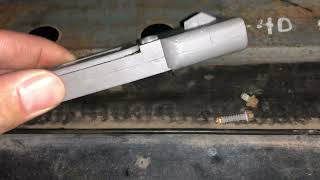
This is a Thick Film Ignition (TFI) module, which is part of Ford's distributor-based ignition system for this era.
We Have This Part in Stock


The information in this article is provided for general reference and educational purposes only. Vehicle specifications, procedures, and part compatibility can vary by production date, trim level, and region. Always consult your vehicle's factory service manual and verify part numbers before purchasing or performing repairs. Safety-critical components such as airbags, seat belts, and braking systems should be installed by a qualified professional.
- Ford Escort: