

Ford Explorer 1991-2001 Throttle Position Sensor (TPS) Replacement Guide
Solving hesitation, stalling, and poor acceleration in your first or second-generation Ford Explorer.
- A failing TPS causes hesitation, rough idle, poor shifting, and a potential 'dead pedal'.
- For a reliable repair, choose the OEM Motorcraft part or a top-tier aftermarket brand like Delphi or Standard Motor Products.
- Always check the part number stamped on your original sensor to ensure you buy the correct replacement.
- This is an easy and inexpensive DIY repair that can be done in under 30 minutes with basic tools.
What is a Throttle Position Sensor?
The Throttle Position Sensor (TPS) on your 1991-2001 Ford Explorer is a small but critical sensor that tells the engine's computer how much you're pushing the gas pedal. It's mounted directly on the throttle body and rotates with the throttle shaft. This action sends a changing voltage signal to the Powertrain Control Module (PCM). The PCM uses this data to manage fuel delivery and, on automatic models, to help control transmission shift points. When it fails, the computer gets bad information, leading to a host of noticeable engine problems.
Common Symptoms of a Failing TPS on a Ford Explorer
A bad TPS can make your Explorer difficult or even unsafe to drive. The symptoms often start intermittently but will get worse over time. Here’s what to look for:
- Hesitation or Stumbling on Acceleration: The truck may feel like it's falling on its face when you try to accelerate from a stop.
- Sudden Surges or Bucking: The engine might unexpectedly rev or lurch while driving, even with steady pedal pressure.
- Poor or Rough Idle: Your Explorer may idle too high, too low, or erratically, sometimes stalling completely when you come to a stop.
- No Throttle Response (Dead Pedal): You might press the gas pedal and get no reaction from the engine for a moment. This can be particularly dangerous when merging into traffic.
- Automatic Transmission Problems: The transmission may shift at the wrong times, either too late or too early, because it relies on the TPS signal to determine engine load.
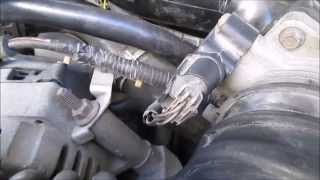
- Check Engine Light: A failing TPS will often trigger the Check Engine Light. For 1996-2001 models, you'll see codes like P0122 (circuit low) or P0123 (circuit high). For 1991-1995 models, you may get an OBD-I code like 23. 🎬 See how to check the TPS on 1990-1994 models.
No Recalls, But a Common Failure
While there are no official recalls or Technical Service Bulletins (TSBs) from Ford specifically for the throttle position sensor on the 1991-2001 Explorer, it is a well-documented, common failure item due to age and wear. The internal electronic contacts simply wear out over time, creating dead spots in the signal.
Choosing the Right Aftermarket TPS
When it comes to electronic sensors for these Ford trucks, not all aftermarket brands are created equal. Owner experiences frequently show that using a quality part is key to a lasting repair. Cheaper, low-quality sensors can fail quickly or be dead on arrival, causing the same problems to return.
Brand Quality Tiers
- Tier 1: OEM / Premium Aftermarket: Motorcraft is the original Ford part and the benchmark for quality and fitment. For a guaranteed fix, it's the top choice. Brands like Delphi are often original equipment manufacturers for many car companies and are widely considered to be a high-quality alternative.
- Tier 2: Reputable Aftermarket: Brands like Standard Motor Products (SMP) and NGK/NTK have a solid reputation for producing reliable sensors that are a good balance of price and quality. Walker Products is another established name in fuel and engine management parts.
- Tier 3: Value Brands: Brands like Dorman and various store brands (e.g., Duralast) offer a lower price point. However, forum discussions and mechanic reviews suggest quality can be inconsistent for electronic parts like a TPS. While they may work, they might not have the same durability as a Tier 1 or Tier 2 part.
Check the Stamp Number
Ford used a few different TPS designs over this 10-year span for the 4.0L and 5.0L engines. The most reliable way to get the correct part is to remove the old sensor and match the engineering number stamped on it (e.g., F57F-9B989-AA). This is more accurate than relying on year and model alone.
Cost of Replacing a Ford Explorer TPS
| Part / Service | Estimated Cost |
|---|---|
| New OEM (Motorcraft) Part | $40 - $90 |
| New Aftermarket Part | $30 - $111 |
| Shop Labor | $45 - $100 |
| Total Professional Replacement | $119 - $180 |
Cost estimates are based on national averages and may vary by location and specific vehicle configuration.
Frequently Asked Questions (FAQ)
Can I just clean my Throttle Position Sensor?
No. The TPS is a sealed electronic sensor. The failure occurs internally where a wiper arm moves across a resistive strip. Cleaning the outside will not fix the problem. If the throttle body itself is dirty and causing the throttle plate to stick, cleaning the throttle body is recommended, but this is a separate procedure from replacing the TPS.
Is replacing the TPS a difficult DIY job?
No, this is one of the easier repairs you can do. It is located on the side of the throttle body, held on by two screws (usually Phillips or 8mm hex), and has one electrical connector. The entire job typically takes less than 30 minutes with basic hand tools.
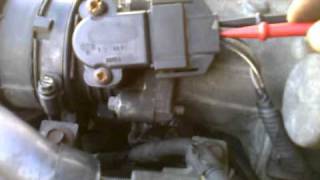
🎬 Watch: A complete walkthrough for testing and replacing your TPS.How do I test my Explorer's TPS?
You can test it with a multimeter. With the sensor plugged in and the key in the 'ON' position (engine off), you back-probe the signal wire. The voltage should be around 0.9-1.0 volts at closed throttle and sweep smoothly up to around 4.5-5.0 volts at wide-open throttle. Any jumps, dead spots, or incorrect voltages indicate a bad sensor.
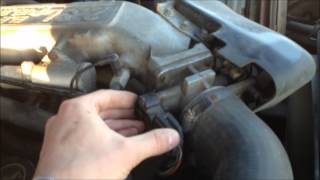
🎬 Watch this 5-minute guide to testing and changing the sensor.Do I need to reset the computer after replacing the TPS?
It is a good practice to disconnect the negative battery terminal for about 15 minutes while you perform the replacement. This will clear any stored fault codes and force the PCM to relearn the new sensor's idle and full-throttle positions. After reconnecting the battery, let the truck idle for a few minutes before driving.
Helpful Videos
Technical Specifications
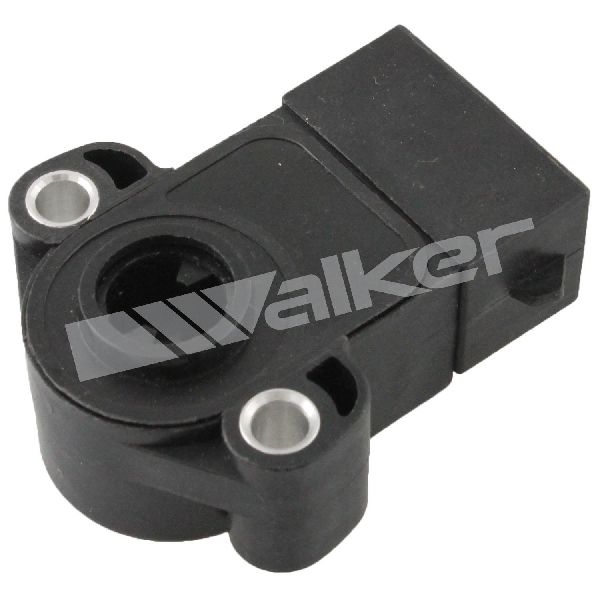
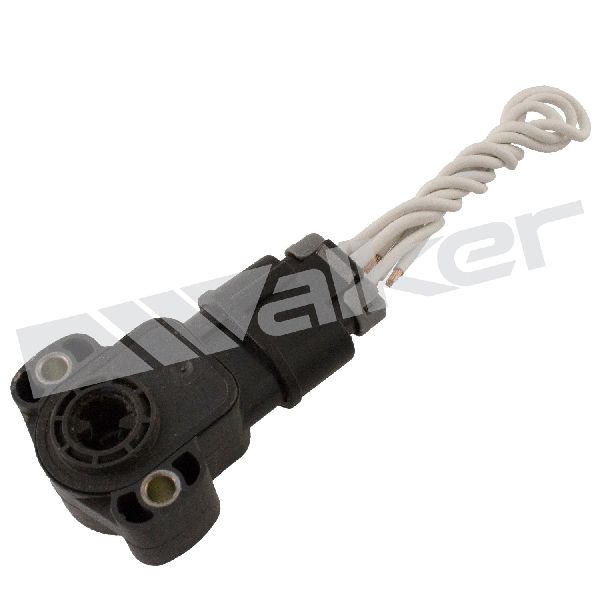
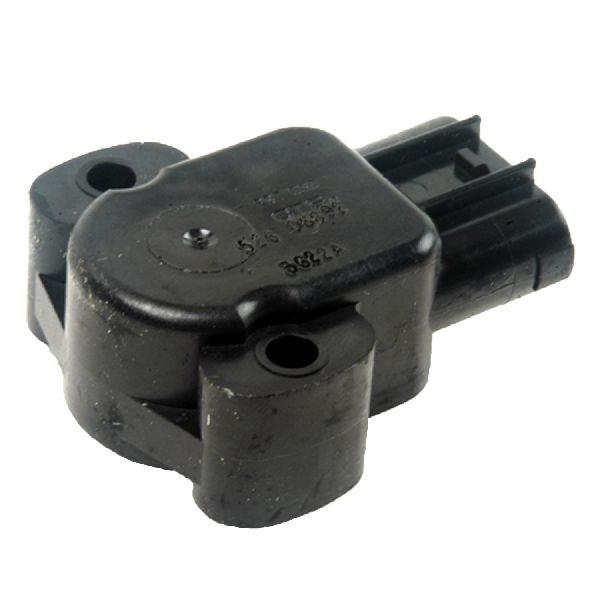
OEM Part Numbers: F57Z-9B989-A CX-1542 F4SZ-9B989-A F4SZ-9B989-AA DY-967 F07F-9B989-BA
3-prong blade male terminal. Mounts to the side of the throttle body with two screws. Rotational potentiometer sensor.
We Have This Part in Stock


The information in this article is provided for general reference and educational purposes only. Vehicle specifications, procedures, and part compatibility can vary by production date, trim level, and region. Always consult your vehicle's factory service manual and verify part numbers before purchasing or performing repairs. Safety-critical components such as airbags, seat belts, and braking systems should be installed by a qualified professional.
- Ford Explorer:
- 🎬 Helpful Videos
- 🛍️ Shop This Part
- What is a Throttle Position Sensor?
- Common Symptoms of a Failing TPS on a Ford Explorer
- No Recalls, But a Common Failure
- Choosing the Right Aftermarket TPS
- Brand Quality Tiers
- Check the Stamp Number
- Cost of Replacing a Ford Explorer TPS
- Frequently Asked Questions (FAQ)
- 🎟️ Get 5% Off