

Choosing the Right Oxygen Sensor for Your 1992-1999 GMC Yukon
Everything a Yukon owner needs to know before buying a new aftermarket oxygen sensor.
- First, confirm your Yukon's year: 1992-1995 models have one O2 sensor, while 1996-1999 models have four.
- For 1996-1999 models, you must identify the exact failing sensor location (e.g., Bank 1, Sensor 1) before ordering.
- Stick with trusted brands like ACDelco, Denso, or NGK/NTK for the best results and longevity.
- A lean code (P0171, P0174) doesn't always mean a bad sensor; check for vacuum or exhaust leaks first.
Is Your Yukon OBD-I or OBD-II? This is Critical.
Before you buy anything, you must know what system your truck has. This is the most common mistake owners make.
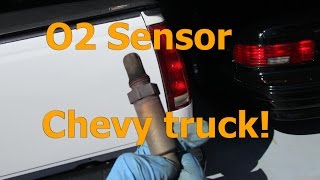
- 1992-1995 Models (OBD-I): These trucks have the Throttle Body Injection (TBI) engine. They use only one oxygen sensor. It is typically a simple 1-wire or 3-wire heated sensor located in the exhaust pipe, often where the two sides merge into a Y-pipe before 🎬 Watch: How to replace O2 sensors on 1988-1995 models the catalytic converter.
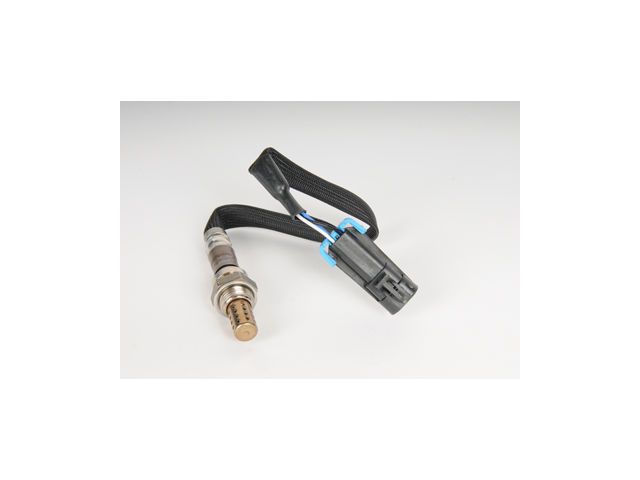
- 1996-1999 Models (OBD-II): These trucks have the newer Vortec engine and a more complex system. They use four oxygen sensors. There are two "upstream" sensors (one on each exhaust manifold before the catalytic converter) and two "downstream" sensors (one on each side after the catalytic converter).
Upstream vs. Downstream (1996-1999)
Upstream sensors (also called Bank 1 Sensor 1 and Bank 2 Sensor 1) are the most important. They are the primary sensors used by the engine computer to control the fuel mixture. Downstream sensors (Bank 1 Sensor 2 and Bank 2 Sensor 2) mainly monitor the health of your catalytic converters. You must order the correct sensor for the specific location; they are often not interchangeable.
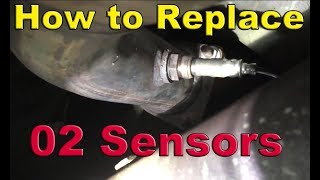
🎬 See this walkthrough for replacing upstream and downstream sensorsSymptoms of a Failing Oxygen Sensor
A bad O2 sensor can make your Yukon run poorly. Common signs include:
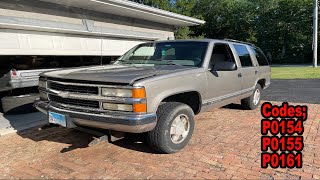
- Check Engine Light: This is the most common symptom. For 1996+ models, codes like P0131, P0135, P0171, or P0174 often point to an O2 sensor or a related issue.
- Poor Fuel Economy: If the sensor is faulty, the engine computer may default to a rich fuel mixture, wasting gas.
- Rough Idle or Engine Misfire: An incorrect air-fuel ratio can cause your engine to shake, hesitate, or run unevenly.
- Failed Emissions Test: A bad O2 sensor will almost certainly cause your truck to fail a smog check.
- Rotten Egg Smell: Excess fuel getting into the exhaust can create a sulfur-like smell and potentially damage the catalytic converter.
Pro-Tip: It Might Not Be the Sensor!
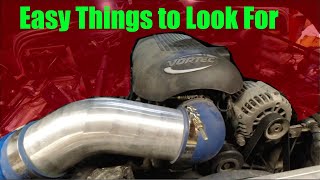
For 1996-1999 Yukons, codes like P0171 (System Too Lean Bank 1) and P0174 (System Too Lean Bank 2) are very common. While this can be a bad O2 sensor, it often means the sensor is doing its job correctly and has detected a vacuum leak. Before replacing sensors, check for cracked vacuum hoses, a leaking intake manifold gasket, or a loose air intake tube. A GM Technical Service Bulletin (TSB) for these codes focuses on finding air leaks, not just replacing sensors.
🎬 Watch: How to find a vacuum leak causing lean codesChoosing the Right Aftermarket Brand
For a critical part like an O2 sensor, brand quality matters. Not all aftermarket sensors are created equal, especially for these GM trucks.
Brand Tiers for Your Yukon
- Tier 1: OEM Quality (Recommended) - ACDelco, Denso, NGK (NTK)
These are the top choices. ACDelco is the original GM parts brand, but for many sensors, they don't manufacture it themselves. The part in the ACDelco box is often a rebranded Denso or NGK/NTK sensor. You can save money by buying the Denso or NGK/NTK equivalent directly. They are known for providing accurate readings and lasting a long time. - Tier 2: Reputable Aftermarket - Delphi, Walker Products
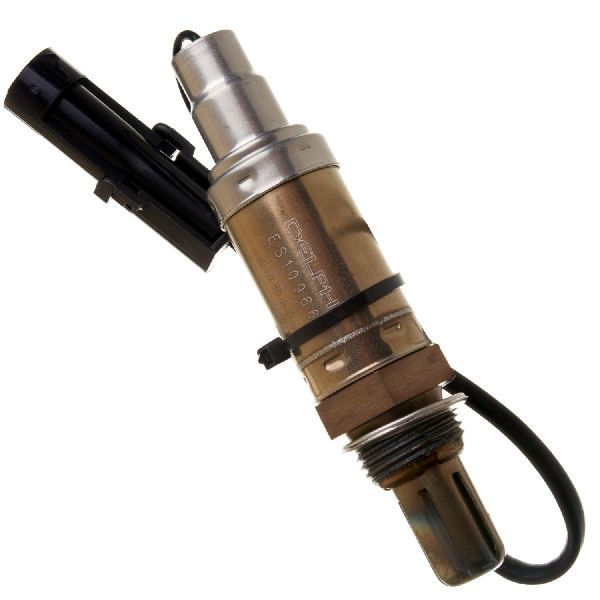
Delphi is another original equipment supplier to GM and is generally a good choice. However, some forum users have reported occasional quality issues with their aftermarket O2 sensors. Walker Products are a common aftermarket brand that generally works well, though some users question their long-term durability compared to Tier 1 brands. - Tier 3: Use with Caution - Bosch
While Bosch is a huge name in auto parts, their O2 sensors have a mixed reputation in GM trucks of this era. Many experienced mechanics and owners on forums advise against using Bosch unless your truck originally came with them. They can sometimes cause minor performance issues without setting a Check Engine Light. - Tier 4: Avoid - Universal & No-Name Brands
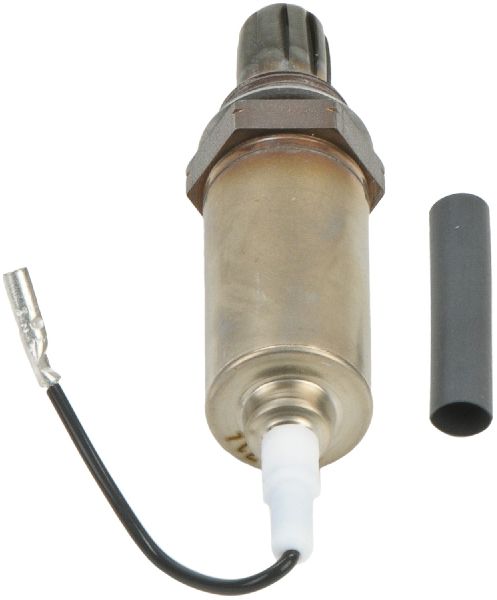
Avoid "universal" sensors that require you to cut and splice wires. Also, steer clear of the cheapest no-name sensors from online marketplaces. They have a very high failure rate and can provide incorrect data to your engine computer, making your truck run even worse.
How Much Should It Cost?
Here is a realistic breakdown of what you can expect to pay. Note that 1996-1999 models have four sensors, so total cost can be higher if you need to replace more than one.
| Item | Estimated Cost |
|---|---|
| New Aftermarket O2 Sensor (Single) | $28 - $112 |
| New OEM O2 Sensor (Single) | $80 - $160 |
| Shop Labor (per sensor) | $100 - $250 |
Costs are estimates. Shop labor can vary widely depending on your location and how difficult the old sensor is to remove. Rusted-in sensors can significantly increase labor time.
Frequently Asked Questions
Can I replace just one oxygen sensor?
Yes. You only need to replace the sensor that has failed. For 1996-1999 models, a diagnostic scan tool will tell you the specific sensor location (e.g., Bank 2, Sensor 1).
Is this a difficult job to do myself?
The job itself is simple: unplug the old sensor, unscrew it, screw in the new one, and plug it in. However, these sensors are often rusted in place and can be extremely difficult to remove without the right tools, like a special O2 sensor socket and a torch for heat. It is considered a DIY-feasible job if you have some experience and the right tools.
Do I need to put anti-seize on the new sensor?
Most new, high-quality oxygen sensors come with anti-seize compound already applied to the threads. If yours does not, it is highly recommended to apply a small amount of high-temperature anti-seize to the threads (but not on the sensor tip!) to make future removal easier.
What's the difference between a 1-wire, 3-wire, and 4-wire sensor?
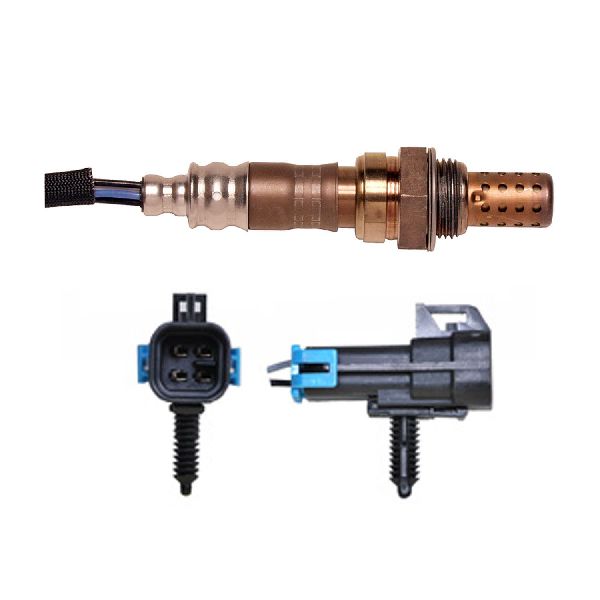
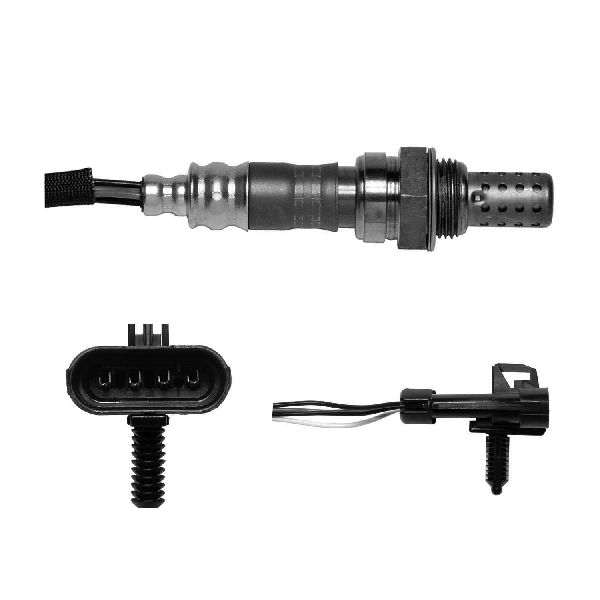
This relates to whether the sensor is heated. The early 1992-1995 models may use a simple 1-wire unheated sensor. Later models use 3-wire or 4-wire heated sensors. The extra wires are for a small internal heater that gets the sensor up to operating temperature faster for more accurate readings on a cold engine. You must use a sensor with the correct number of wires and the correct plug for your vehicle.
Helpful Videos
Technical Specifications
OEM Part Numbers: ACDelco AFS105 ACDelco AFS75 ACDelco 213-2870
Varies by year. 1992-1995 models use a single 1-wire or 3-wire sensor. 1996-1999 models use four 4-wire heated sensors. All use a threaded M18 mounting type.
We Have This Part in Stock


The information in this article is provided for general reference and educational purposes only. Vehicle specifications, procedures, and part compatibility can vary by production date, trim level, and region. Always consult your vehicle's factory service manual and verify part numbers before purchasing or performing repairs. Safety-critical components such as airbags, seat belts, and braking systems should be installed by a qualified professional.
- GMC Yukon:
- 🎬 Helpful Videos
- 🛍️ Shop This Part
- Is Your Yukon OBD-I or OBD-II? This is Critical.
- Upstream vs. Downstream (1996-1999)
- Symptoms of a Failing Oxygen Sensor
- Pro-Tip: It Might Not Be the Sensor!
- Choosing the Right Aftermarket Brand
- Brand Tiers for Your Yukon
- How Much Should It Cost?
- Frequently Asked Questions
- 🎟️ Get 5% Off