

A Practical Guide to the CV Axle Shaft on Your 1992-2003 Audi S4
That clicking sound when you turn could be your S4 asking for a new CV axle; here’s what you need to know.
- A clicking noise on turns is the classic sign of a failing CV axle; don't ignore it.
- On a Quattro S4, a completely broken front axle can leave the car unable to move.
- For longevity, rebuilding an original German axle is often better than using a cheap aftermarket replacement.
- Replacing the full axle assembly is a common, affordable repair, but be aware of quality differences between brands.
Is Your S4's CV Axle Failing? Listen for the Signs
The most common sign of a bad outer CV joint is a rhythmic clicking or popping noise when you make a sharp, slow turn, like in a parking lot. This sound happens because the joint is worn and has developed play. Other symptoms 🎬 Listen to the clicking sound of a failing CV axle. you might notice include:
- Vibrations: A damaged or unbalanced axle can cause a vibration that you feel through the car while driving, which often gets worse as you accelerate.
- Grease Splatter: The CV joints are protected by a rubber boot filled with grease. If this boot tears, grease will be flung onto the inside of your wheel, suspension parts, and undercarriage. This is a clear visual sign of a problem.
- Clunking Noises: A clunk when you accelerate or decelerate can point to a worn inner CV joint, which connects to the transmission.
A Critical Issue for Quattro Owners
If a front CV axle breaks completely on a 1992-2003 S4, the car may not move at all, even though the engine is running. The all-wheel-drive system's center differential will send power to the broken axle—the path of least resistance—leaving you stranded. Do not ignore the warning signs.
Choosing a Replacement: Aftermarket vs. OEM
When it's time to replace a CV axle, you have a few choices. For Audis of this era, there is a significant quality difference between factory parts and many aftermarket options.
- OEM (Original Equipment Manufacturer): Genuine Audi axles, or those from the original supplier like GKN/Loebro, are widely considered the best option for longevity and performance. They are properly balanced to prevent vibration and made from high-quality metals that last. The downside is the high cost.
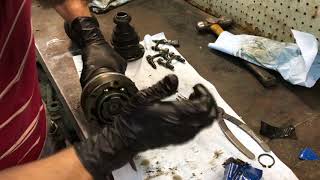
- Rebuilding the Original Axle: If only the boot is torn and the joint isn't making noise yet, you can replace the boot and repack the joint with fresh grease. Many Audi specialists prefer rebuilding an original axle over installing a cheap new one. However, this is a very messy job.
- New Aftermarket Axles: This is the most common and often most affordable choice. It's much easier to replace the entire assembly than to rebuild a joint. Brands like Surtrak offer a direct-fit, budget-friendly solution. While these parts meet basic requirements, they may not have the same durability or precise balancing as OEM axles, which can sometimes lead to a shorter lifespan or vibrations.
Pro Tip: Many experienced owners and mechanics agree: a rebuilt original German axle is often better than a brand-new, low-cost aftermarket axle. If your original axle isn't clicking yet, consider replacing just the boot or having it professionally rebuilt.
Understanding Replacement Costs
The cost to replace a CV axle can vary based on the parts you choose and who does the work. The prices below are estimates for a single axle replacement.
| Part/Service | Estimated Cost |
|---|---|
| New Aftermarket Axle (e.g., Surtrak) | $90 - $162 |
| New OEM Axle | $450 - $700+ |
| Professional Rebuild of Original Axle | $120 - $200 |
| Shop Labor | $180 - $350 |
Frequently Asked Questions
Can I just replace the torn boot?
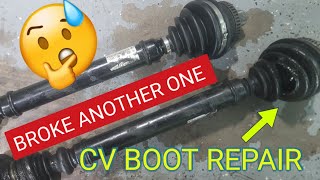
Yes. If the CV joint itself is not yet making any clicking or grinding noises, you can just replace the rubber boot and repack the joint with new grease. This is a cost-effective repair but it is known to be a very greasy and messy job. 🎬 Watch this step-by-step guide to replacing a CV boot. If the joint has been clicking, the damage is already done, and the entire axle should be replaced.
Is it better to replace axles in pairs?
It is not strictly necessary, but it is common practice. The axles on both sides of the car have been subjected to the same amount of wear and tear. If one has failed, the other may not be far behind. Replacing them in pairs can save you a future trip to the shop.
Is replacing a CV axle a DIY job?
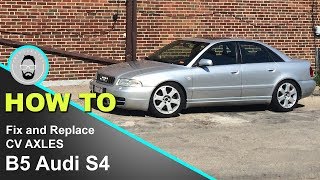
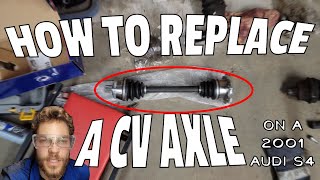
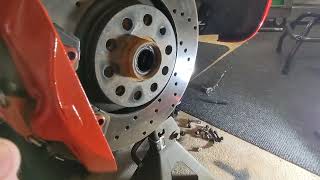
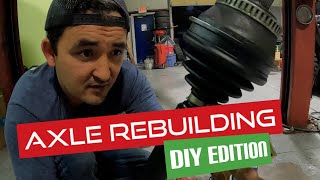
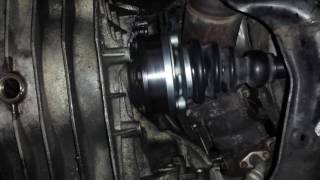
For an experienced home mechanic, yes. It is considered an intermediate-level job. 🎬 See a complete walkthrough of the axle replacement process. You will need special tools like a 14mm or 17mm hex socket for the main axle bolt and a triple square socket set (M10 is common on the B5 S4) for the inner bolts. The "pinch bolt" that holds the upper control arms can be very difficult to remove on these cars.
Are the front and rear axles the same?
No, the front and rear CV axles are different lengths and have different part numbers. The front axles must also accommodate the steering angle. Be sure to order the correct part for the specific location (front left, front right, rear left, or rear right).
Helpful Videos
Technical Specifications
OEM Part Numbers: 8D0407451MX 8E0501203
Replacement requires a triple square socket (commonly M10 for B5 models) for the inner flange bolts and a large hex socket (14mm or 17mm) for the outer axle bolt. The outer axle bolt is a stretch bolt and must be replaced.
We Have This Part in Stock


The information in this article is provided for general reference and educational purposes only. Vehicle specifications, procedures, and part compatibility can vary by production date, trim level, and region. Always consult your vehicle's factory service manual and verify part numbers before purchasing or performing repairs. Safety-critical components such as airbags, seat belts, and braking systems should be installed by a qualified professional.
- Audi S4: