

A Guide to Disc Brake Hardware Kits for the 1992-2003 Audi S4
Don't let worn-out clips and pins ruin your S4's braking performance; here's what you need to know before you buy.
- Always replace brake hardware when changing brake pads to ensure quiet operation and even wear.
- You must buy the correct kit for your S4 generation: C4 (1992-94) and B5 (1997-03) kits are different.
- Symptoms like noise and uneven wear are common signs of failing hardware.
- Quality aftermarket brands like Centric or DFC offer excellent performance and durability for this vehicle.
Why Your S4's Brake Hardware Matters
When performing a brake job on your Audi S4, it's easy to focus only on the pads and rotors. However, the disc brake hardware kit is just as important. This hardware lives in a harsh environment, constantly exposed to extreme heat, moisture, and road salt. Over time, the metal clips lose their spring tension, guide pins can seize from corrosion, and rubber boots can tear. Worn hardware can lead to annoying brake noise, uneven wear on your new pads and rotors, and even cause calipers to stick, which reduces braking effectiveness and generates excess heat.
Critical: Know Your S4 Generation (C4 vs. B5)
The 1992-2003 year range covers two completely different S4 models. It is essential you buy the correct kit for your specific vehicle, as they are not interchangeable.
- C4 Generation (1992-1994): The original S4, based on the Audi 100 chassis.
- B5 Generation (1997-2003): The twin-turbo V6 model, famous for its tuning potential. This model uses a unique HP2 twin-piston front caliper.
Always verify your vehicle's model year before ordering a disc brake hardware kit. A kit for a 1993 S4 will not fit a 2001 S4.
Symptoms of Worn Brake Hardware
Failing brake hardware often mimics other brake problems. If you notice these symptoms, especially after installing new pads, your hardware is a likely culprit.
- Squealing or Grinding: Worn anti-rattle clips can allow brake pads to vibrate, causing high-pitched squeals.
- Rattling or Clicking: Loose-fitting pads can make a clicking or rattling sound, especially over bumps or during initial brake application.
- Uneven Brake Pad Wear: If a caliper cannot slide freely due to a seized guide pin, it will cause the inner or outer brake pad to wear much faster than the other.
- Vehicle Pulling to One Side: A stuck caliper can cause the brake on one wheel to drag, making the car pull to that side when braking or even while driving.
- Spongy or Soft Pedal: While often a sign of air in the brake lines, a stuck caliper can sometimes contribute to an inconsistent or soft pedal feel.
Choosing the Right Aftermarket Hardware Kit
For a vehicle of this age, aftermarket hardware offers excellent value. OEM hardware is always an option, but quality aftermarket brands meet or exceed original specifications for a fraction of the price. Here’s a breakdown of common brands.
Pro Tip: Always replace your brake hardware with every brake pad change. The small cost is cheap insurance for a quiet and effective brake job.
| Brand Tier | Brands | Quality & Materials |
|---|---|---|
| Good (Value) | Carlson, Dorman | These brands provide functional, cost-effective kits that meet basic requirements. They are a good choice for daily driving and budget-conscious repairs. The components are typically zinc-plated steel. |
| Better (OE-Style) | Centric | Centric is a well-regarded name in the aftermarket brake world and is often considered a go-to for reliable, OE-quality fit and performance. Their kits are comprehensive and durable for daily and spirited driving. |
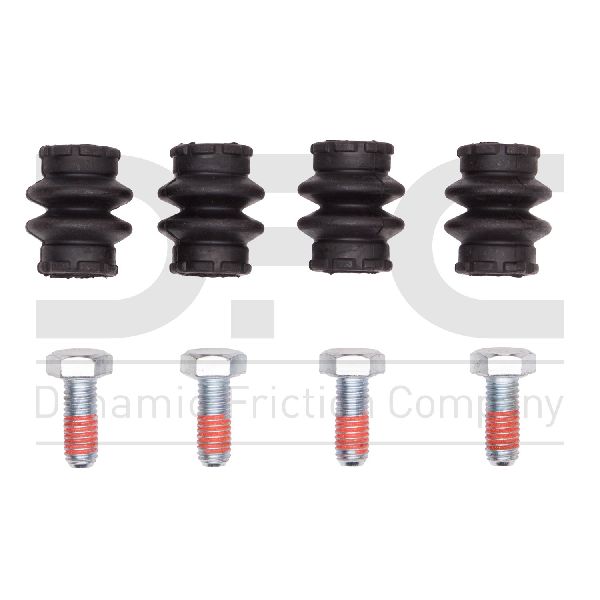
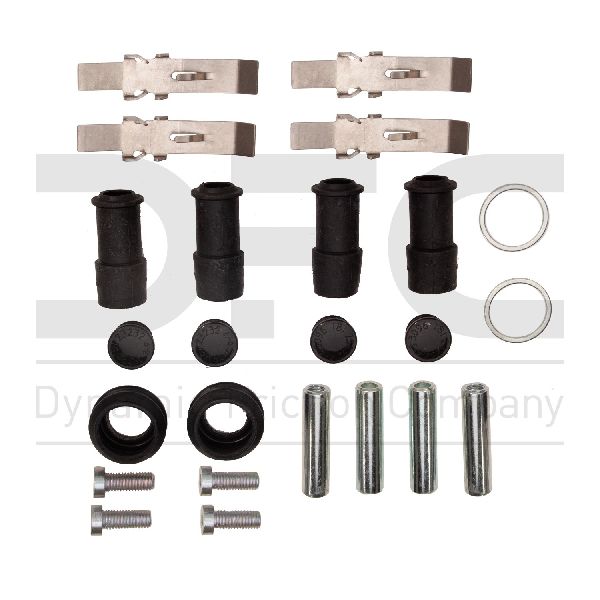
| Best (Premium) | Dynamic Friction (DFC) | For owners seeking the best durability, look for brands that use higher-grade materials. DFC is noted for using more stainless steel components, which offer superior corrosion resistance compared to standard zinc-plated hardware. This is ideal for cars driven in wet climates or areas that use road salt. |
Frequently Asked Questions (FAQ)
Can I reuse my old brake hardware?
It is strongly recommended not to. The metal clips are heat-cycled thousands of times and lose their tension, and guide pins can have hidden corrosion. For the low cost of a new kit, it's not worth risking the performance of your new pads and rotors.
What is typically included in a disc brake hardware kit?
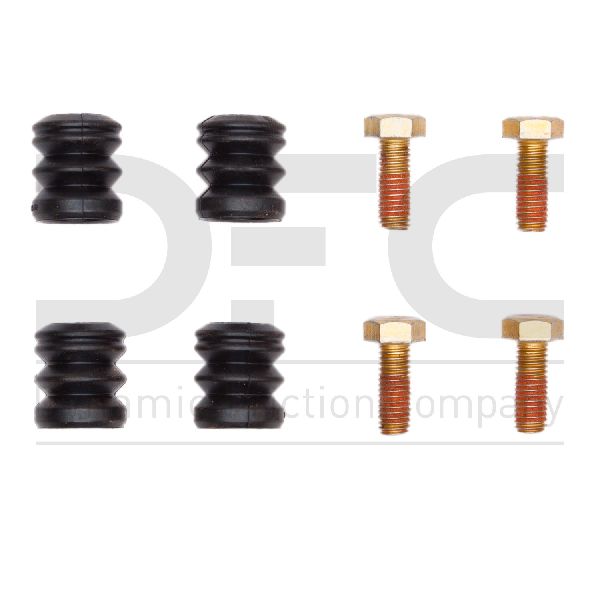
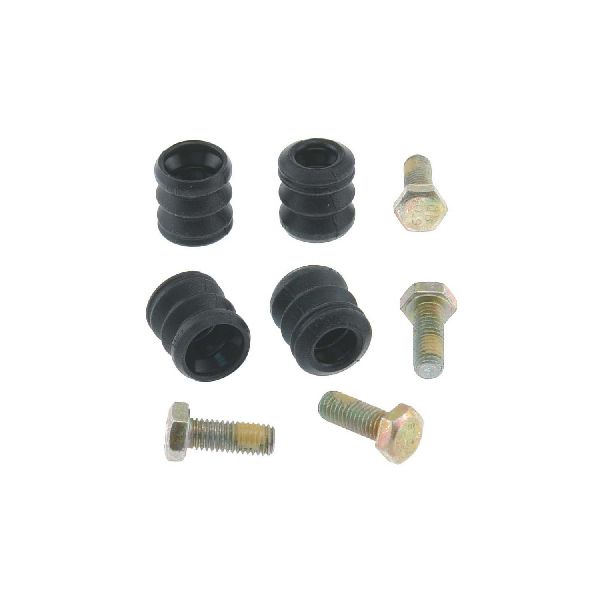
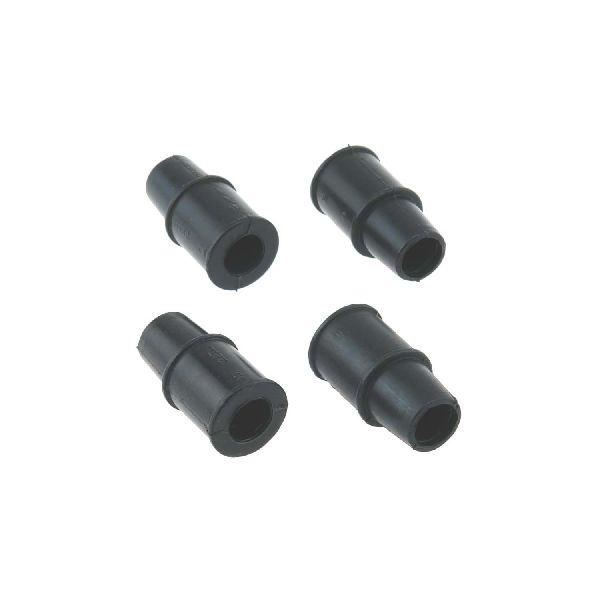
A basic kit includes the necessary anti-rattle clips and springs for two calipers (one axle). More comprehensive kits may also include new caliper guide pins and protective rubber boots. Caliper bolts are not usually included.
Do I need different kits for the front and rear brakes?
Yes. The front and rear brake calipers on the Audi S4 are different sizes and designs. You must purchase separate hardware kits designed specifically for the front or rear axle.
Are there any recalls for the 1992-2003 Audi S4 brakes?
There are no open recalls specifically for the disc brake hardware on these models. A service campaign was issued for a vacuum hose on some 1997-1999 models which could affect brake assist, but it is unrelated to the hardware itself.
Technical Specifications
The B5 generation (1997-2003) Audi S4 is equipped with HP2 twin-piston front brake calipers, which require a specific hardware kit design.
We Have This Part in Stock


The information in this article is provided for general reference and educational purposes only. Vehicle specifications, procedures, and part compatibility can vary by production date, trim level, and region. Always consult your vehicle's factory service manual and verify part numbers before purchasing or performing repairs. Safety-critical components such as airbags, seat belts, and braking systems should be installed by a qualified professional.
- Audi S4: