

Lexus ES300 Ignition Knock Sensor Guide (1992-2003)
Understanding the critical role of knock sensors on your ES300 and why choosing the right replacement is essential.
- This is a very labor-intensive repair; choose a high-quality sensor (NGK, Delphi, Beck Arnley) to avoid repeating the job.
- Always replace both sensors and the short wiring harness at the same time.
- A primary symptom is the Check Engine Light with codes P0325/P0330 and the transmission not shifting into overdrive.
- Due to the high labor cost, this repair is not a good place to save money with a budget part.
Is Your ES300 Knock Sensor Failing?
A bad knock sensor on the 1992-2003 ES300 is a common problem. When one fails, the engine's computer can no longer hear if detonation is happening. To protect the engine, it defaults to a "safe mode," which significantly reduces performance and fuel economy. You will almost certainly get a Check Engine Light with specific trouble codes.
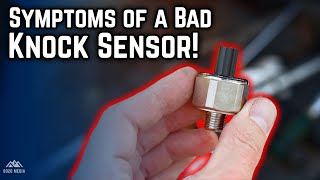
🎬 Watch: Learn more about the common symptoms of a bad sensor.The Replacement Job: Why Part Quality Matters
Replacing the knock sensors on the ES300's 1MZ-FE V6 engine is a difficult and labor-intensive job. The sensors are located deep in the valley of the engine, underneath the entire upper and lower intake manifold assembly. A mechanic must remove many components to access them, making the labor cost much higher than the cost of the parts themselves. Because this job takes 4-6 hours, using a low-quality aftermarket sensor is a huge risk. Many owners and mechanics report that cheap, non-OEM sensors can fail quickly or not work at all, forcing you to pay for the same expensive repair twice. For this specific repair, investing in a high-quality part is the smartest financial decision.
Pro-Tip: Replace in Pairs and More
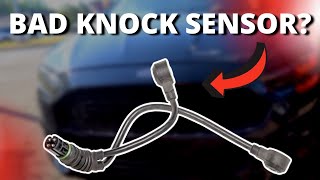
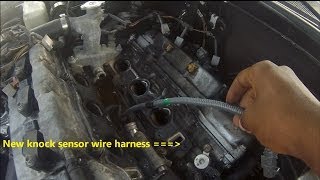
Since the labor is so intensive, it is highly recommended to replace both knock sensors at the same time, even if only one has failed. Also, always replace the short wiring harness that connects the two sensors. This harness becomes brittle from heat and often breaks during the repair, causing the new sensors to fail. 🎬 See the sensor location and why the wiring harness is critical. Many mechanics also suggest replacing the coolant bypass hose that runs through the same area, as it is easily accessible during this job and can prevent future leaks.
Choosing the Right Aftermarket Knock Sensor
While genuine Lexus parts are always a safe bet, several reputable aftermarket brands offer a reliable alternative. Given the difficulty of this repair, it's best to avoid unproven, budget-tier brands.
- Premium Aftermarket (Recommended): Brands like NGK/NTK and Delphi are often original equipment (OE) suppliers for many automakers and have a strong reputation for sensor quality. They are designed to meet the specific voltage requirements of the Lexus ECU, which is a common failure point for cheaper parts.
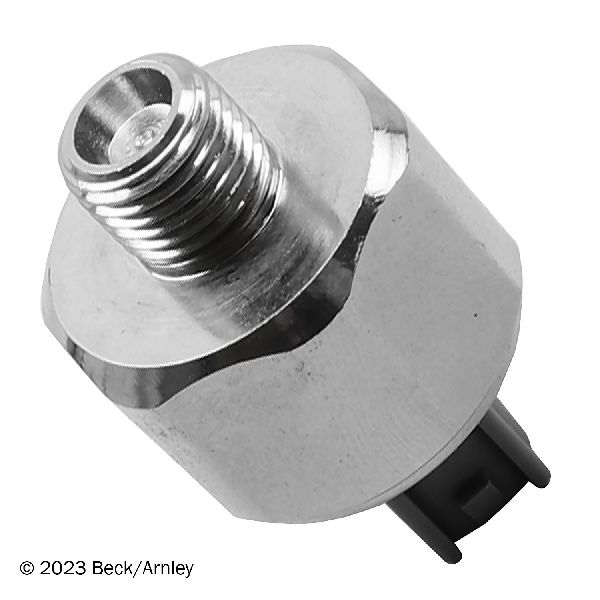
- Standard Aftermarket: Brands like Beck Arnley and Standard Ignition (SMP) are generally considered reliable. Beck Arnley often sources parts from the original manufacturers. These can be a good balance of cost and quality.
- Economy Aftermarket (Use with Caution): Brands like URO Parts have a mixed reputation. While they may be suitable for simple, easy-to-access components, using them for a labor-intensive job like the ES300 knock sensor is risky. Many forum users have reported issues with cheaper sensors causing the check engine light to return.
| Item | Estimated Cost |
|---|---|
| New Aftermarket Sensors (Pair) | $75 - $335 |
| New OEM Sensors (Pair) | $300 - $415 |
| Shop Labor | $305 - $450+ |
| Total Professional Replacement | $511 - $711+ |
Frequently Asked Questions (FAQ)
Can I drive my ES300 with a bad knock sensor?
Yes, but it's not recommended for long. The car's computer will put the engine in a safe or "limp" mode, which means you'll have poor acceleration and bad gas mileage. On the ES300, a common symptom is that the transmission will not shift into overdrive, causing high RPMs at highway speeds.
Why are there two knock sensors?
Your ES300 has a V6 engine, with two banks of three cylinders each. There is one knock sensor for each bank (Bank 1 and Bank 2) to monitor for detonation across the entire engine.
What are the common trouble codes for a bad knock sensor?
The most common codes are P0325 (Knock Sensor 1 Circuit Malfunction - Bank 1) and P0330 (Knock Sensor 2 Circuit Malfunction - Bank 2). These codes indicate a problem with the sensor's circuit, which could be the sensor itself, the wiring harness, or the connection.
Is this a DIY job?
For most home mechanics, this is a very challenging job. It requires removing the upper and lower intake manifolds and dealing with numerous hoses and electrical connectors. It is rated as a difficult repair, and one mistake can lead to vacuum leaks or other issues. This is often best left to an experienced mechanic.
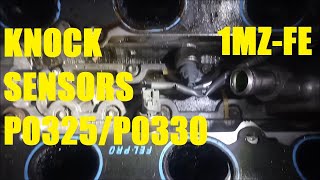
🎬 Watch this step-by-step walkthrough of the 1MZ-FE knock sensor replacement.Were there any recalls for the ES300 knock sensor?
No, there have been no specific recalls issued by Lexus or the NHTSA for the ignition knock sensors on the 1992-2003 Lexus ES300.
Helpful Videos
Technical Specifications
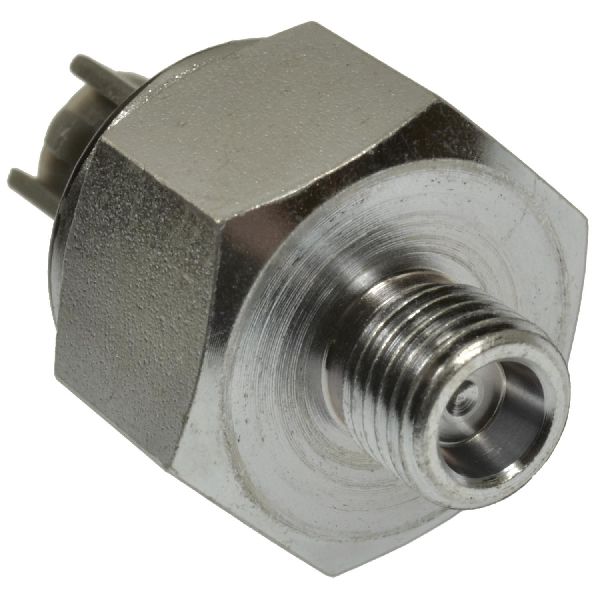
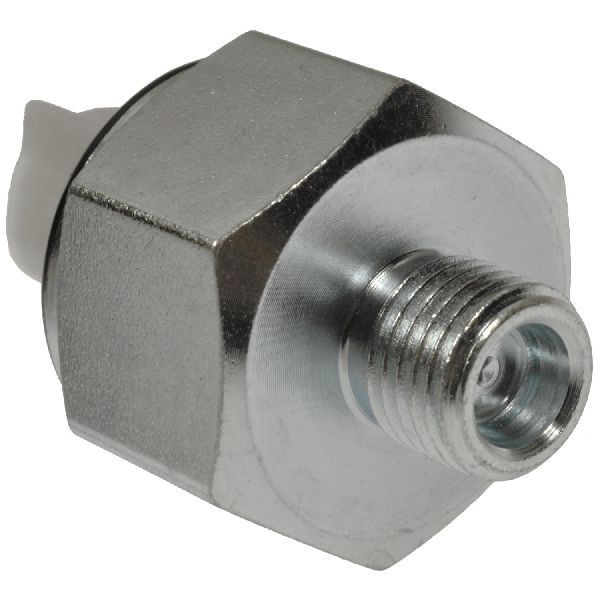
OEM Part Numbers: 89615-12040 89615-12050 89615-12090 89615-33020
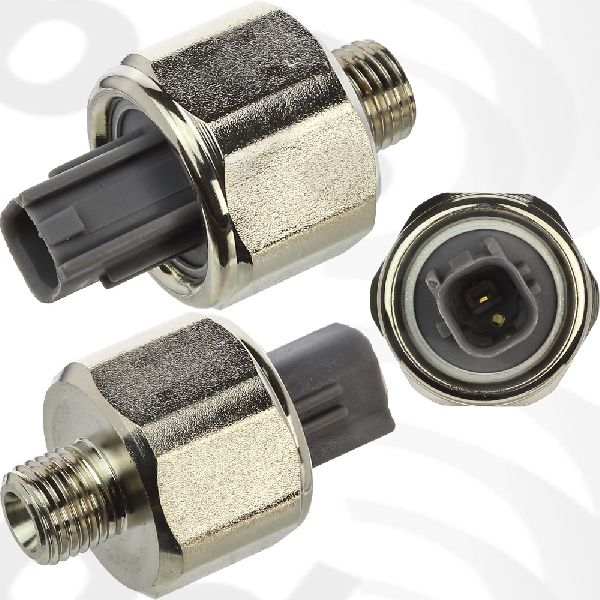
The 1992-2003 Lexus ES300 uses two knock sensors, one for each cylinder bank of the 1MZ-FE V6 engine. They are located under the lower intake manifold.
We Have This Part in Stock


The information in this article is provided for general reference and educational purposes only. Vehicle specifications, procedures, and part compatibility can vary by production date, trim level, and region. Always consult your vehicle's factory service manual and verify part numbers before purchasing or performing repairs. Safety-critical components such as airbags, seat belts, and braking systems should be installed by a qualified professional.
- Lexus ES300: