

Choosing the Right Disc Brake Pads for Your 1993-1997 Subaru Impreza
Don't let worn-out brakes ruin your drive; here's how to pick the best new pads for your first-generation Impreza.
- For most owners, a quality ceramic aftermarket pad from a brand like Akebono or Bosch provides the best mix of quiet operation, low dust, and reliable stopping power.
- Listen for a high-pitched squeal as the first sign of worn pads; a grinding noise means you've waited too long and may be damaging your rotors.
- Replacing brake pads is a straightforward DIY job for this Impreza generation, requiring basic tools and safety precautions.
- There are no major recalls for the brake pads on this vehicle, but be aware of the 'Hill Holder' mechanism on manual models, which can sometimes cause a sticking sensation.
Symptoms of Failing Brake Pads
Your Impreza will give you clear signs when the brake pads are getting low. Ignoring these can lead to more expensive repairs, like needing new rotors or calipers. Be aware of these common symptoms:
- Squealing or Screeching: Most brake pads have a small metal tab called a wear indicator. When the pad material gets too thin, this tab scrapes against the rotor, making a high-pitched squeal when you brake. This is the earliest warning to get your pads checked.
- Grinding Noises: If you hear a harsh grinding sound, it means the brake pads are completely worn out. This is the sound of metal-on-metal contact between the pad's backing plate and the rotor, which can quickly cause serious damage.
- Vibration or Pulsing: If you feel a pulsing or vibration in the brake pedal or steering wheel when you brake, it could mean your rotors have been warped by heat from worn pads.
- Longer Stopping Distances: If your car takes longer to stop than it used to, your brake pads are likely worn and not creating enough friction.
Known Issues for This Generation
While no major recalls or Technical Service Bulletins (TSBs) for brake pads specifically affect the 1993-1997 Impreza, some owners of manual transmission models have reported issues with the "Hill Holder" mechanism. This system can sometimes stick, making it feel like the brakes are engaged when trying to start from a stop on a hill. This is a separate mechanism from the brake pads themselves but is something to be aware of if you experience dragging or sticking sensations.
Choosing the Right Aftermarket Brake Pads
When shopping for new brake pads, you don't need to buy expensive original parts from the dealer to get good performance. Many aftermarket brands offer excellent quality, often with improvements over the original factory pads. The key is to choose the right pad material and brand for your driving style.
Brake Pad Materials: Ceramic vs. Semi-Metallic
For your Impreza, you'll mainly choose between two types of pads:
- Ceramic Pads: These are a great choice for daily driving. They are known for being very quiet, producing very little brake dust (which keeps your wheels cleaner), and having a long life. Brands like Akebono and Bosch are well-regarded for their high-quality ceramic pads.
- Semi-Metallic Pads: These pads contain metal fibers, which help them handle heat better. They offer a stronger bite and better performance in a wider range of temperatures, making them a good option for more spirited driving. However, they tend to be noisier and create more dust than ceramic pads. Brands like Raybestos and EBC offer excellent semi-metallic options.
Pro Tip: For a typical daily-driven 1993-1997 Impreza, a quality set of ceramic pads from a reputable brand offers the best balance of performance, low noise, and long life.
Aftermarket Brand Tiers
The many available brands can be grouped into tiers based on quality and intended use.
| Tier | Description | Brands |
|---|---|---|
| Premium / Performance | Best for enthusiasts who want superior stopping power and heat resistance. May create more dust and noise. | Brembo, EBC Brakes, Powerstop, Hawk |
| Daily Driver (OEM Quality) | Excellent quality for daily driving, offering a great balance of performance, low noise, and durability. Many consider these brands to be as good as or better than original parts. | Akebono, Bosch, Advics, Raybestos, Wagner Brakes, Centric (Premium lines) |
| Economy | Meets basic requirements and is budget-friendly. Good for a car that isn't driven hard or frequently. Quality can be inconsistent. | Pronto, Dynamic Friction, Total Stopping Solutions, some store brands |
Frequently Asked Questions (FAQ)
Do I need to replace my rotors with my brake pads?
Not always. If your rotors are still thick enough (within manufacturer specifications) and aren't warped or deeply grooved, they can often be reused. However, if you feel a pulsation when braking or see heavy scoring, it's best to replace the rotors at the same time for the best performance and safety.
Should I replace front and rear brake pads at the same time?
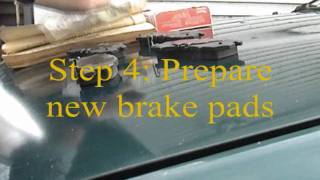
Not necessarily. The front brake pads on your Impreza do most of the stopping work and typically wear out faster than the rear pads. You should replace pads as a set per axle (both front wheels or both rear wheels 🎬 Watch this step-by-step guide to replacing your front brake pads.) but you don't need to do all four at once unless they are all worn out.
What is a brake pad shim and is it important?
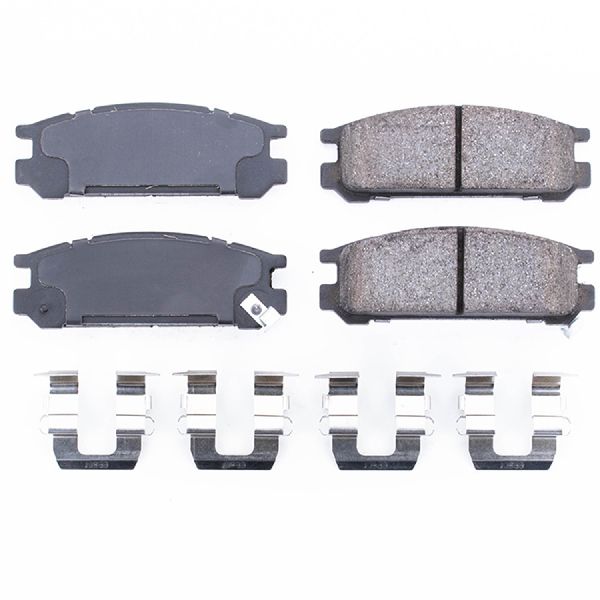
A shim is a thin piece of metal or rubber that fits on the back of the brake pad to help reduce noise and vibration. It's a critical part for quiet braking. Many quality aftermarket pad sets, like those from Centric or Akebono, come with new shims included. Always use new shims when you install new pads.
Do these brake pads have electronic wear sensors?
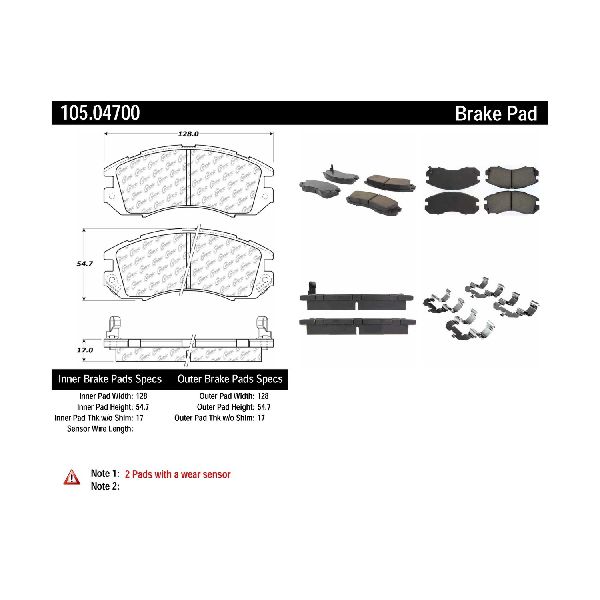
No, the 1993-1997 Subaru Impreza uses a simple mechanical wear indicator, which is a small metal tab that makes a squealing noise when the pads are low. It does not have the electronic sensors found on many newer vehicles.
Helpful Videos
Technical Specifications
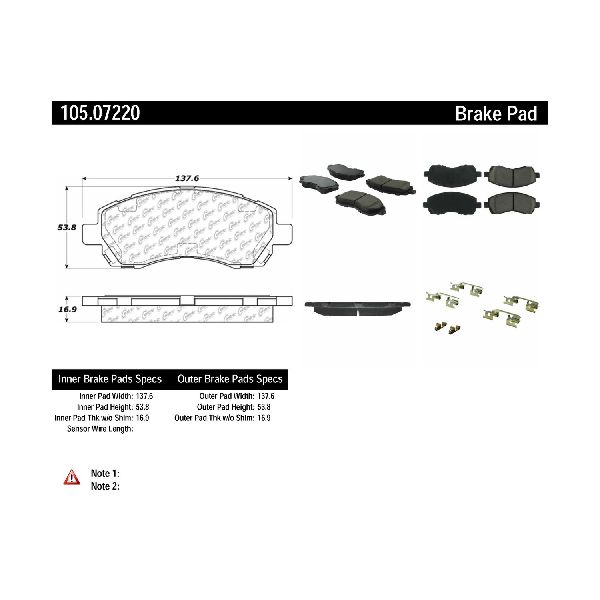
OEM Part Numbers: 105.04700 105.04710
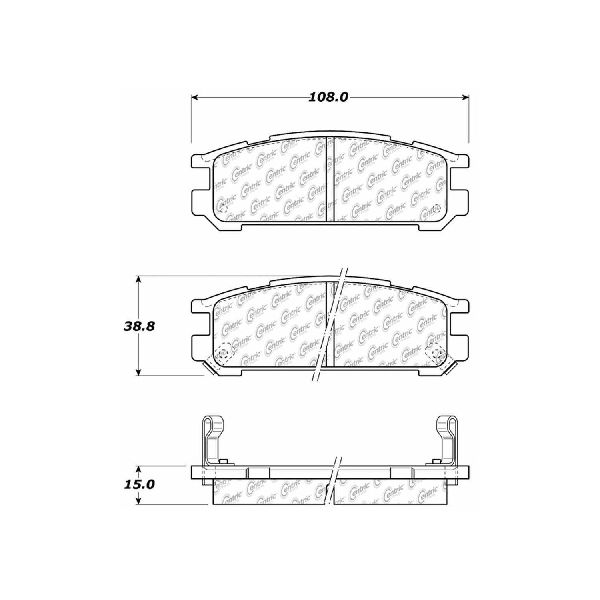
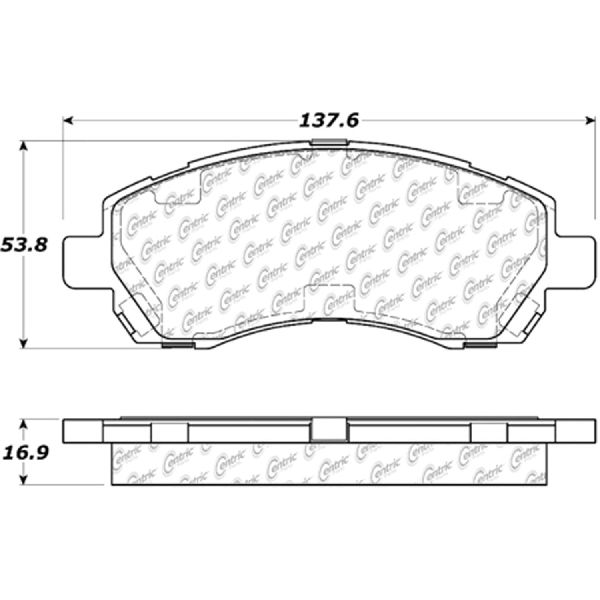
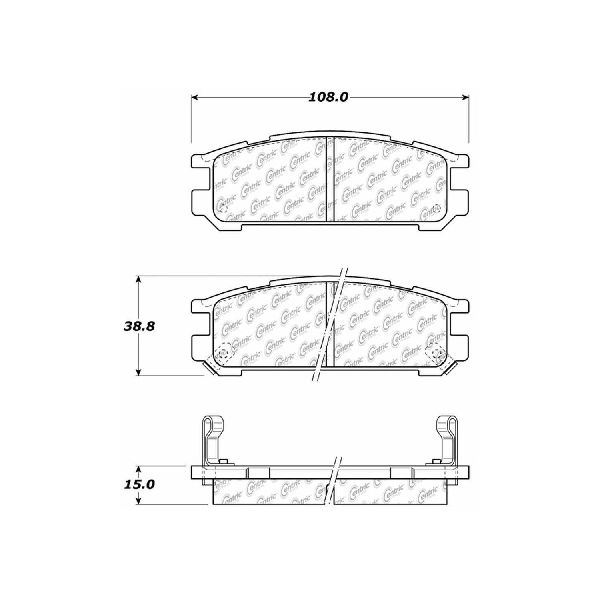
This generation Impreza uses a single-piston sliding caliper for both front and rear disc brakes. It does not use electronic wear sensors, relying on a mechanical audible indicator. Pad shape and size can vary between front and rear, and depending on whether the car was originally equipped with rear disc or rear drum brakes.
We Have This Part in Stock

The information in this article is provided for general reference and educational purposes only. Vehicle specifications, procedures, and part compatibility can vary by production date, trim level, and region. Always consult your vehicle's factory service manual and verify part numbers before purchasing or performing repairs. Safety-critical components such as airbags, seat belts, and braking systems should be installed by a qualified professional.
- Subaru Impreza: