

Toyota T100 Knock Sensor: Replacement Guide for 1993-1998 Models
Learn the symptoms of a failing knock sensor and how to choose the right replacement for your T100's specific engine.
- The replacement job is drastically different for V6 and 4-cylinder engines; identify your engine before buying parts.
- For V6 models, the high labor cost (5-7 hours) makes using a cheap aftermarket sensor a significant risk.
- On V6 engines, it is critical to also replace the short wiring harness (pigtail) at the same time as the sensor.
- The most common trouble code for a failing knock sensor is P0325.
Understanding Knock Sensor Failure
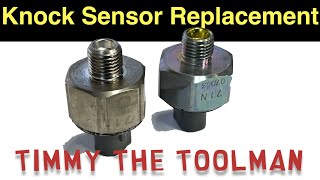
When the knock sensor on a 1993-1998 Toyota T100 fails, the ECU can no longer detect harmful engine knock. To protect the engine, the computer switches to a pre-programmed "safe" mode. This mode significantly retards the ignition timing, which prevents potential damage but results in noticeably poor performance, including sluggish acceleration and lower gas mileage. 🎬 Watch: Learn more about common symptoms of a bad knock sensor. The most common sign of failure is a Check Engine Light with the diagnostic trouble code (DTC) P0325.
V6 vs. 4-Cylinder: A Critical Difference
Before buying any parts, you must know which engine your T100 has. The replacement job is completely different for V6 and 4-cylinder models, which dramatically impacts the cost and choice of part.
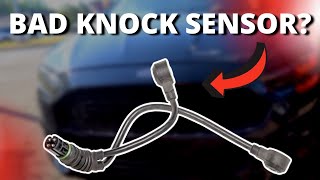
- V6 Engines (3.0L 3VZ-E & 3.4L 5VZ-FE): The knock sensor is located deep inside the engine valley, underneath the lower intake manifold. 🎬 See this walkthrough of the complex V6 knock sensor replacement. This is a difficult and labor-intensive repair that takes a professional mechanic 5 to 7 hours. Because the labor cost is so high, using a cheap, low-quality aftermarket sensor is a major gamble. If it fails early, you will have to pay for the entire job a second time.
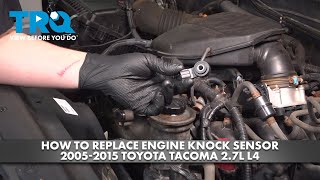
- 4-Cylinder Engine (2.7L 3RZ-FE): The knock sensor is located on the side of the engine block. 🎬 Watch: How to replace the sensor on a 2.7L 4-cylinder engine. It is much easier to access, and the replacement can typically be done in about one hour.
Choosing the Right Aftermarket Knock Sensor
For this part, the quality of the sensor matters, especially on V6 models. While budget-friendly aftermarket brands like 'Replacement' are available, owners should weigh the risks.
- For V6 Owners: Due to the 5+ hours of labor required, it is strongly recommended to use an OEM or a top-tier aftermarket sensor. Forum discussions with Toyota owners show that cheap aftermarket sensors have a higher failure rate, which can lead to repeating this very expensive repair. It is also critical to replace the short wiring harness (pigtail) that connects to the sensor at the same time. This harness becomes brittle from heat and is a common point of failure.
- For 4-Cylinder Owners: Because the labor is simple and takes only about an hour, a budget-friendly aftermarket sensor is a much lower risk. If the part were to fail, the cost to replace it again is minimal compared to the V6 job.
Cost to Replace a 1993-1998 Toyota T100 Knock Sensor
| Item | Estimated Cost |
|---|---|
| New OEM Sensor | $140 - $265 |
| New Aftermarket Sensor (Replacement Brand) | $27.90 - $28.13 |
| Shop Labor (4-Cylinder) | $100 - $150 |
| Shop Labor (V6) | $550 - $850+ |
| Total V6 Job (Aftermarket Part + Labor) | $580 - $880+ |
| Total 4-Cyl Job (Aftermarket Part + Labor) | $128 - $179 |
Pro Tip: For V6 engines, always replace the knock sensor wiring harness (pigtail, part #82219-34010) when you replace the sensor. This small, relatively inexpensive part is buried under the intake manifold and is a common failure point that can trigger the same P0325 code.
Frequently Asked Questions (FAQ)
Where is the knock sensor located on the Toyota T100?
On V6 models, the sensor is under the lower intake manifold. On 4-cylinder models, it is on the driver's side of the engine block.
Can I replace the knock sensor myself?
For a 4-cylinder engine, the replacement is straightforward and feasible for a DIY mechanic. For a V6 engine, the job is very advanced, requiring the removal of the entire intake manifold assembly. It is not recommended for beginners.
What happens if I ignore a bad knock sensor?
Your truck's computer will default to safe settings, causing poor acceleration and high fuel consumption. While the goal is to protect the engine, if a true engine knock condition occurs and is not detected, it could lead to serious internal engine damage over time.
What is code P0325?
P0325 stands for "Knock Sensor 1 Circuit Malfunction (Bank 1)". It means the engine computer has detected a problem in the electrical circuit for the knock sensor, which could be the sensor itself, the wiring, or the connector.
Were there any recalls for the T100 knock sensor?
No, searches of the NHTSA database and other sources did not find any recalls or specific Technical Service Bulletins (TSBs) for the knock sensor on the 1993-1998 Toyota T100.
Helpful Videos

Technical Specifications
OEM Part Numbers: 89615-12040 89615-12090 89615-12050 89615-50010
The knock sensor for the Toyota T100 is a piezoelectric sensor. The V6 (5VZ-FE) engine requires a specific harness (pigtail), part number 82219-34010, which is known to become brittle and fail.

The information in this article is provided for general reference and educational purposes only. Vehicle specifications, procedures, and part compatibility can vary by production date, trim level, and region. Always consult your vehicle's factory service manual and verify part numbers before purchasing or performing repairs. Safety-critical components such as airbags, seat belts, and braking systems should be installed by a qualified professional.
- Toyota T100: