

Pontiac Grand Am Ignition Module Guide: 1993-2005
Solve stalling, misfires, and no-start issues by understanding your Grand Am's ignition module.
- A failing ignition module commonly causes stalling, misfiring, or a no-start condition in your Grand Am.
- Do not confuse the ignition *module* with the ignition *switch*, which was part of a major recall for engine stalling.
- This is a DIY-friendly repair that can be done with basic tools in about an hour.
- Consider spending slightly more for a reputable aftermarket brand to avoid premature failure and repeat repairs.
Is Your Grand Am's Ignition Module Failing?
A bad ignition module in a 1993-2005 Pontiac Grand Am can cause a range of frustrating engine problems that often seem to appear without warning. Because the module is responsible for spark timing, its failure can mimic other issues, like bad spark plugs or ignition coils. Heat is a major enemy of these modules, and after years of service, the internal electronics can break down, leading to inconsistent performance that gets worse as the engine warms up.
Common Symptoms of a Bad Ignition Module
- Engine Misfires: The engine may shake or shudder, especially while idling or accelerating. This is often one of the first signs.
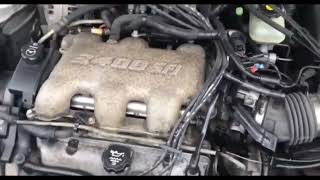
- Car Won't Start: You'll hear the engine crank, but it never fires up because there's no spark getting to the plugs. 🎬 Watch this DIY diagnosis for a Grand Am crank-no-start issue.
- Stalling: The engine may stall unexpectedly while driving, particularly at low speeds or when stopped. This can become a serious safety issue.
- Poor Acceleration: The car may feel sluggish and lack power when you press the gas pedal.
- Check Engine Light: A failing module can trigger the check engine light. A common code is P0300 for random or multiple cylinder misfires.
Important Recall Notice Clarification
Many Grand Am owners are aware of a major recall (NHTSA #14V400000) related to the ignition. It's crucial to know this recall is for the ignition SWITCH (the part your key turns in the steering column), not the ignition control MODULE. The recall addresses an issue where a heavy keychain could cause the switch to turn off while driving, disabling the engine and airbags. This is a separate part and problem from a failing ignition module.
Choosing the Right Aftermarket Ignition Module
When shopping for a new aftermarket ignition module, you'll find a wide range of prices and brands. While budget-friendly options are tempting, experience shows that cheaper, unbranded electronic parts have a higher failure rate. Since replacing the module takes time, choosing a more reliable part from the start can save you from doing the job twice.
For a vehicle like the Grand Am, a quality aftermarket part from a recognized brand offers a good balance of price and reliability. Brands like Standard Motor Products (SMP) and Delphi are well-known in the industry and are often a solid choice over no-name parts. The key is to select a part from a manufacturer with a reputation for quality control, which ensures the internal electronics can withstand engine heat and vibration for years to come.
Pro Tip: Diagnose Before You Replace
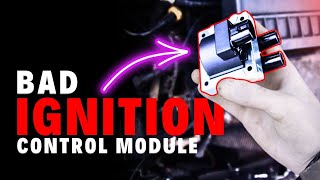
The symptoms of a bad ignition module can also be caused by failing ignition coils or old spark plugs. One owner reported replacing coils and plugs first, only to find the module was the true cause of a persistent misfire. If possible, have the module tested at an auto parts store. Many stores can test these components to confirm they are faulty before 🎬 Watch how to test for symptoms of a bad module. you spend money on a replacement.
Estimated Replacement Costs
The cost to replace an ignition module depends on whether you do it yourself or have a professional mechanic perform the work.
| Part & Labor | Estimated Cost |
|---|---|
| New Aftermarket Ignition Module | $62 - $77 |
| Shop Labor | $85 - $150 |
| Total Estimated Cost (At a Shop) | $147 - $227 |
Frequently Asked Questions (FAQ)
Can I drive with a bad ignition module?
It is not recommended. A failing module can cause the engine to stall at any time, which is a significant safety risk, especially in traffic. It's best to get the vehicle repaired as soon as symptoms appear.
Is replacing the ignition module a DIY job?
Yes, for many DIY mechanics, this is a manageable job. The module is typically located on top of the engine, mounted with the ignition coils. It usually requires basic hand tools like a socket set. The difficulty is low to moderate, and it can typically be completed in under an hour.
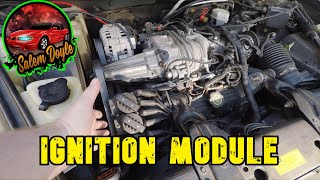
🎬 See this step-by-step walkthrough for replacing the ignition control module.Does the ignition module need to be programmed?
No, for the 1993-2005 Pontiac Grand Am, the ignition control module is a direct replacement part and does not require any special programming. You can simply install the new part and start the vehicle.
What is the difference between the ignition module and the ignition coils?
The ignition module is the electronic controller that tells the coils when to fire. The ignition coils are transformers that convert the car's 12-volt power into the high voltage needed for the spark plugs. On many Grand Am engines, the coils are mounted directly on top of the module.
Helpful Videos
Technical Specifications
OEM Part Numbers: 10489422 19179595 DR145 LX346
Varies by engine (2.2L, 2.3L, 2.4L, 3.1L, 3.3L, 3.4L). The module is an electronic, solid-state component that typically mounts underneath the ignition coil pack(s).

The information in this article is provided for general reference and educational purposes only. Vehicle specifications, procedures, and part compatibility can vary by production date, trim level, and region. Always consult your vehicle's factory service manual and verify part numbers before purchasing or performing repairs. Safety-critical components such as airbags, seat belts, and braking systems should be installed by a qualified professional.
- Pontiac Grand Am: