

Jeep Grand Cherokee (1993-2006) Engine Crankshaft Position Sensor Guide
Don't let a failing crankshaft sensor leave you stranded; here's how to choose the right replacement for your Grand Cherokee.
- A failing sensor causes critical issues like no-starts or sudden stalling, especially when the engine is hot (heat soak).
- This is a notoriously difficult part to replace due to its location; expect a frustrating job.
- Owner consensus strongly recommends using a Mopar or NTK brand sensor to avoid repeating the difficult installation.
- The sensor location is different for I6 and V8 engines, and can vary between ZJ, WJ, and WK generations.
Is Your Grand Cherokee Stalling? It Might Be the Crankshaft Sensor
A failing crankshaft position sensor is one of the most common reasons a 1993-2006 Jeep Grand Cherokee will crank but not start, or suddenly stall. This sensor lives in a high-heat, high-vibration environment at the back of the engine, and failure is common as these vehicles age. When it fails, it leaves your engine guessing, leading to serious and sudden driveability problems.
Known Issue: Heat Soak Failure
A very common problem for the Grand Cherokee is "heat soak." The sensor works fine when the engine is cold, but after driving for a while and shutting the engine off, it won't restart. After the engine cools down for 30-60 minutes, it starts up again. This happens because heat increases the sensor's internal resistance, causing the signal to become weak or disappear entirely until it cools off. Replacing the sensor is the only fix.
Symptoms of a Failing Crankshaft Position Sensor
A bad crank sensor can cause several problems, some of which can be dangerous if they happen while driving. Look out for these signs:
- Engine Cranks but Won't Start: This is the most common symptom. The starter will turn the engine over, but it will never fire up because the PCM isn't getting a signal. 🎬 Watch this diagnostic guide for a Jeep that cranks but won't start.
- Sudden Engine Stalling: The engine may cut out for no reason while driving, especially when it's hot. This can result in a dangerous loss of power.
- Rough Idle or Misfiring: An erratic signal can confuse the PCM, leading to incorrect timing that causes the engine to run poorly and misfire.
- Check Engine Light: A failing sensor will often trigger the Check Engine Light. Common trouble codes include P0320 (No Crank Reference Signal at PCM) and P0335 (Crankshaft Position Sensor Circuit Malfunction).
- Poor Acceleration: The engine may feel sluggish or hesitate when you press the gas pedal.
Choosing the Right Aftermarket Sensor: A Tiered Approach
This is one of the few parts where brand choice is critical. The replacement job is difficult and frustrating, so you don't want to do it twice. Jeep owner forums are filled with stories of cheap sensors failing immediately or within a few months.
Tier 1: OEM & Premium Aftermarket
These are the most recommended options for reliability and peace of mind.
- Mopar: This is the original factory part. It offers the best fit and longest life. While it's the most expensive option, many owners feel it's worth the price to avoid repeat failures.
- NGK / NTK: NGK (under their NTK brand for sensors) is widely believed to be the original equipment manufacturer for Mopar on many Jeep sensors. They are considered the best aftermarket alternative, offering OEM quality at a slightly lower price.
- Standard Motor Products (SMP): A well-respected aftermarket brand that generally produces reliable sensors. It's a solid choice if Mopar or NTK are not available.
Tier 2: Reputable Aftermarket
These brands are widely available and can be a good balance of cost and quality, but may have less consistent track records than Tier 1.
- Delphi: A major OEM supplier for many car manufacturers, Delphi generally produces quality parts.
- Hitachi: Another respected OEM supplier known for quality electronics.
- Dorman: Known for providing a wide range of aftermarket solutions, quality can sometimes be inconsistent but they are a popular choice.
Tier 3: Value & Budget Brands
This category includes many of the other brands available, often at very low prices. While brands like Walker, Holstein, or Spectra can offer significant savings, they carry a higher risk of being dead-on-arrival or failing prematurely. For a part this difficult to install, most experienced Jeep owners recommend avoiding the cheapest options.
A Note on Generations & Engines
The sensor's location varies significantly. Always confirm the location for your specific year and engine before starting.
- ZJ (1993-98) 4.0L I6: Driver's side of the bellhousing.
- ZJ (1993-98) 5.2L/5.9L V8: Passenger's side of the bellhousing.
- WJ (1999-04) 4.0L I6: Driver's side, notoriously difficult. Access is sometimes possible through an interior panel on the driver's side floor.
- WJ (1999-04) 4.7L V8: Located on the bottom of the engine; the starter must be removed for access.
- WK (2005-06) 3.7L/4.7L/5.7L: Typically on the passenger side rear of the engine block.
Cost of Replacing the Crankshaft Position Sensor
| Part Type | Estimated Cost |
|---|---|
| New OEM (Mopar) | $90 - $150 |
| New Aftermarket | $18 - $149 |
| Shop Labor | $150 - $300 |
Cost estimates are approximate and can vary by region and vehicle specifics.
Frequently Asked Questions
Where is the crankshaft position sensor located?
It's located at the rear of the engine, mounted to the transmission bellhousing. The exact position (driver's or passenger's side) depends on your engine (4.0L, 4.7L, 5.2L, 5.7L, 5.9L) and your Grand Cherokee's generation (ZJ, WJ, or WK).
Is it difficult to replace the crankshaft position sensor myself?
Yes, this is considered a difficult and frustrating job for a DIY mechanic. Access is extremely tight, requiring long socket extensions, swivel joints, and a lot of patience. For V8 models, you may need to remove other components like the starter to gain access.
Do I really need to buy an expensive Mopar or NTK sensor?
While not required, it is highly recommended by experienced Jeep owners. Cheaper sensors have a high rate of early failure, and since the labor is so difficult, you don't want to risk having to do the job again in a few months.
The new sensor has a paper spacer on the tip. Should I remove it?
No, do not remove the paper spacer. It is designed to set the correct air gap between the sensor and the crankshaft's tone wheel. The paper will harmlessly shear off the first time the engine starts.
Were there any recalls for this part on my 1993-2006 Grand Cherokee?
No. While there have been recalls related to the crankshaft sensor *tone wheel* on much newer (2014+) Grand Cherokees with diesel engines, no such recalls were issued for the 1993-2006 model years covered in this guide.
Helpful Videos
Technical Specifications
OEM Part Numbers: 56027868AC 56027870 68569185AA 56028666AB 56028815AB
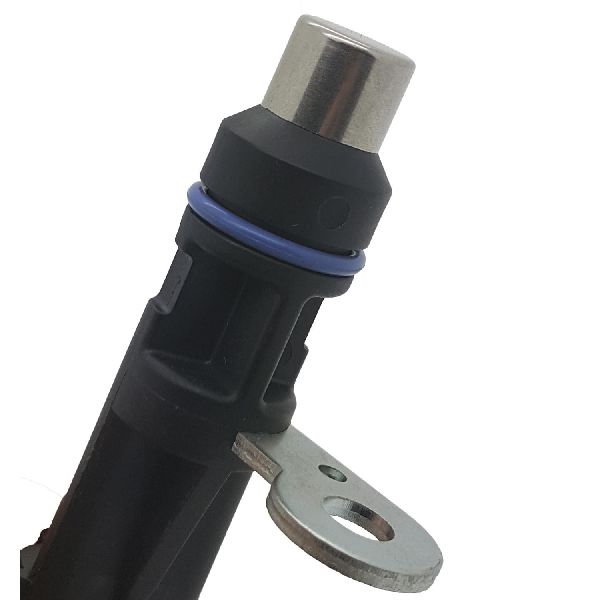
This is a hall-effect sensor that reads the position of the crankshaft via a tone wheel mounted to the flexplate or flywheel. It is typically secured with one or two bolts to the transmission bellhousing. The electrical connector is a 3-pin design.
We Have This Part in Stock


The information in this article is provided for general reference and educational purposes only. Vehicle specifications, procedures, and part compatibility can vary by production date, trim level, and region. Always consult your vehicle's factory service manual and verify part numbers before purchasing or performing repairs. Safety-critical components such as airbags, seat belts, and braking systems should be installed by a qualified professional.
- Jeep Grand Cherokee:
- 🎬 Helpful Videos
- 🛍️ Shop This Part
- Is Your Grand Cherokee Stalling? It Might Be the Crankshaft Sensor
- Known Issue: Heat Soak Failure
- Symptoms of a Failing Crankshaft Position Sensor
- Choosing the Right Aftermarket Sensor: A Tiered Approach
- Tier 1: OEM & Premium Aftermarket
- Tier 2: Reputable Aftermarket
- Tier 3: Value & Budget Brands
- A Note on Generations & Engines
- Cost of Replacing the Crankshaft Position Sensor
- Frequently Asked Questions
- 🎟️ Get 5% Off