

1994-1998 Honda Accord Automatic Transmission Input Shaft Speed Sensor Guide
Solve erratic shifting and check engine lights by understanding this critical transmission sensor in your Accord.
- A failing input shaft speed sensor is a common issue on 1994-1998 Accords, causing shifting problems and a P0715 code.
- Symptoms include harsh shifting, a flashing D4 light, and an erratic speedometer.
- Replacement is a simple DIY job, accessible from the top of the engine bay after removing the air intake hose.
- Using a quality aftermarket brand like Beck Arnley or Standard Ignition is a cost-effective alternative to OEM.
Is your 1994-1998 Honda Accord shifting strangely?
If your automatic transmission is acting up, a common culprit is a failing input shaft speed sensor. This sensor is a known failure point on this generation of Accord, but it's straightforward to diagnose and replace. Ignoring it can lead to more serious transmission problems and leave you stranded.
Symptoms of a Failing Input Shaft Speed Sensor
A bad sensor will give your car's computer confusing signals, resulting in noticeable problems. Here’s what to look for:
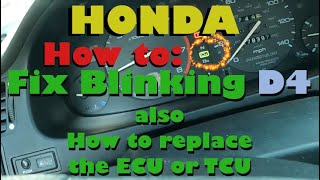
- Check Engine Light or Flashing D4 Light: This is often the first sign. The most common trouble code is P0715, which points directly to a problem in the 🎬 Watch: How to diagnose flashing D4 light trouble codes. mainshaft/input speed sensor circuit.
- Harsh or Erratic Shifting: The car may slam into gear, hesitate between shifts, or shift at the wrong times.
- Stuck in One Gear: The transmission may go into "limp mode" to protect itself, getting stuck in 2nd or 3rd gear. This results in poor acceleration and high RPMs at faster speeds.
- Speedometer Not Working: The speedometer may behave erratically or stop working completely.
- Cruise Control Failure: If the car can't determine its speed accurately, the cruise control will not work.
Choosing the Right Aftermarket Sensor
For a critical part like a transmission sensor, quality matters. While an OEM Honda sensor is always a safe bet, quality aftermarket parts can offer significant savings. For the 1994-1998 Accord, here's what to know about the available brands:
- Beck Arnley: This brand has a long history of providing parts that match original equipment (OE) form, fit, and function. They often work with a network of global partners to source parts, which sometimes means re-boxing the same part Honda used. For many Honda owners, Beck Arnley is a trusted choice for sensors.
- Standard Ignition (SMP): Standard is a well-known aftermarket manufacturer. Their quality can vary; you might get a re-boxed OE part or a part made in-house. They are generally considered a reliable option and are widely available.
Pro Tip: While budget-friendly sensors from online marketplaces are tempting, they can be a gamble. A faulty replacement sensor can cause the same problems, leading you to waste time and money on a second repair. Sticking with a reputable aftermarket brand like Beck Arnley or Standard Ignition is a safer investment.
Typical Replacement Costs
The cost to replace the input shaft speed sensor depends on whether you do it yourself or take it to a shop.
| Part/Service | Estimated Cost |
|---|---|
| New Aftermarket Part | $76.49 - $188.60 |
| Shop Labor | $100 - $180 |
| Total Professional Repair | $176 - $369 |
Frequently Asked Questions
Where is the input shaft speed sensor located?
On the 1994-1998 Accord with an automatic transmission, the input shaft (mainshaft) speed sensor is located on the top of the transmission housing. You can see it by looking down between the engine and the firewall, usually near the distributor. You will likely need to remove the air intake hose to get clear access to it.
Can I replace this sensor myself?
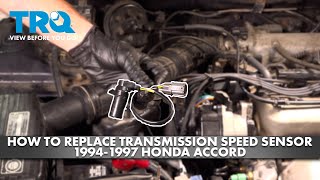
Yes, this is a very DIY-friendly repair. The job requires basic hand tools like a 10mm socket, a ratchet with an extension, and pliers. After removing the air intake tube for access, you simply disconnect the electrical connector, remove one 10mm bolt, and pull the old sensor out. 🎬 See this step-by-step walkthrough for replacing the sensor. Always apply a little transmission fluid or silicone lubricant to the O-ring on the new sensor before installation to ensure a good seal.
What happens if I don't replace a bad sensor?
Continuing to drive with a faulty speed sensor can cause long-term damage. The constant harsh shifting and high RPMs put extra stress on the transmission's internal clutches and gears. What starts as a simple sensor issue could eventually lead to a complete transmission failure, which is 🎬 Watch: What to do if a new sensor doesn't fix the D4 light. a much more expensive repair.
Is the input sensor the same as the output sensor?
No, they are different parts, though they may look similar. The input (mainshaft) sensor measures the speed of the shaft coming from the engine, while the output (countershaft) sensor measures the speed of the shaft going out to the wheels. The computer compares both signals to control shifting and operate the speedometer. They are not interchangeable.
Are there any recalls for this sensor?
No, there are no specific recalls or Technical Service Bulletins (TSBs) from Honda or the NHTSA for the automatic transmission input shaft speed sensor on the 1994-1998 Accord.
Helpful Videos
Technical Specifications
OEM Part Numbers: 28820-P0Z-004
This sensor is a magnetic pickup that generates a signal based on the rotation of the transmission's mainshaft. It is secured by a single 10mm bolt and uses a 2-pin electrical connector.
We Have This Part in Stock


The information in this article is provided for general reference and educational purposes only. Vehicle specifications, procedures, and part compatibility can vary by production date, trim level, and region. Always consult your vehicle's factory service manual and verify part numbers before purchasing or performing repairs. Safety-critical components such as airbags, seat belts, and braking systems should be installed by a qualified professional.
- Honda Accord: