

Your Guide to the 1994-2001 Ford Mustang Vehicle Speed Sensor
If your speedometer is acting up or your cruise control is dead, the Vehicle Speed Sensor is the likely culprit.
- A faulty VSS is the most common cause of speedometer and cruise control issues in 1994-2001 Mustangs.
- For automatic models, a bad VSS can cause significant and potentially damaging shifting problems.
- Always check the plastic drive gear on the sensor; it can fail and is cheaper to replace than the entire sensor.
- Ensure you buy the correct sensor for your specific transmission (manual vs. automatic) as they are often different.
Is Your Mustang's Speedometer Lying to You?
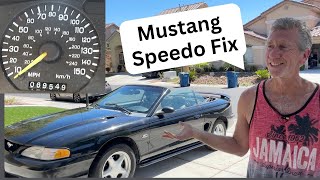
A faulty Vehicle Speed Sensor (VSS) is a common problem on 1994-2001 SN95 Mustangs. This small but vital sensor is responsible for some of the most noticeable issues you might face, from a speedometer that bounces around or doesn't work at all, to an automatic transmission that shifts hard or at the wrong times. Luckily, it's a straightforward part to diagnose and replace for most DIY mechanics.
Symptoms of a Failing VSS
When the VSS starts to fail, your Mustang will give you clear signs. The most common symptom is an erratic or completely dead speedometer. You may also notice that your cruise control no longer engages. For cars with an automatic transmission, you might experience harsh, delayed, or incorrect gear shifts. In some cases, a failing VSS will trigger the Check Engine Light, often with the diagnostic trouble code P0500.
Pro Tip: Check the Gear First!
The VSS is often driven by a small plastic gear on the transmission's output shaft. This gear can wear out, strip, or break. Before you buy a new sensor, it's a good idea to remove the old one and inspect this gear. Sometimes, simply replacing the gear is all that's needed 🎬 See how to remove a sensor if it's stuck in the transmission. to fix the problem, saving you time and money.
Choosing the Right Aftermarket VSS
When it comes to replacing your VSS, you have options ranging from budget-friendly to premium. While Ford's own Motorcraft brand is the original equipment benchmark for quality and fit, several aftermarket brands offer reliable alternatives.
- Premium Aftermarket (Delphi, NGK/NTK, Standard Ignition): These brands are well-respected in the industry and often supply parts directly to automakers. They are known for their quality control and durability, making them a solid choice for a reliable, long-lasting repair.
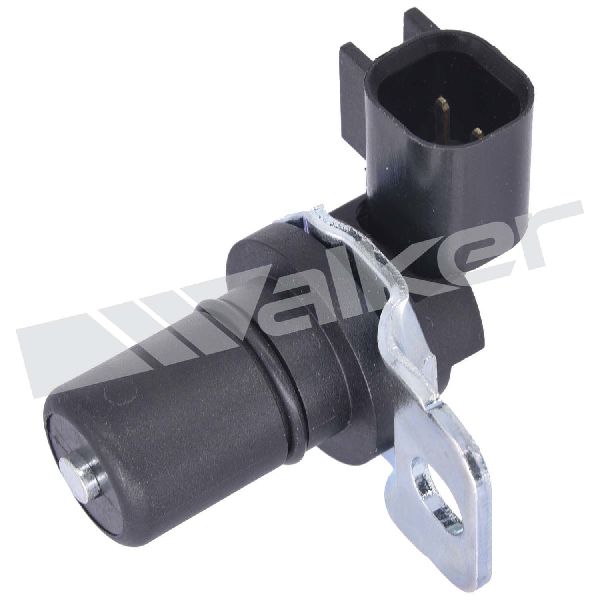
- Standard Aftermarket (Dorman, Walker Products): Brands like Dorman are known for providing a wide range of parts and sometimes offer design improvements over the original. While generally reliable, quality can sometimes be inconsistent compared to premium brands. They represent a good balance between cost and performance.
- Economy Brands (Holstein, True Tech, others): These brands offer the most budget-friendly options. While tempting, they may not have the same level of quality control or longevity as the more established brands. They can be a viable option for a quick fix on a tight budget, but long-term reliability might be a concern.
How Much Does a VSS Replacement Cost?
The cost to replace the VSS on a 1994-2001 Mustang is relatively low, especially if you do the work yourself. The part itself is affordable, and the job is simple enough for most home mechanics.
| Cost Category | Estimated Price |
|---|---|
| New Aftermarket VSS | $20 - $75 |
| New OEM (Motorcraft) VSS | $80 - $150 |
| Shop Labor | $50 - $120 (0.5-1.0 hours) |
| Total (DIY) | $20 - $75 |
| Total (Shop Repair) | $100 - $270 |
Important Note on Transmission Type
The Vehicle Speed Sensor is often different for automatic and manual transmissions. Always verify that you are purchasing the correct part for your specific transmission to ensure proper fit and function.
Frequently Asked Questions
Where is the VSS located on a 1994-2001 Mustang?
The VSS is located on the driver's side of the transmission, toward the rear where the driveshaft connects. It is typically held in place by a single 8mm or 10mm bolt.
Is this a difficult repair to do myself?
No, this is generally considered an easy DIY repair. It requires basic hand tools, and you'll need to safely lift the car with a jack and jack stands to access the transmission. The sensor is usually held by one bolt, making removal and installation straightforward.
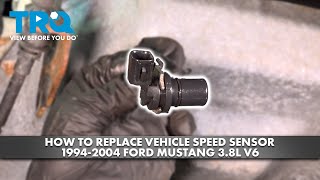
🎬 Watch this step-by-step guide to replacing your Mustang's VSS.What does the P0500 trouble code mean?
P0500 is a generic diagnostic trouble code that stands for "Vehicle Speed Sensor (VSS) Malfunction." It means the car's main computer (PCM) is not receiving a proper signal from the VSS, or the signal is erratic. This is the most common code associated with a failing VSS.
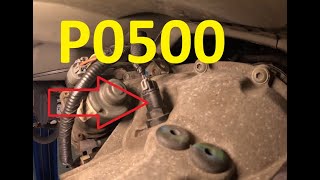
🎬 Learn more about diagnosing the P0500 code and its causes.Can a bad VSS cause any other problems?
Yes. Besides the main symptoms, a bad VSS can sometimes cause the engine to hesitate or stall when coming to a stop, as the computer uses vehicle speed to help control idle. It can also lead to decreased fuel economy because the transmission may not be in the most efficient gear.
Helpful Videos


Technical Specifications
OEM Part Numbers: E9LZ-9E731-A DY-588 XR3R-7H103-AA
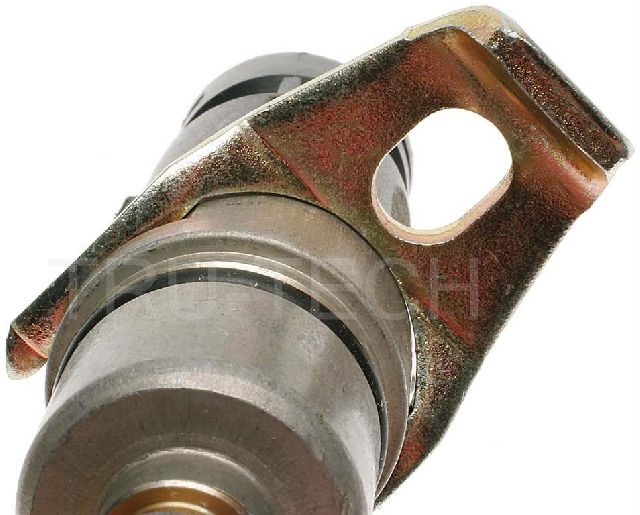
The VSS for the 1994-2001 Mustang is an electromagnetic sensor that mounts to the tailshaft housing of the transmission. It is driven by a plastic gear and sends an 8,000 pulse-per-mile signal to the PCM. The sensor is secured by a single bolt and uses a two-pin electrical connector.
We Have This Part in Stock


The information in this article is provided for general reference and educational purposes only. Vehicle specifications, procedures, and part compatibility can vary by production date, trim level, and region. Always consult your vehicle's factory service manual and verify part numbers before purchasing or performing repairs. Safety-critical components such as airbags, seat belts, and braking systems should be installed by a qualified professional.
- Ford Mustang: