

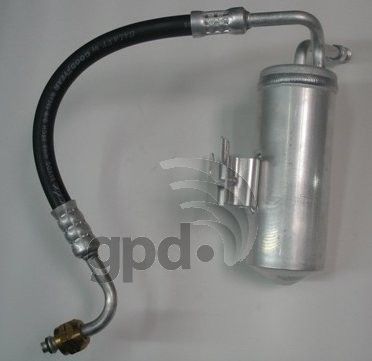
Saturn SL2 A/C Accumulator with Hose Assembly Guide (1994-2002)
If your Saturn SL2's A/C is blowing warm, the accumulator assembly is a key part of the puzzle.
- Replacing the accumulator is mandatory any time the A/C system is opened for service.
- This is not a DIY-friendly repair; it requires specialized equipment to handle refrigerant legally and safely.
- A quality aftermarket part is a perfectly suitable replacement for this vehicle, as OEM parts are largely unavailable.
- If the compressor failed, the entire system must be checked for contamination before installing new parts.
Is Your Saturn's A/C Losing Its Cool?
When the air conditioning in your 1994-2002 Saturn SL2 stops blowing cold, a refrigerant leak is the most common cause. While leaks can happen anywhere, the repair almost always involves replacing the A/C accumulator with its integrated hose assembly. This part is critical for the health and longevity of your entire A/C system. If your compressor has failed, replacing the accumulator is not optional; it's a required step to prevent immediate failure of the new compressor.
Symptoms of a Failing A/C System
While the accumulator itself can fail, its failure is often tied to a larger system problem. Watch for these signs:
- A/C Blows Warm or Not Cold Enough: This is the number one sign of low refrigerant, often from a leak somewhere in the system.
- Strange Noises: A rattling from the accumulator means internal parts may have broken loose. Grinding or squealing noises often point to a failing A/C compressor, which will require you to replace the accumulator as part of the repair.
- Visible Leaks: You might see a greasy, oily residue on the accumulator body or its hose connections. This is refrigerant oil, indicating a leak.
- Moldy or Musty Smell: While often caused by moisture in the evaporator case, a saturated accumulator that can no longer absorb moisture can contribute to poor system performance and odd smells.
This is Not a Beginner DIY Job
Replacing any A/C component, including the accumulator, requires specialized tools like a refrigerant recovery machine, vacuum pump, and manifold gauges. Handling R134a refrigerant is regulated by law, and it cannot be released into the air. For a reliable, long-lasting repair, this job is best left to a qualified mechanic.
Choosing the Right Aftermarket Part for Your SL2
For a vehicle like the 1994-2002 Saturn SL2, original OEM parts are scarce or discontinued. The aftermarket is your primary source. Brands like Global Parts Distributors (GPD) produce direct-fit replacement parts that are designed to meet or exceed original specifications. These parts use quality desiccant material and are durability tested. Given the age of the SL2, a quality aftermarket accumulator assembly is a reliable and cost-effective choice. The success of the repair depends more on the proper replacement procedure (flushing debris, replacing O-rings, pulling a vacuum, and adding the correct oil/refrigerant charge) than on finding a rare OEM part.
| Part | Estimated Cost |
|---|---|
| New Aftermarket A/C Accumulator w/ Hose Assembly | $25 - $45 |
| Shop Labor (Evacuate, Replace, Recharge) | $200 - $350 |
| Total Estimated Cost | $225 - $395 |
Pro Tip: System Contamination
If your A/C compressor failed catastrophically (known as "black death"), it likely sent metal shavings throughout the entire system. In this case, just replacing the compressor and accumulator is not enough. The condenser, expansion valve, and all lines must be replaced or thoroughly flushed to prevent the debris from destroying your new compressor.
Frequently Asked Questions (FAQ)
Do I have to replace the accumulator if I replace my compressor?
Yes, absolutely. It is a mandatory step. The accumulator's main job is to absorb moisture. The moment you open the A/C system, it absorbs humidity from the air and is considered contaminated. Failing to replace it will void the warranty on your new compressor and likely cause it to fail prematurely.
Can I just add more refrigerant if my A/C is blowing warm?
You can, but it's a temporary fix. If the system is low on refrigerant, it has a leak. Simply adding more means it will leak out again. A proper repair involves finding and fixing the leak, which may be at a hose, seal, or component like the compressor. The system must then be vacuumed and recharged to the specific capacity, which for the Saturn S-Series is 1.5 lbs of R134a.
Are there any recalls for the A/C system on my Saturn SL2?
No. A search of the National Highway Traffic Safety Administration (NHTSA) database shows no safety recalls specifically for the A/C accumulator or related A/C components on the 1994-2002 Saturn SL2.
What is the difference between an accumulator and a receiver-drier?
They perform the same function of drying and filtering refrigerant, but are used in different types of A/C systems. Your Saturn SL2 uses an orifice tube system, which requires an accumulator on the low-pressure side (after the evaporator). Systems with an expansion valve use a receiver-drier on the high-pressure side (after the condenser).
Technical Specifications
Refrigerant Type: R134a System Capacity: 1.5 lbs (24 oz) Required Oil: PAG 46
We Have This Part in Stock

The information in this article is provided for general reference and educational purposes only. Vehicle specifications, procedures, and part compatibility can vary by production date, trim level, and region. Always consult your vehicle's factory service manual and verify part numbers before purchasing or performing repairs. Safety-critical components such as airbags, seat belts, and braking systems should be installed by a qualified professional.
- Saturn SL2: