

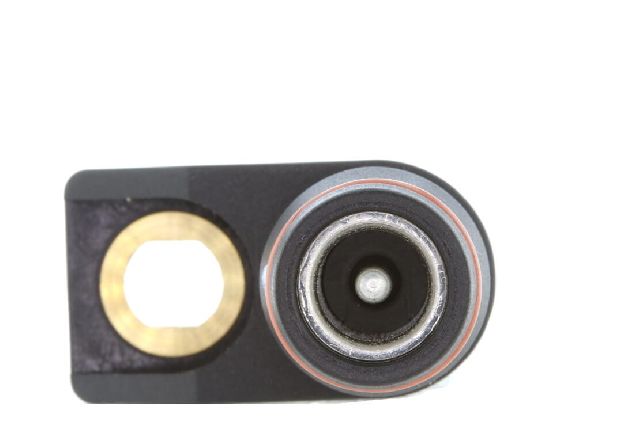
Mercedes-Benz SL600 (1994-2003) Engine Crankshaft Position Sensor Guide
Solving the mystery of why your V12 SL600 cranks but won't start, or stalls when hot.
- The most common symptom is the engine stalling when hot and not restarting until it cools down.
- Verify your model year: 1994-2002 models (M120 engine) use TWO sensors; 2003 models (M137 engine) use ONE.
- Using the OEM-supplier Bosch brand is strongly recommended for reliability and to avoid repeat failures.
- Failure is a matter of 'when,' not 'if.' Many owners replace this part preventatively to avoid being stranded.
Is Your SL600 Stalling? The Crank Sensor is a Common Culprit
One of the most common and frustrating problems for 1994-2003 Mercedes-Benz SL600 owners is when the engine suddenly stalls and refuses to restart until it has cooled down. This classic symptom, known as heat soak failure, often points directly to a bad crankshaft position sensor (CPS). The sensor is an electronic part located in a very hot area of the engine bay, and over many years, the heat can damage its internal components, causing it to stop working when hot but function again when cool. Eventually, it will fail completely, leaving you with a car that cranks but will not start.
Critical Difference: 1994-2002 vs. 2003 Models
Before ordering, you must know which engine your SL600 has. This is the most common ordering mistake.
- 1994-2002 SL600 (R129 chassis with M120 engine): These models use TWO crankshaft position sensors. You may need to replace them as a pair. One is typically easier to access from the top, while the other is more difficult and may require access from underneath the car.
- 2003 SL600 (R230 chassis with M137 engine): These models use only ONE crankshaft position sensor.
Always verify the number of sensors required for your specific model year before purchasing.
Choosing the Right Aftermarket Sensor: Brand Quality Matters
For a high-performance, complex vehicle like the SL600, the quality of electronic sensors is critical. While budget-friendly options are available, installing a low-quality sensor can lead to continued problems or premature failure, leaving you stranded again. Here is a breakdown of the available brands:
- Tier 1 - OEM Supplier (Highly Recommended): Bosch is the original equipment manufacturer for Mercedes-Benz for this part. Choosing a Bosch sensor ensures you are getting the same quality, fit, and durability as the part that came on your car from the factory. For a critical component like this, Bosch is the safest and most reliable choice.
- Tier 2 - Quality Aftermarket: Brands like Delphi and Standard Ignition (SMP) have a general reputation for producing quality components. They can be a good alternative if a Bosch part is not available, but owner and mechanic feedback for these specific Mercedes models heavily favors sticking with Bosch.
- Tier 3 - Economy Brands: This category includes Dorman, Facet, Global Parts, Holstein, Prenco, Spectra, Vemo, and Walker Products. While attractively priced, these brands are often associated with lower quality control. Using a budget sensor on a sensitive Mercedes V12 engine is a gamble that can lead to incorrect signals, persistent running issues, or a short service life. It is generally advised to avoid these for this specific application.
How Much Does a Replacement Cost?
The cost to replace the crankshaft position sensor on an SL600 depends on the part quality and whether you do it yourself or use a professional mechanic. Note that 1994-2002 models require two sensors.
| Item | Estimated Cost |
|---|---|
| New Aftermarket Sensor (per sensor) | $21.39 - $191.79 |
| New OEM (Bosch) Sensor (per sensor) | $60 - $160 |
| Shop Labor | $188 - $275 |
Pro Tip: Installation
The sensor is located at the rear of the engine on the driver's side, where the engine block meets the transmission bell housing. Access is very tight. The sensor is held in by a single E8 external Torx bolt. While it is possible to do this job yourself, it requires patience, a set of socket extensions, and the ability to work by feel, as you may not be able to see the sensor directly. A small piece of paper or tape in the socket can help prevent the bolt from falling during reinstallation.
Frequently Asked Questions (FAQ)
Where is the crankshaft position sensor located?
It is on the driver's side of the engine, down low on the bell housing where the engine and transmission connect. It reads teeth on the flywheel to determine the engine's position. Access is tight and often requires reaching from the top of the engine bay.
Can I replace this sensor myself?
Yes, this is a DIY-friendly job for those with some mechanical experience and the right tools (specifically an E8 external Torx socket and extensions). However, the tight space can make it frustrating. If you are not comfortable working in tight spaces by feel, it may be best to leave this job to a professional.
Are there any recalls for this part on my SL600?
No, there are no specific recalls from Mercedes-Benz or the NHTSA for crankshaft position sensor failure on the 1994-2003 SL600 V12 models. A recall was issued for some later model diesel engines, but it does not apply to this vehicle. You can always check for any recalls on your specific car by entering your VIN on the NHTSA website.
Why did my brand new, cheap sensor fail after only a few miles?
This is a common complaint when using non-OEM sensors on sensitive European cars. The engine's computer is calibrated to the precise signal and resistance of the original Bosch sensor. Lower-quality aftermarket sensors may not have the same internal components or build quality, leading to an incorrect signal, poor performance, or immediate failure, especially as the engine heats up.
Technical Specifications
OEM Part Numbers: A0031532828 0031532828 A0031532728 0031532728 A0041531328 0041531328 A0031531328 0031531328
Location: Rear of engine on driver's side bell housing. Attachment: Single E8 external Torx bolt. Connector: 2-pin or 3-pin, depending on part number.
We Have This Part in Stock


The information in this article is provided for general reference and educational purposes only. Vehicle specifications, procedures, and part compatibility can vary by production date, trim level, and region. Always consult your vehicle's factory service manual and verify part numbers before purchasing or performing repairs. Safety-critical components such as airbags, seat belts, and braking systems should be installed by a qualified professional.
- Mercedes-Benz SL600: