

Ford Mustang Constant Control Relay Module (CCRM) Guide for 1994-2004
If your Mustang won't start, overheats, or the A/C is dead, the CCRM is a likely culprit.
- The 'Relay' on a 1994-2004 Mustang is usually the Constant Control Relay Module (CCRM), which houses multiple relays.
- Always verify the part number for your specific year and engine (V6/V8) before purchasing a replacement CCRM.
- Before replacing the CCRM, check all related fuses first, as a simple blown fuse can cause similar symptoms.
- Know the location for your year: 1994-95 models are in the engine bay, while 1996-04 models require removing the passenger-side fender liner.
Understanding the Mustang's CCRM

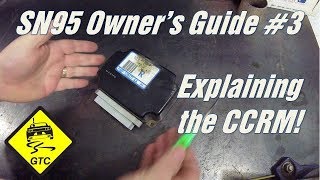
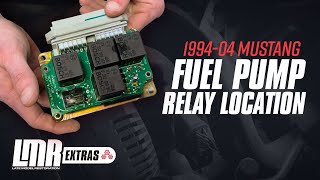
When you hear a 1994-2004 Mustang owner talk about a failed "relay" causing major issues, they are almost always referring to the Constant Control Relay Module (CCRM). Instead of having separate relays scattered around the engine bay, Ford put them all into one convenient, but sometimes problematic, box. The individual relays inside are soldered directly to a circuit board, making them non-serviceable for most owners. 🎬 See what's inside the CCRM and how the relays look. When one of the internal relays fails, the entire CCRM module must be replaced.
Symptoms of a Failing CCRM

Because the CCRM controls multiple systems, a failure can show up in several ways:
- Engine Cranks but Won't Start: This is the most common symptom. The fuel pump relay inside the CCRM fails, and the engine doesn't get any fuel. You won't hear the familiar 2-second "buzz" of the fuel pump priming when you turn the key to the 'on' position.
- Engine Overheating at Idle: If the cooling fan relay fails, your fan won't turn on when the engine gets hot. This will cause the temperature gauge to climb, especially when you're stopped in traffic.
- A/C Blows Warm Air: A bad A/C clutch relay within the CCRM will prevent the compressor from engaging, so you'll get no cold air from your vents.
- Battery Drain When Off: Less commonly, a relay can get stuck in the "on" position. This can cause the cooling fan or fuel pump to run continuously even when the car is off, draining your battery.
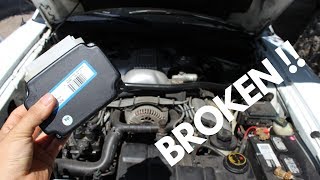
- Buzzing or Clicking Noises: You might hear a constant buzzing or rapid clicking sound coming from the CCRM itself, which is a clear sign of an internal electrical failure. 🎬 Listen to what a buzzing CCRM sounds like when failing.
Misdiagnosis is Common
The CCRM is often blamed for problems it didn't cause. Before spending money on a new module, always check related fuses first, particularly the main fuses for the cooling fan circuit. Also, a faulty Engine Coolant Temperature (ECT) sensor can prevent the fan from turning on, mimicking a CCRM failure.
Choosing the Right Aftermarket CCRM

When shopping for a new CCRM, part matching is critical. CCRMs are specific to year ranges and engine types (V6 vs. V8). Installing the wrong one can lead to unpredictable behavior or damage to other components. For example, modules for 1994-2000 models are different from those for 2001-2004 models.
For this part, the main aftermarket option is the "Replacement" brand. This is a budget-friendly choice that can get your car back on the road. However, some owners in forums have noted that the reliability of generic aftermarket electronic parts can be a hit or miss. Another option is a remanufactured OEM unit, which can offer a balance of quality and cost. Since the relays are soldered in, a simple used part from a junkyard carries the risk of having a short remaining lifespan.
Where to Find Your CCRM
The location changes depending on your Mustang's year:
- 1994-1995 Mustang: The CCRM is bolted to the radiator coolant overflow tank bracket, located in the engine bay behind the radiator fan. It is relatively easy to access.
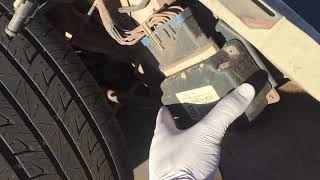
- 1996-2004 Mustang: The CCRM is hidden in the passenger-side front fender well. You must remove the front wheel and the plastic fender liner to get to it. 🎬 Watch this step-by-step guide on replacing the CCRM module.
Cost of Replacing a Mustang CCRM
| Part Type | Estimated Cost |
|---|---|
| New OEM | $200 - $350 |
| New Aftermarket (Replacement Brand) | $120 - $180 |
| Remanufactured | $100 - $150 |
| Used OEM | $40 - $80 |
| Shop Labor | $75 - $150 |
Note: The price of a single, generic 5-pin relay (around $15-$20) is not reflective of the cost of a CCRM assembly. Costs are estimates and may vary by location and supplier.
Frequently Asked Questions

Can I just replace the bad relay inside the CCRM?
It is not recommended for a typical DIY mechanic. The relays are soldered to a multi-layer circuit board. Attempting to de-solder the old relay without proper tools and experience can permanently damage the board. Replacing the entire module is the standard, reliable repair.
Is there a recall on the 1994-2004 Mustang CCRM?
No, there are no official NHTSA safety recalls or Technical Service Bulletins (TSBs) specifically for the CCRM on 1994-2004 Ford Mustangs.
Will a V6 CCRM work in a V8 Mustang (or vice-versa)?
No, you should always use the CCRM that is specified for your exact year and engine. The internal wiring and relay configurations are different, and using the wrong one can cause systems to malfunction.
My fan works with the A/C on but not when the engine gets hot. Is it the CCRM?
Not necessarily. If the fan runs at all, it means the fan motor and the CCRM's high-speed relay are likely working. This specific symptom often points to a bad Engine Coolant Temperature (ECT) sensor, which is responsible for telling the CCRM to activate the low-speed fan.
Helpful Videos
Technical Specifications
OEM Part Numbers: F6SZ-12B577-AA F7CF-AB F7CF-AA F48F-AA F6SF-AA F6SF-AB XR3F-12B577-AB
A single module containing integrated, non-serviceable relays for the fuel pump, PCM power, A/C clutch, and low/high-speed cooling fans.

The information in this article is provided for general reference and educational purposes only. Vehicle specifications, procedures, and part compatibility can vary by production date, trim level, and region. Always consult your vehicle's factory service manual and verify part numbers before purchasing or performing repairs. Safety-critical components such as airbags, seat belts, and braking systems should be installed by a qualified professional.
- Ford Mustang: