

Choosing the Right Spark Plug Wires for Your 1995-1999 Ford Mustang
Restore lost power and cure misfires by picking the perfect spark plug wire set for your V6, GT, or Cobra.
- Replace wires one at a time to avoid mixing up the firing order.
- For stock Mustangs, Motorcraft or NGK wires are a reliable, cost-effective choice.
- For modified engines, consider performance wires like MSD Super Conductor or Taylor for better heat resistance and spark delivery.
- Properly routing wires and using separators is crucial to prevent them from melting on hot engine parts.
Understanding Spark Plug Wires in Your SN95 Mustang
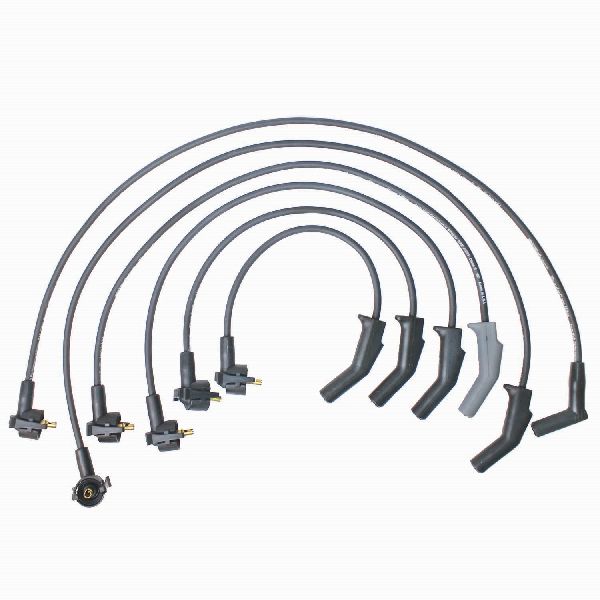
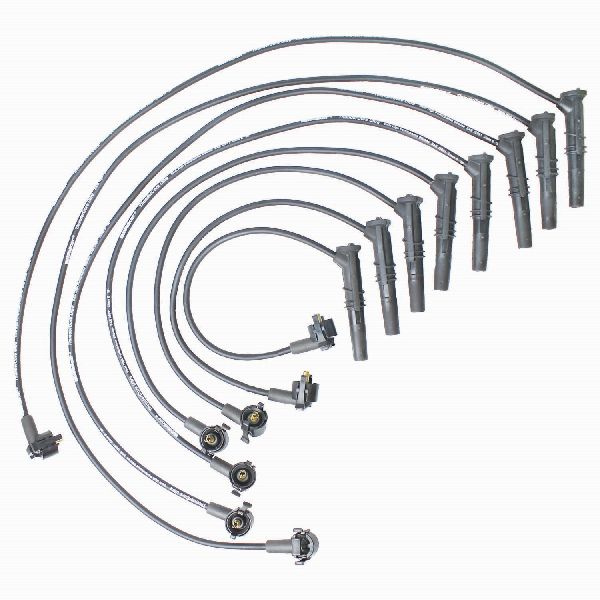
The spark plug wires on your 1995-1999 Mustang live in a harsh environment. They are constantly exposed to high engine temperatures, vibration, and electrical stress. For the 1995 5.0L V8, wires run from a distributor cap. For the 1996-1999 4.6L V8 and 3.8L V6 models, they connect to coil packs. When the insulation on these wires breaks down, voltage can leak or 'arc' to the engine block instead of reaching the spark plug. This results in a weak or non-existent spark, causing a variety of noticeable engine problems.
Common Symptoms of Failing Spark Plug Wires
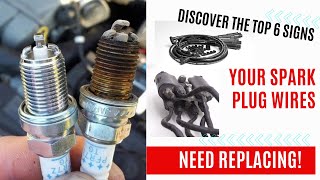
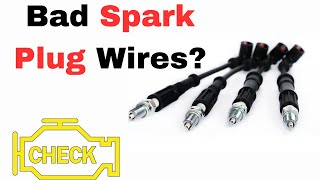
Bad spark plug wires can make your Mustang run poorly. If you notice any of these signs, it might be time for a replacement:
🎬 Watch this video to see common bad spark plug symptoms.- Rough Idle: The engine may shake or vibrate more than usual when stopped.
- Engine Misfires: You might feel a stutter or hesitation from the engine, especially during acceleration. A flashing check engine light is a serious sign of a misfire.
- Poor Acceleration: The car may feel sluggish and less responsive than normal.
- Reduced Fuel Economy: When your engine isn't running efficiently, it burns more fuel.
- Check Engine Light: Misfires will often trigger diagnostic trouble codes, such as P0300 (random misfire) or P0301-P0308 (misfire on a specific cylinder).
- Difficulty Starting: A weak spark can make it harder for the engine to fire up.
Known Issue: Wire Arcing and Routing
A common problem on these Mustangs, especially V8 models, is spark plug wires arcing against metal engine parts due to improper routing or degraded insulation. When replacing your wires, pay close attention to how the old ones are routed. Use all the factory wire separators and looms to keep them away from hot exhaust manifolds and sharp metal edges. Some owners report that keeping certain wires separated in the looms can prevent inductive crossfire.
Choosing the Right Aftermarket Wires
With dozens of options available, picking the right set can be confusing. Here’s a breakdown of the different tiers to help you decide.
Tier 1: OEM-Equivalent & Daily Driver
For a stock or lightly modified Mustang, you can't go wrong with a set that meets or exceeds original factory specifications. These are reliable, no-fuss options.
- Motorcraft: This is Ford's own brand. Choosing Motorcraft ensures a perfect fit and factory-correct performance. Many owners stick with Motorcraft for a stock look and reliable operation.
- NGK / Denso: Both are major OEM suppliers and are highly respected for their quality. An NGK or Denso wire set will provide excellent performance and durability for a daily driven car.
- Standard Motor Products (SMP): A well-regarded aftermarket brand that offers quality replacement parts.
Tier 2: Performance & Heavy-Duty
If you have performance modifications like a cold air intake, exhaust, or an upgraded ignition system, or if you just want extra durability, these brands are a great choice. They typically feature thicker 8mm (or larger) wires with better heat protection and lower electrical resistance.
- MSD (Super Conductor): A top choice for performance enthusiasts. Their 8.5mm Super Conductor wires have very low resistance (40-50 ohms per foot) for a hotter spark, while still suppressing radio interference. Be sure to get the red "Super Conductor" series, not the lower-tier "Heli-Core" wires.
- Taylor Cable: Very popular in the Mustang community. Their Spiro-Pro and Thundervolt lines are known for good performance and value. They come in various colors and diameters, like 8mm and 10.4mm.
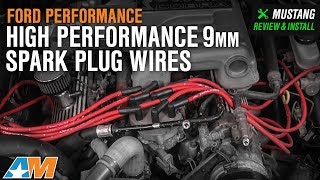
- Ford Performance (Formerly Ford Racing): These are often 9mm wires and are a popular upgrade. While some users have reported issues with arcing, many others use them without complaint. They are an affordable step up from stock. 🎬 See how to install Ford Performance 9mm wires on V8s.
- Accel: Another long-standing performance brand. Their 300+ and 8.8mm wires are considered a good performance choice by many owners.
What Does Wire Diameter (8mm, 9mm) Mean?
A larger diameter, like 8.5mm or 9mm, doesn't automatically mean more power. It means the wire has thicker insulation. This provides better protection against heat and helps prevent voltage from arcing to ground, which is especially important in high-performance or tightly packed engine bays. The real performance comes from a quality, low-resistance conductor core inside the wire.
| Category | Price Range | Best For |
|---|---|---|
| Budget Aftermarket | $37 - $70 | Stock vehicles, daily driving |
| OEM-Equivalent (Motorcraft, NGK) | $50 - $100 | Stock or lightly modified vehicles, reliability |
| Performance (MSD, Taylor, Ford Performance) | $75 - $200+ | Modified engines, high-heat applications, enthusiasts |
| High-End/Racing (Granatelli, JBA) | $200 - $415+ | Heavily modified, supercharged, or racing engines |
Frequently Asked Questions (FAQ)
Can I replace just one bad spark plug wire?
While you can, it's not recommended. Spark plug wires degrade from heat and age at a similar rate. If one has failed, the others are likely not far behind. Replacing them as a complete set ensures consistent performance and prevents you from having to do the job again in a few months.
How important is applying dielectric grease?
It's very important. Applying a small amount of dielectric grease to the inside of each boot before installation helps seal out moisture, prevents corrosion, and makes it much easier to remove the wires in the future. It does not improve conductivity; it only protects the connection.
What is the most common mistake when replacing spark plug wires?
The most common mistake is mixing up the firing order. This will cause the engine to run very poorly or not at all. The best way to avoid this is to replace the wires one at a time. Remove one old wire, match its length to a new wire, and install the new wire before moving on to the next one.
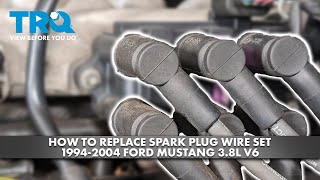
🎬 Follow this step-by-step guide for replacing wires on V6 models.Do I need performance wires for my stock Mustang?
No, you don't *need* them. A quality OEM-equivalent set like Motorcraft or NGK is perfectly fine for a stock car. However, some owners choose performance wires for their added durability, heat resistance, and appearance.
Helpful Videos
Technical Specifications
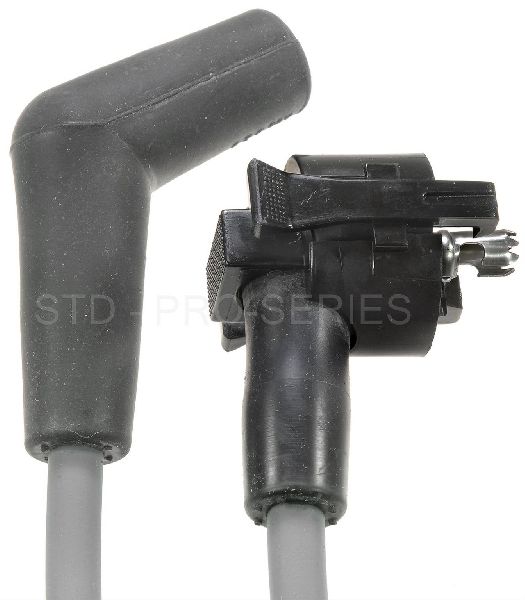
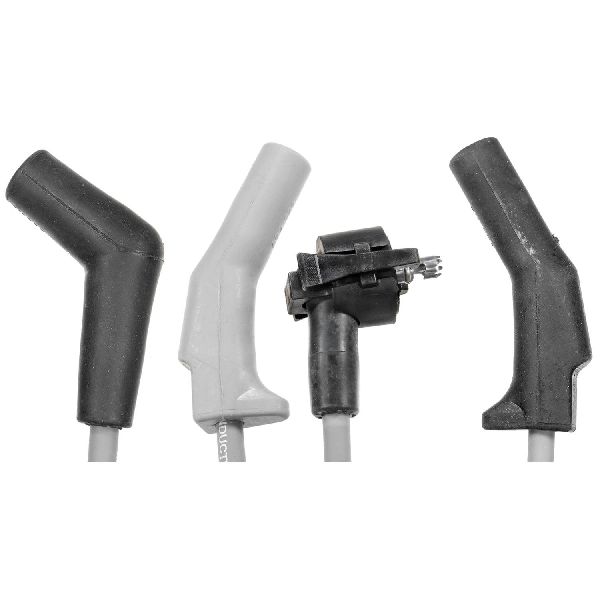
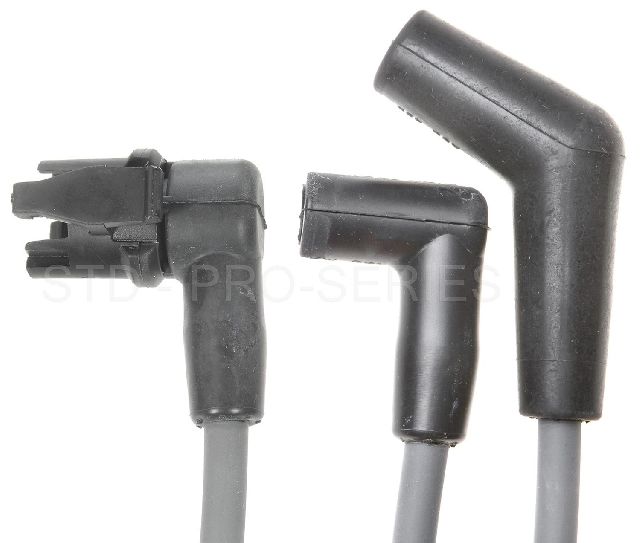
OEM Part Numbers: WR-4017-C F4PZ-12259-C F6PZ-12259-AA
Varies by engine. The 1995 5.0L V8 uses a distributor-style set. The 1996-1999 4.6L V8 and 3.8L V6 use coil pack-style sets. Wire diameter ranges from 7mm (stock) to over 10mm (performance). Core material is typically a spiral-wound conductor to suppress EMI/RFI.
We Have This Part in Stock

The information in this article is provided for general reference and educational purposes only. Vehicle specifications, procedures, and part compatibility can vary by production date, trim level, and region. Always consult your vehicle's factory service manual and verify part numbers before purchasing or performing repairs. Safety-critical components such as airbags, seat belts, and braking systems should be installed by a qualified professional.
- Ford Mustang:
- 🎬 Helpful Videos
- 🛍️ Shop This Part
- Understanding Spark Plug Wires in Your SN95 Mustang
- Common Symptoms of Failing Spark Plug Wires
- Known Issue: Wire Arcing and Routing
- Choosing the Right Aftermarket Wires
- Tier 1: OEM-Equivalent & Daily Driver
- Tier 2: Performance & Heavy-Duty
- What Does Wire Diameter (8mm, 9mm) Mean?
- Frequently Asked Questions (FAQ)
- 🎟️ Get 5% Off