

1995-2000 Ford Mustang Suspension Stabilizer Bar Bushing Guide
Eliminate clunking noises and restore your Mustang's handling by choosing the right stabilizer bar bushings.
- The most common sign of failure is a clunking noise from the front end over bumps.
- You must measure your sway bar's diameter before ordering to ensure the correct fit.
- Choose rubber (Moog) for a quiet, stock ride or polyurethane (Energy Suspension, Nolathane) for improved handling.
- If you choose polyurethane bushings, you must use the included silicone grease to prevent squeaking.
Symptoms of Worn Stabilizer Bar Bushings
When the original rubber bushings on your 1995-2000 Mustang wear out, they can cause several noticeable issues. The most common symptom is a clunking or rattling noise from the front end, especially when driving over bumps or uneven roads. You might also notice that your car leans more in turns, a feeling known as body roll. In some cases, you can physically see that the bushings are cracked, shrunken, or have been contaminated by oil. You can check for wear by getting under the car and trying to move the sway bar near the bushing; if there's noticeable play or noise, the bushings are likely bad.
Choosing the Right Aftermarket Bushings
When replacing your stabilizer bar bushings, you have a choice between standard rubber replacements and polyurethane upgrades. Your decision affects ride quality and performance.
Standard Replacement vs. Performance Upgrade
| Brand Tier | Brands | Material | Best For |
|---|---|---|---|
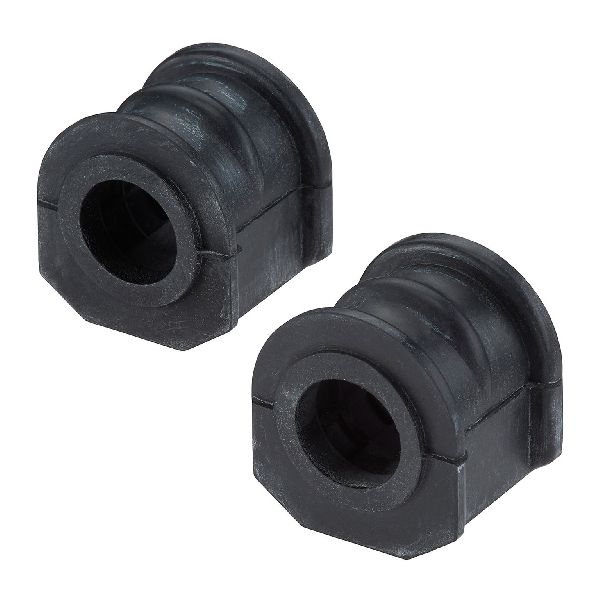
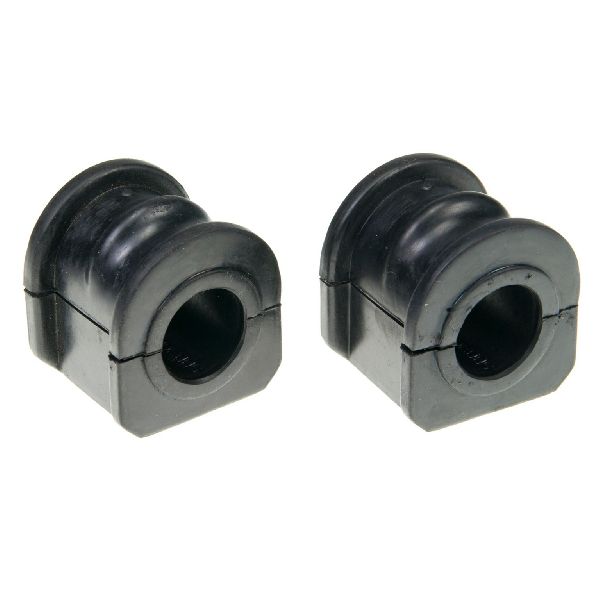
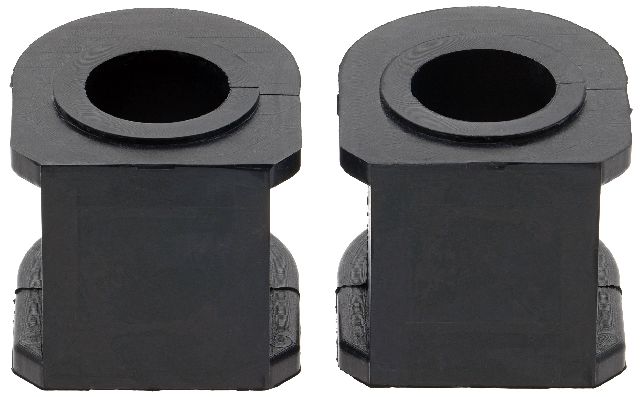
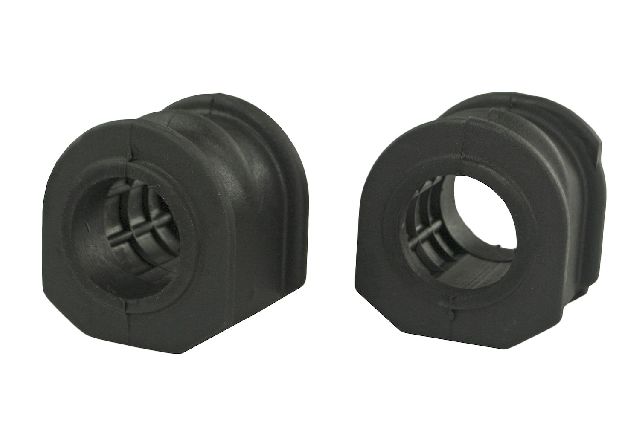
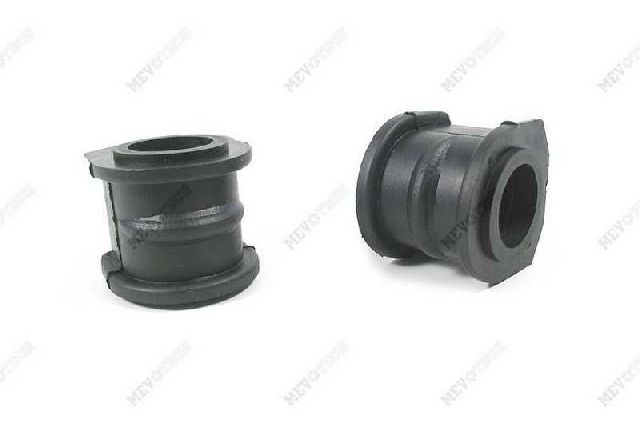
| Standard Replacement | Moog, Mevotech | Rubber or Thermoplastic | Owners who want a quiet, comfortable ride similar to the original factory feel. These are a direct replacement for worn-out OEM bushings. |
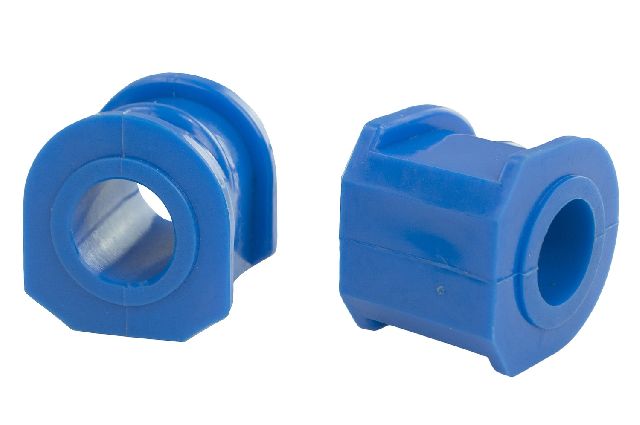
| Performance Upgrade | Energy Suspension, Nolathane | Polyurethane | Drivers looking for improved handling and a more responsive feel. Polyurethane is stiffer than rubber, which makes the sway bar work more effectively to reduce body roll. |
Rubber vs. Polyurethane: What You Need to Know
Rubber bushings, like the ones your Mustang came with, provide a quiet and comfortable ride by absorbing vibrations. Their downside is that they can flex more and wear out over time. Polyurethane (poly) bushings are much firmer and more durable. This stiffness improves handling response but can also transmit more road noise and vibration into the car, making the ride harsher. Polyurethane bushings also require special silicone-based grease during installation to prevent squeaking. Using petroleum-based grease can damage them.
Brand Quality & Reputation
- Moog: Generally considered a reliable choice for standard, OEM-quality rubber or thermoplastic replacement parts.
- Mevotech: Often seen as a budget-friendly option. Reviews are mixed; some users report good experiences with their 'Supreme' line, while others have had issues with premature failure.
- Energy Suspension: A very popular brand for polyurethane upgrades. They are well-known for improving handling but are also frequently mentioned in discussions about squeaking if not lubricated properly. Their black bushings are often graphite-impregnated to help reduce noise.
- Nolathane: Another performance polyurethane brand, known for durability and engineering that aims to provide sharper handling and control. They are designed to pivot freely, which helps maintain suspension geometry.
Pro Tip: Measure Your Sway Bar!
The 1995-2000 Mustangs were available with different sway bar diameters depending on the model (V6, GT, Cobra) and options. Before ordering, you must measure the diameter of your actual sway bar with a caliper to ensure you get the correct size bushings. Do not rely on vehicle information alone.
Frequently Asked Questions
Should I choose rubber or polyurethane bushings?
If you want to maintain the original quiet, comfortable ride of your Mustang, choose rubber or thermoplastic bushings from a brand like Moog. If you prioritize sharper handling and a sportier feel and don't mind a potentially firmer ride, polyurethane from Energy Suspension or Nolathane is the way to go.
Do I need to use the grease that comes with polyurethane bushings?
Yes, it is critical. Polyurethane bushings will squeak loudly if they are not lubricated correctly with the supplied silicone-based grease. Apply it generously to the inside of the bushing where it contacts the sway bar. Do not use regular petroleum-based grease, as it can degrade the polyurethane.
Is replacing sway bar bushings a difficult job?
No, this is generally considered a straightforward job that a DIY mechanic can do with basic hand tools. You will need to safely raise and support the front of the car, unbolt the two brackets holding the bushings, slide the old ones off, and install the new ones. The end links do not typically need to be removed to replace the main frame bushings.
Are there any recalls or TSBs for my Mustang's sway bar bushings?
Searches did not find any specific recalls or Technical Service Bulletins (TSBs) for the stabilizer bar bushings on the 1995-2000 Ford Mustang. However, clunking noises from the front suspension are a common complaint for this generation, often related to worn bushings or end links.
Technical Specifications
Bushings are specific to the sway bar diameter. Common sizes for the 1995-2000 Mustang vary by model (V6, GT, Cobra). Measurement with a caliper is required for accurate ordering.
We Have This Part in Stock

The information in this article is provided for general reference and educational purposes only. Vehicle specifications, procedures, and part compatibility can vary by production date, trim level, and region. Always consult your vehicle's factory service manual and verify part numbers before purchasing or performing repairs. Safety-critical components such as airbags, seat belts, and braking systems should be installed by a qualified professional.
- Ford Mustang: