

Throttle Position Sensor Guide for 1995-2000 GMC K3500 Trucks
Solve common acceleration, idling, and transmission shifting problems by understanding the throttle position sensor in your GMT400.
- A bad Throttle Position Sensor can mimic serious transmission problems; always investigate the TPS first for shifting issues.
- Gas engines (5.7L/7.4L) and 6.5L Diesel engines use completely different, non-interchangeable throttle sensors.
- Replacement is a very simple DIY task for gas engines, requiring only basic tools and less than 30 minutes.
- For reliability, consider OEM-grade brands like Delphi or ACDelco, as they are often the original equipment suppliers.
Understanding the Throttle Position Sensor on Your K3500
The Throttle Position Sensor (TPS) is a small but critical sensor that reads the angle of the throttle blade as you press the accelerator. For the 1995-2000 GMC K3500, this part plays a huge role not just in engine performance, but also in how the 4L80-E automatic transmission behaves. The truck's main computer, the ECU, uses the TPS signal to control fuel delivery and tell the transmission when to shift. A faulty sensor can send incorrect information, leading to a host of problems that might be mistaken for a major transmission failure.
Gas vs. Diesel Engines: A Key Difference
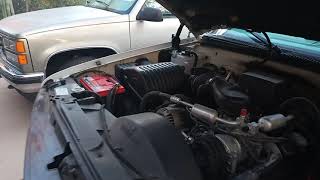
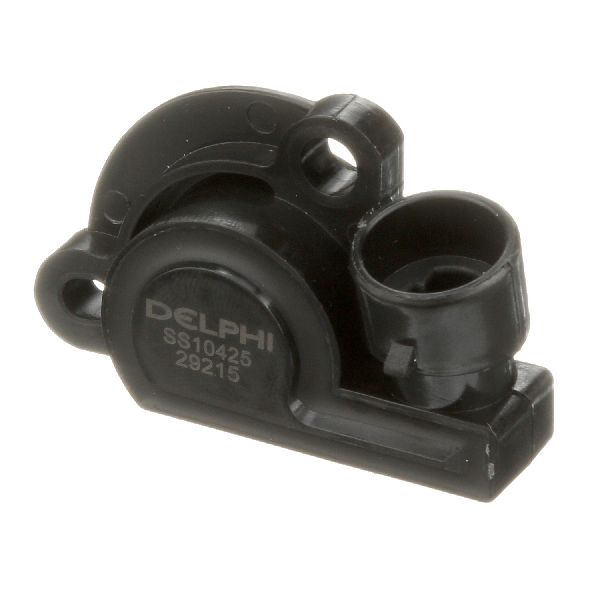
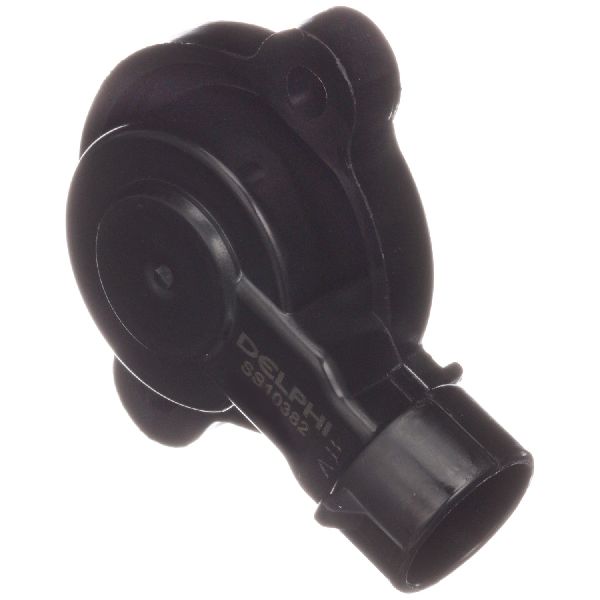
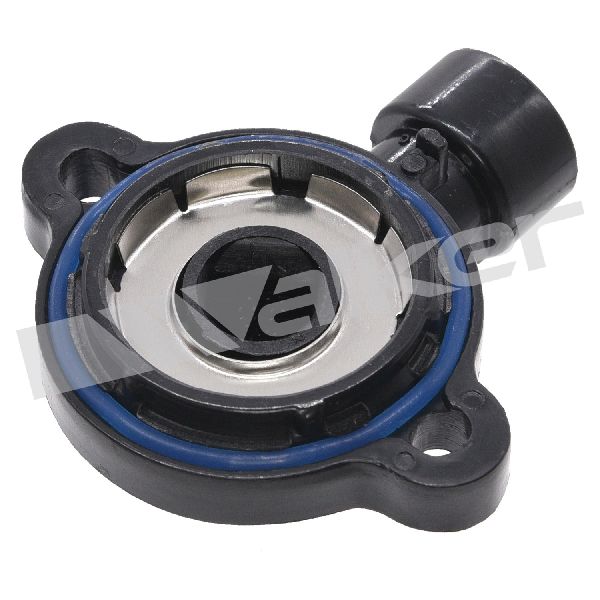
It is critical to identify your engine before ordering. Gas engines (5.7L V8 and 7.4L V8) use a small, rotary sensor located on the side of the throttle body. The 6.5L Turbo Diesel engine uses a different system, often called an Accelerator Pedal Position (APP) sensor, which is a more complex and expensive assembly connected to the pedal itself. Symptoms can be similar, but the parts are not interchangeable. This guide focuses primarily on the more common TPS for gas engines.
Is Your K3500's Throttle Position Sensor Failing?
A bad TPS can make your reliable workhorse feel unpredictable. Because it directly impacts both the engine and transmission, symptoms can be confusing. 🎬 Watch a breakdown of common bad throttle position sensor symptoms. Owners often report issues that seem like the transmission is failing, when the real culprit is this inexpensive sensor.
- Erratic Shifting: The most common complaint. The transmission may shift hard, late, or refuse to shift into the next gear. It might also not downshift correctly when you accelerate.
- Engine Hesitation or Stumbling: When you press the gas, the truck might hesitate or bog down before accelerating.
- Poor or High Idle: The engine may idle roughly, too high, or stall when you come to a stop.
- Sudden Surging: The truck might unexpectedly surge or accelerate without you pressing the pedal further.
- Check Engine Light: A failing TPS will often trigger a Check Engine Light with codes like P0121, P0122, or P0123.
Choosing the Right Aftermarket TPS Brand
When replacing your TPS, you have several options. For a critical sensor like this, brand quality can make a difference in performance and longevity.
Tier 1: OEM Quality Brands
- Delphi: Delphi is a well-regarded brand and often an original equipment (OE) manufacturer for GM. Choosing Delphi is the closest you can get to a factory part, ensuring proper fit and function.
- ACDelco: The official GM parts brand. An ACDelco part is the original equipment replacement, though it may be manufactured by another company like Delphi.
- NGK/NTK: Known for their expertise in sensors, NTK (a division of NGK) produces high-quality replacement parts that meet or exceed OE specifications.
Tier 2: Reputable Aftermarket Brands
- Standard Motor Products (SMP) / Standard Ignition: A long-standing, trusted name in the aftermarket. Their parts are generally considered reliable and are a popular choice among mechanics, though some forum users note occasional inconsistency with electronic parts.
- Beck Arnley: This brand focuses on sourcing parts that match the original OE form and function, often packaging parts from various quality manufacturers.
Tier 3: Budget-Friendly Options
- Dorman: Dorman provides a wide range of affordable parts. While often a good value, forum discussions for GMT400 trucks sometimes mention mixed results with electronic sensors. It can be a viable option if budget is the primary concern.
- Walker Products, True Tech, Global Parts, Replacement: These brands fall into the value category. They can solve the problem on a budget, but may not offer the same long-term durability or precise calibration as higher-tier brands.
| Item | Estimated Cost |
|---|---|
| New Aftermarket TPS | $25 - $90 |
| New OEM (ACDelco) TPS | $65 - $100 |
| Shop Labor | $50 - $125 |
| Total Professional Replacement | $75 - $225 |
Pro Tip: Installation is Simple
Replacing the TPS on a gas engine K3500 is a very easy DIY job that takes less than 30 minutes. It is held on by two small Torx screws. 🎬 Follow this step-by-step guide to replace your TPS. After installing the new sensor, it's a good idea to disconnect the battery for about 10 minutes to reset the truck's computer, although no special relearn procedure is required.
Frequently Asked Questions
Can a bad TPS really feel like a bad transmission?
Yes, absolutely. This is the most common issue reported by K3500 owners. The transmission control module (TCM) relies on the TPS signal to determine shift pressure and timing. An incorrect signal causes hard shifts, delayed shifts, or failure to shift, which are classic symptoms of a failing transmission. Always check the TPS before considering expensive transmission work.
🎬 See how a new TPS can fix common shifting issues.Are there any recalls for the TPS on my truck?
No, there have been no specific recalls issued by the NHTSA for the throttle position sensor on the 1995-2000 GMC K3500. Any failures are considered a result of normal wear and tear.
Do I need to calibrate or program a new TPS?
For the 1995-2000 K3500 gas engines, no special calibration or programming is needed. The sensor is a simple plug-and-play part. However, some TPS sensors for the 6.5L diesel may require an adjustment to set the correct idle and full-throttle voltage readings.
How do I test my current TPS?
You can test the TPS with a multimeter. With the sensor plugged in and the key on (engine off), you would measure the voltage on the signal wire. It should read around 0.5 volts at idle and sweep smoothly up to around 4.5 volts at wide-open throttle without any drops or spikes. An abrupt jump or drop in voltage indicates a bad sensor.
Helpful Videos


Technical Specifications
OEM Part Numbers: 17106681 17123852 213-918
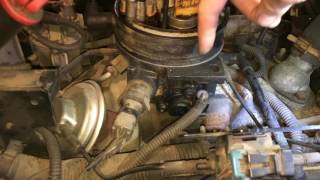
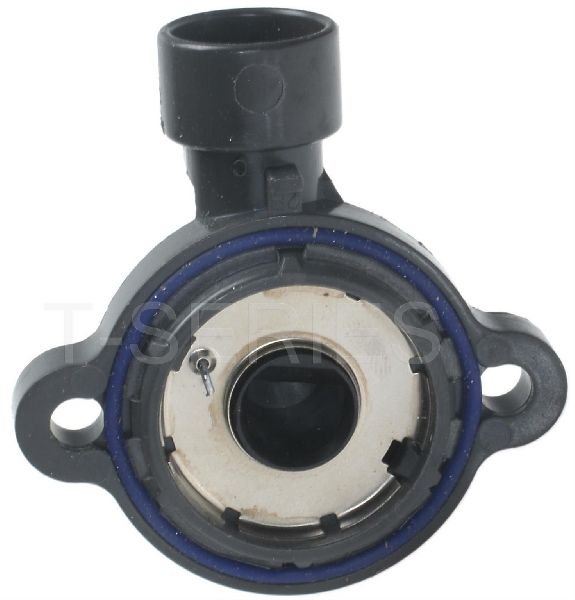
Located on the throttle body for gas engines (5.7L, 7.4L). Typically a 3-pin connector. Held on by two T20 or T25 Torx screws. The 6.5L diesel uses a different Accelerator Pedal Position (APP) sensor assembly.
We Have This Part in Stock


The information in this article is provided for general reference and educational purposes only. Vehicle specifications, procedures, and part compatibility can vary by production date, trim level, and region. Always consult your vehicle's factory service manual and verify part numbers before purchasing or performing repairs. Safety-critical components such as airbags, seat belts, and braking systems should be installed by a qualified professional.
- GMC K3500: