

Ford Mustang Engine Coolant Temperature Sensor Guide (1995-2004)
A failing coolant temp sensor can cause poor performance and overheating in your SN95 or New Edge Mustang; here's how to choose the right replacement.
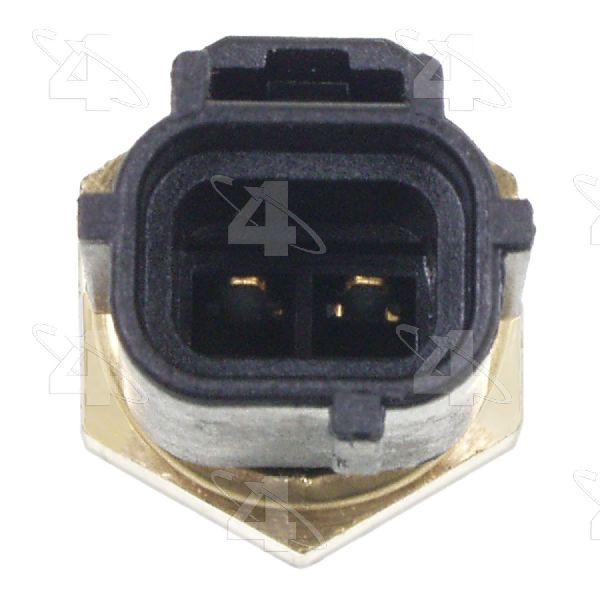
- For 1995-1998 Mustangs, verify if you need the two-wire ECT sensor (for the computer) or the one-wire sender (for the gauge).
- A bad ECT sensor commonly causes a check engine light (P0117, P0118), poor fuel economy, and hard starting when the engine is hot.
- This is an easy DIY replacement that takes less than an hour with basic tools.
- For this critical part, it is recommended to use the OEM Motorcraft brand or a high-quality aftermarket brand like Delphi or NGK for reliability.
Is Your Mustang's Engine Coolant Temp Sensor Failing?

A bad Engine Coolant Temperature (ECT) sensor can cause a surprising number of problems. Because the engine's computer relies on this sensor for accurate temperature readings, a faulty one can trick the computer into making the wrong adjustments. This can lead to poor performance, bad fuel economy, and even engine overheating.
Key Symptoms of a Bad ECT Sensor
- Check Engine Light: This is often the first sign. Common trouble codes include P0117 (Circuit Low Input), P0118 (Circuit High Input), and P0125 (Insufficient Coolant Temperature). 🎬 Watch: How to test and replace a sensor with these codes.
- Poor Fuel Economy: The computer may think the engine is cold and inject extra fuel, causing the engine to run rich.
- Black Smoke from Exhaust: A rich fuel mixture can result in black or dark-colored smoke from the tailpipe.
- Engine Overheating or Fans Not Working: If the sensor fails to report that the engine is hot, the cooling fans may not turn on when they should. Conversely, sometimes the fans will run constantly as a fail-safe.
- Hard Starting When Hot: If the sensor incorrectly tells the computer the engine is cold, the computer will provide a cold-start fuel mixture, making it difficult to start a warm engine.
- Rough Idle and Poor Performance: An incorrect air-fuel mixture can cause a rough idle, hesitation, and a general feeling of sluggishness.
Known Issues: Recalls and Service Bulletins
Searches of the National Highway Traffic Safety Administration (NHTSA) database and technical service bulletins (TSBs) did not find any specific recalls for the engine coolant temperature sensor on 1995-2004 Ford Mustangs. However, a related "safety improvement campaign" was issued for the 1995 model's engine cooling fan motor, which could seize and potentially cause a fire. While the sensor was not the cause, its function is directly related to fan operation.
Choosing the Right Aftermarket ECT Sensor

When it comes to sensors, quality matters. A cheap, inaccurate sensor can cause the same problems as a broken one. Here’s a breakdown of your options.
- OEM (Motorcraft): Motorcraft is Ford's official parts brand. Choosing a Motorcraft sensor guarantees an exact fit and the same performance as the original part. For a critical component like the ECT sensor, many Mustang owners prefer to stick with OEM to avoid any performance issues.
- Premium Aftermarket (Delphi, NGK): Brands like Delphi and NGK are often original equipment suppliers for other major car manufacturers and have a strong reputation for quality and reliability. They are an excellent alternative to Motorcraft and can sometimes offer a better price.
- Standard/Value Aftermarket (Standard Ignition, Walker, Facet, etc.): These brands offer a budget-friendly solution. While they can be a good value, their quality and longevity can sometimes be inconsistent compared to OEM or premium brands. For a part that is relatively inexpensive and easy to replace, it may be worth spending a few extra dollars for a higher-tier brand.
Sensor vs. Sender: A Common Mistake on 1995-1998 Mustangs
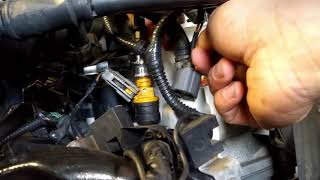
On V8 and V6 Mustangs from 1995-1998, there are two different temperature components. The ECT Sensor has a two-wire connector and sends information to the engine computer. The Temperature Sender has a single wire and only operates the gauge on your dashboard. If your check engine light is on, you likely need the two-wire ECT sensor. If your gauge is acting up but the car runs fine, you may only need the one-wire sender.
🎬 See this video to identify the sensor and sender locations.Typical Replacement Costs
Replacing the ECT sensor is an affordable repair, especially if you do it yourself.
| Part Type | Price Range |
|---|---|
| New OEM (Motorcraft) | $25 - $60 |
| New Aftermarket | $12 - $57 |
| Shop Labor | $75 - $150 |
Frequently Asked Questions

Where is the ECT sensor located on a 1995-2004 Mustang?
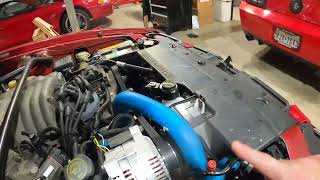
The ECT sensor is threaded into the engine's coolant crossover pipe, which is part of the intake manifold at the front of the engine. It is generally easy to access, located near the thermostat housing. On V8 models, it's typically on the passenger side of the distributor or coil packs.
Can I replace the ECT sensor myself?
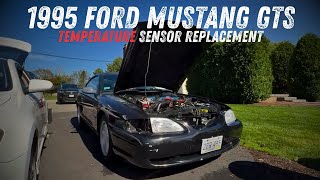
Yes, this is a great DIY job for beginners. The sensor is easy to access, and the replacement should take less than an hour with basic tools like a wrench or a deep socket. Be sure to perform the replacement on a cold engine to avoid burns 🎬 Watch this quick walkthrough of an ECT sensor replacement. and minimize coolant loss.
How do I know if the sensor or the thermostat is bad?
A bad thermostat often causes the engine to either overheat quickly or never reach operating temperature. A bad ECT sensor is more likely to cause a check engine light, poor fuel economy, and performance issues like a rough idle or hard starting, even if the engine temperature seems normal. An OBD-II scanner can read the temperature the sensor is reporting to the ECU, which can help diagnose the problem.
What happens if I order the wrong part for my 1998 Mustang?
The most common mistake for 1995-1998 models is mixing up the two-wire ECT sensor (for the computer) and the one-wire temperature sender (for the gauge). They are not interchangeable. If you replace the wrong one, your original problem will not be fixed. Always verify the number of wires on your existing part before ordering.
Helpful Videos
Technical Specifications
OEM Part Numbers: DY961 3F1A12A648AB
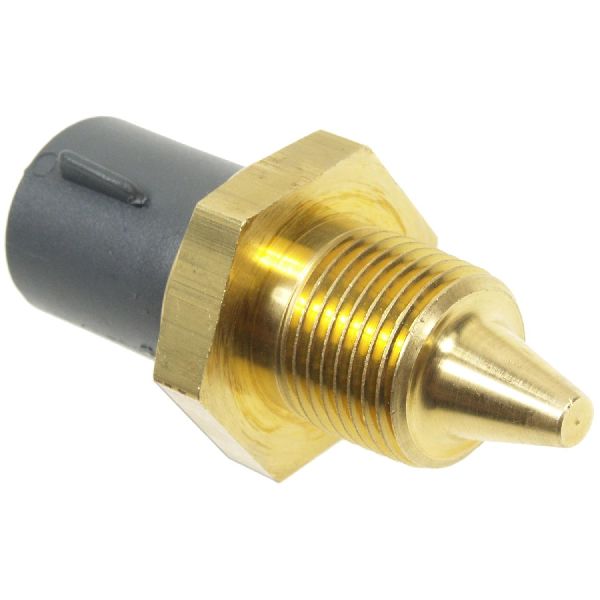
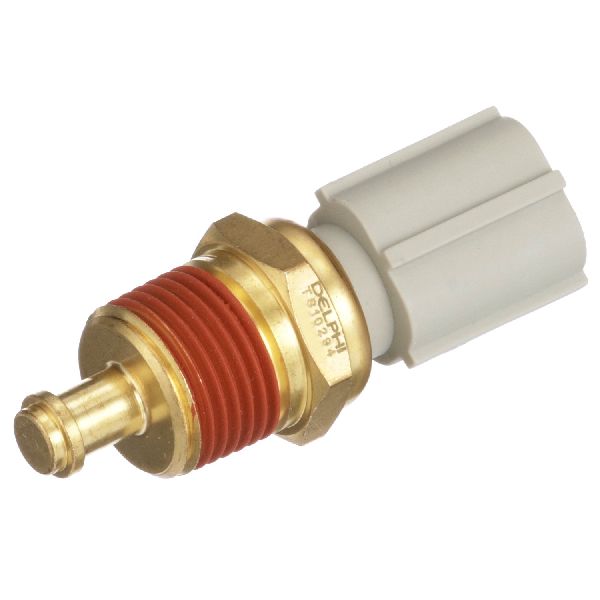
Typically a two-pin brass or composite sensor with threaded body. Resistance changes with temperature. For 1995-1998 models, ensure you are purchasing the two-pin sensor for the ECU, not the single-pin sender for the gauge.
We Have This Part in Stock


The information in this article is provided for general reference and educational purposes only. Vehicle specifications, procedures, and part compatibility can vary by production date, trim level, and region. Always consult your vehicle's factory service manual and verify part numbers before purchasing or performing repairs. Safety-critical components such as airbags, seat belts, and braking systems should be installed by a qualified professional.
- Ford Mustang:
- 🎬 Helpful Videos
- 🛍️ Shop This Part
- Is Your Mustang's Engine Coolant Temp Sensor Failing?
- Key Symptoms of a Bad ECT Sensor
- Known Issues: Recalls and Service Bulletins
- Choosing the Right Aftermarket ECT Sensor
- Sensor vs. Sender: A Common Mistake on 1995-1998 Mustangs
- Typical Replacement Costs
- Frequently Asked Questions
- 🎟️ Get 5% Off