

Ford Thunderbird Engine Coolant Temperature Sensor Guide (1995-2005)
Fix your Thunderbird's erratic temperature gauge, poor fuel economy, or overheating issues by understanding its temperature sensors.
- The 2002-2005 models use a Cylinder Head Temp (CHT) sensor, which is different from the traditional Engine Coolant Temp (ECT) sensor on 1995-1997 models; ensure you buy the right part.
- A bad sensor can cause serious issues, including poor fuel economy, rough running, and even engine overheating.
- For this critical part, stick with OEM (Motorcraft) or a top-tier aftermarket brand like NGK or Standard Ignition for best results.
- Replacement is a simple DIY task that can be done in under 30 minutes with minimal coolant loss.
Understanding Your Thunderbird's Temperature Sensors: A Tale of Two Generations
The 1995-2005 Ford Thunderbird covers two different generations with two different engine temperature monitoring systems. It is critical to know which one your car has.
- 1995-1997 (10th Generation): Models with the 3.8L V6 and 4.6L V8 engines use a traditional Engine Coolant Temperature (ECT) sensor. This sensor screws directly into a coolant passage, usually on the intake manifold near the thermostat housing 🎬 See this walkthrough for replacing the sensor on a 4.6L engine., and measures the coolant's temperature directly. These models also typically have a separate, single-wire sender just for the dashboard temperature gauge.
- 2002-2005 (11th Generation): Models with the 3.9L V8 use a more modern system. The primary sensor is a Cylinder Head Temperature (CHT) sensor. Instead of measuring coolant, it measures the actual temperature of the engine's metal cylinder head 🎬 Watch: How to replace a Ford cylinder head temperature sensor.. This is a fail-safe design; if you have a major coolant leak, the CHT sensor will still detect the engine overheating, while a traditional ECT sensor would give a false, low reading. These models may also have a secondary ECT sensor for other systems, often located near the oil filter housing. Many part stores incorrectly label CHT sensors as ECT sensors, so be sure you are buying the correct part for the correct location.
Symptoms of a Failing Temperature Sensor
A bad ECT or CHT sensor can cause a range of problems, from annoying to critical. Look out for these common signs:
- Check Engine Light: The most common sign is a check engine light with codes like P0117 (sensor circuit low, indicating a false high temp) or P0118 (sensor circuit high, indicating a false low temp).
- Poor Fuel Economy: If the sensor falsely tells the computer the engine is cold, the system will run a rich fuel mixture, wasting gas.
- Black Smoke from Exhaust: A very rich fuel mixture can result in black smoke coming from the tailpipe.
- Engine Overheating: A sensor that fails to report a high temperature may not trigger the electric cooling fans, leading to overheating in traffic or at low speeds.
- Erratic Temperature Gauge: The gauge on your dashboard may read cold all the time, spike to hot suddenly, or fluctuate randomly.
- Hard Starting: Especially when the engine is cold, the wrong fuel mixture can make the engine difficult to start.
Known Issues, Recalls, and TSBs
Our research found no active recalls or specific Technical Service Bulletins (TSBs) from Ford or the NHTSA directly related to the engine coolant temperature sensors for the 1995-2005 Ford Thunderbird. While cooling system issues can occur, the sensor itself has not been identified as a widespread, recall-worthy defect.
Choosing the Right Aftermarket Sensor
While you can always get a part from the dealer, the aftermarket offers a wide range of quality and price. For a critical sensor like this, it's best to avoid the cheapest options, which can fail prematurely.
Tier 1: OEM or Premium Aftermarket
These brands are either original equipment manufacturers for Ford or have a long-standing reputation for quality that rivals OEM. They are the most reliable choice.
- Motorcraft: The OEM choice. You can't go wrong, but it may cost more.
- NGK: A top-tier OEM supplier for many brands, known for excellent sensor technology.
- Standard Ignition (SMP): A highly respected aftermarket brand often considered an OEM-equivalent.
- Delphi: Another major OEM supplier with a strong reputation in electronics.
Tier 2: Reputable Aftermarket
These brands offer a good balance of quality and price. They are a solid choice for most repairs.
- Hella
- Walker Products
- Vemo
- Facet
Tier 3: Economy Brands
These brands are for budget-focused repairs. While they will work, their long-term reliability and accuracy may not match the higher-tier options. Use these if the budget is the primary concern.
- URO Parts
- True Tech
- Global Parts
- Holstein
A Note on Connectors
Over time, the plastic connector for the temperature sensor can become brittle and break during replacement. Inspect the connector and wiring pigtail before you start. It's often a good idea to have a new pigtail on hand, just in case.
Cost of Replacing the Engine Coolant Temperature Sensor
| Item | Estimated Cost |
|---|---|
| New OEM (Motorcraft) Part | $25 - $60 |
| New Aftermarket Part | $12 - $188 |
| Shop Labor | $75 - $150 |
| Total Professional Replacement | $90 - $250 |
Frequently Asked Questions
Where is the temperature sensor on my Thunderbird?
For 1995-1997 models (3.8L/4.6L), the ECT sensor is usually on the front of the intake manifold, near the thermostat housing. For 2002-2005 models (3.9L), the primary CHT sensor is on the driver's side cylinder head, while a secondary ECT sensor may be near the oil filter housing.
Can I replace this sensor myself?
Yes, this is a very DIY-friendly job. It typically requires only basic hand tools. The main challenge is accessing the sensor and swapping it quickly to minimize coolant loss. The difficulty is about a 1 out of 5.
Do I need to drain all the coolant?
No, a full drain is not necessary. Some coolant will spill when you remove the old sensor. To minimize loss, have the new sensor ready to install immediately. Work on a cold engine to avoid burns and pressure spray. After replacement, top off the coolant reservoir as needed.
What do codes P0117 and P0118 mean?
P0117 means "ECT Circuit Low Input," which the computer interprets as an extremely high temperature. This can be caused by a short in the wiring or a failed sensor. P0118 means "ECT Circuit High Input," which the computer interprets as an extremely low temperature 🎬 Watch: EricTheCarGuy explains how to diagnose a P0118 code. (like -40°F). This is often caused by a bad sensor, a disconnected plug, or a break in the wire.
Helpful Videos
Technical Specifications
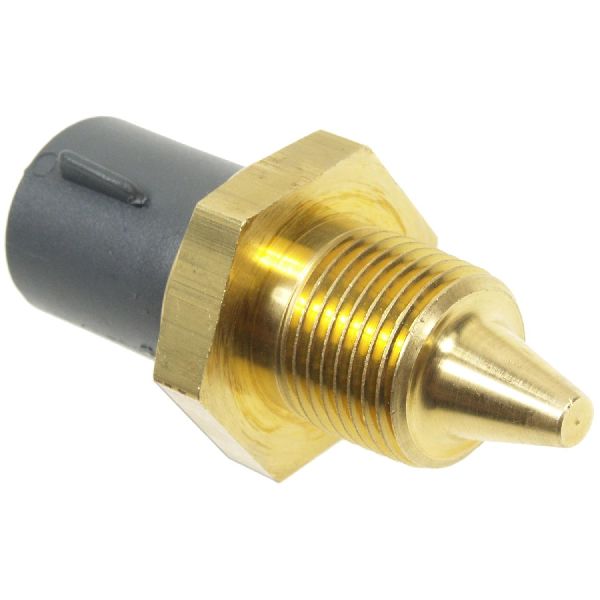
OEM Part Numbers: F5AZ-12A648-A F62Z-12A648-AA 1W4Z12A648AA F5AZ-12A648-AB
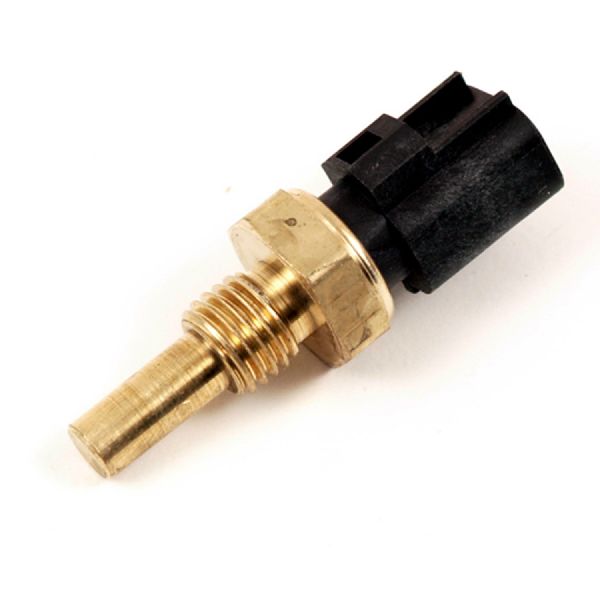
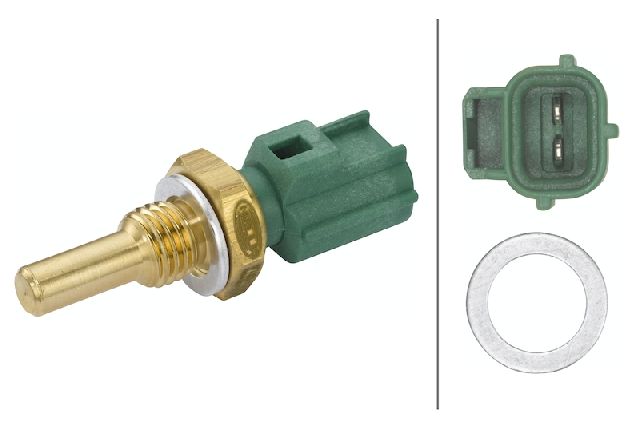
The sensor is a thermistor, meaning its electrical resistance changes with temperature. It is typically a two-wire sensor. The specific part for your vehicle will have a unique thread pitch and connector style that must match perfectly.
We Have This Part in Stock


The information in this article is provided for general reference and educational purposes only. Vehicle specifications, procedures, and part compatibility can vary by production date, trim level, and region. Always consult your vehicle's factory service manual and verify part numbers before purchasing or performing repairs. Safety-critical components such as airbags, seat belts, and braking systems should be installed by a qualified professional.
- Ford Thunderbird:
- 🎬 Helpful Videos
- 🛍️ Shop This Part
- Understanding Your Thunderbird's Temperature Sensors: A Tale of Two Generations
- Symptoms of a Failing Temperature Sensor
- Known Issues, Recalls, and TSBs
- Choosing the Right Aftermarket Sensor
- A Note on Connectors
- Cost of Replacing the Engine Coolant Temperature Sensor
- Frequently Asked Questions
- 🎟️ Get 5% Off