

Dodge Stratus Crankshaft Position Sensor Guide (1995-2006)
Having trouble with your Dodge Stratus stalling or not starting? A bad crankshaft position sensor could be the problem.
- A failing crankshaft sensor is a very common cause of no-start, stalling, and rough running issues on the Dodge Stratus.
- Symptoms are often heat-related, with the car failing to start after a short trip but starting again once cooled.
- For reliable results, it is strongly recommended to use an OEM (Mopar) or NGK (NTK) brand sensor; many cheaper aftermarket brands are known to fail quickly.
- Replacement difficulty varies by engine: the 2.4L is challenging due to tight access, while the V6 engines are generally more straightforward.
Symptoms of a Failing Crankshaft Sensor in a Dodge Stratus


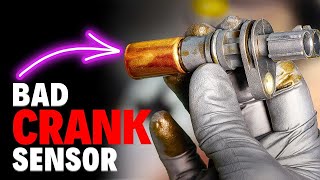
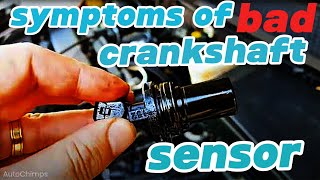
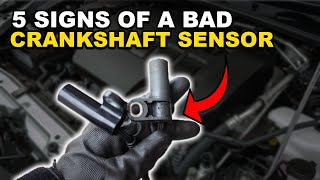
When the crankshaft position sensor in your Stratus starts to fail, it can cause a number of noticeable problems. Often, the issues are intermittent at first, meaning they come and go. One of the most common signs is the Check Engine Light turning on. A code scanner will often show codes like P0335 (Crankshaft Position Sensor 'A' Circuit Malfunction), P0339 (Crankshaft Position Sensor Circuit Intermittent), or P0300 (Random/Multiple Cylinder Misfire).
Other common symptoms include:
- Engine Will Not Start: This is a classic symptom. The engine will crank over but won't fire up because the computer doesn't know when to send spark and fuel.
- Intermittent Stalling: The engine may shut off unexpectedly while you are driving or when idling at a stoplight. This can be a serious safety issue.
- Rough Idle and Misfiring: Your car may run erratically, shake, or feel like it's sputtering, especially at idle.
- Poor Acceleration: The car might feel sluggish and lack power when you press the gas pedal.
- Reduced Fuel Economy: Incorrect timing from a bad sensor can cause the engine to use more fuel than normal.
Heat-Related Failure
A common issue with these sensors is failure after the engine gets hot. You might drive a short distance, turn the car off, and then find it won't restart until it has cooled down for several hours. This is a strong indicator that the crankshaft sensor is the culprit.
Choosing the Right Aftermarket Crankshaft Sensor

When it comes to electronic sensors for your Stratus, not all aftermarket brands are created equal. For Chrysler vehicles of this era, owner experiences strongly suggest that some brands are much more reliable than others.
Tier 1: Recommended Brands
- NGK (NTK): This brand is widely recommended by mechanics and vehicle owners. NTK is often the original equipment manufacturer (OEM) for Chrysler sensors, meaning you are getting a part of the same quality as the one from the dealer, just without the Mopar box.
- Mopar (OEM): While more expensive, the original Mopar part is the benchmark for quality and is guaranteed to work correctly. If you want to fix the problem once and not worry about it, this is a safe bet.
Tier 2: Use with Caution
- Standard Motor Products (SMP): Generally considered a decent quality brand, but some users have reported occasional issues.
- Delphi: A well-known brand that often produces quality parts, but for critical sensors on a Stratus, owner feedback is less common than for NGK/NTK.
- Beck Arnley: This brand sources parts from various manufacturers, so quality can be inconsistent.
Tier 3: Economy Brands (Not Recommended for this Part)
- Dorman: While Dorman makes many useful parts, their electronic sensors have a mixed reputation. Many owners report Dorman crankshaft sensors failing quickly or not working out of the box for Chrysler vehicles.
- Store Brands (e.g., Duralast): These are typically budget-focused parts. Given the critical function of this sensor and the labor involved in replacing it on some Stratus engines, using a store brand part can be a gamble that leads to doing the job twice.
Why Part Quality Matters for This Sensor
The crankshaft sensor works by reading a magnetic signal. Forum discussions among Dodge owners suggest that many cheaper aftermarket sensors have weaker magnets or electronics that are not calibrated correctly. This can lead to a weak or incorrect signal, causing the same problems as the old, failed sensor. It is often worth spending more on a quality brand like NGK/NTK to avoid repeat failures.
Dodge Stratus Crankshaft Sensor Cost
| Part Type | Estimated Cost |
|---|---|
| New OEM (Mopar) | $150 - $220 |
| New Aftermarket (Premium) | $40 - $90 |
| New Aftermarket (Economy) | $21 - $40 |
| Shop Labor | $150 - $350+ |
Note: Labor costs can vary significantly based on which engine your Stratus has. The 2.4L engine is more labor-intensive than the V6 models.
Known Issues & Installation Info

There are no specific recalls from the NHTSA for the crankshaft position sensor on the 1995-2006 Dodge Stratus. However, a Technical Service Bulletin (TSB) existed for later model year Dodge vehicles (2009-2010) with similar engines that experienced a P0339 code, which sometimes required shimming the sensor to correct its spacing. This indicates that sensor reading accuracy is a known sensitivity on these engines.
Installation by Engine
- 2.4L 4-Cylinder: This is the most difficult replacement. The sensor is located on the back of the engine block, underneath the starter and between the front motor mount. Access is very tight. The job often requires jacking up the engine and removing the front motor mount bracket or removing the starter to gain access.
- 2.7L V6: The sensor is located on the back of the engine, on the passenger side, bolted to the transmission bellhousing where it reads the flywheel. It is typically accessed from underneath the vehicle. After removing the air filter box for a better view from the top, you can reach the 10mm bolt and connector from below.
- 2.5L & 3.0L V6: The sensor is generally located on the front of the engine, near the crankshaft pulley, or on the transmission bellhousing. For the 3.0L, it is often found on the back of the engine near the firewall.
Frequently Asked Questions (FAQ)
Can I still drive my Stratus with a bad crankshaft sensor?
It is not recommended. A failing sensor can cause the engine to stall at any time, which is a major safety hazard, especially in traffic. If the sensor fails completely, your car will not start at all, leaving you stranded.
My check engine light is on for a crank sensor. Should I just replace it?
While the sensor is the most common cause, the problem could also be in the wiring or the connector. A visual inspection for damaged wires or a loose, corroded connector is a good first step. Sometimes oil leaks can damage the sensor or its wiring. If the wiring looks good, replacing the sensor is the next logical step.
I replaced the sensor and my car still won't start or runs rough. What's wrong?
This is a common complaint when using low-quality aftermarket sensors. The new sensor may be faulty right out of the box. The second possibility is a wiring issue between the sensor and the engine computer. It's highly recommended to use an OEM/Mopar or NTK brand sensor to rule out part quality as the problem.
Do I need to perform a 'relearn' procedure after replacing the sensor?
For the 1995-2006 Dodge Stratus, a specific relearn procedure is not typically required after replacing the crankshaft position sensor. However, it is always a good practice to clear the diagnostic trouble codes with a scan tool after the repair is complete.
Helpful Videos
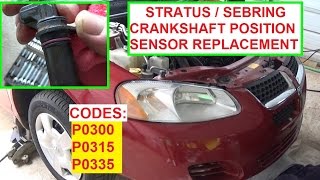
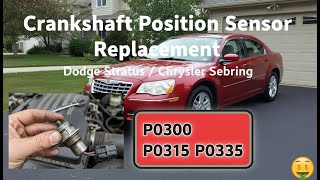
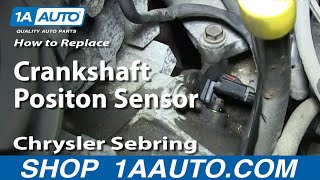
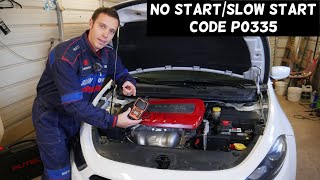
Technical Specifications
OEM Part Numbers: 4609077 4807083 PC105 5269703 MD349080 05269873AB
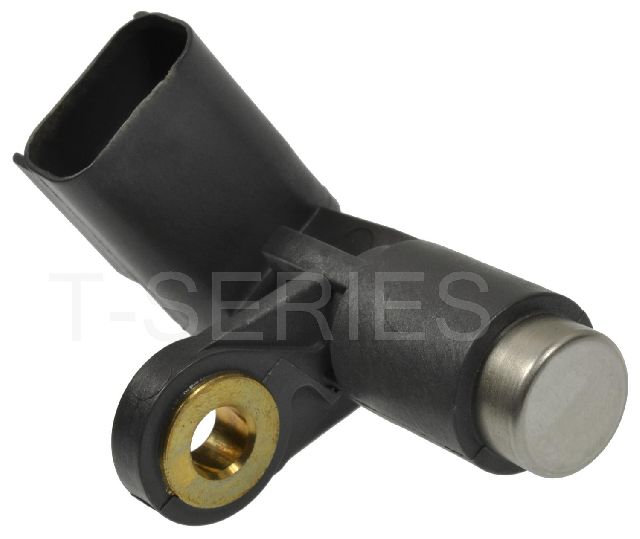
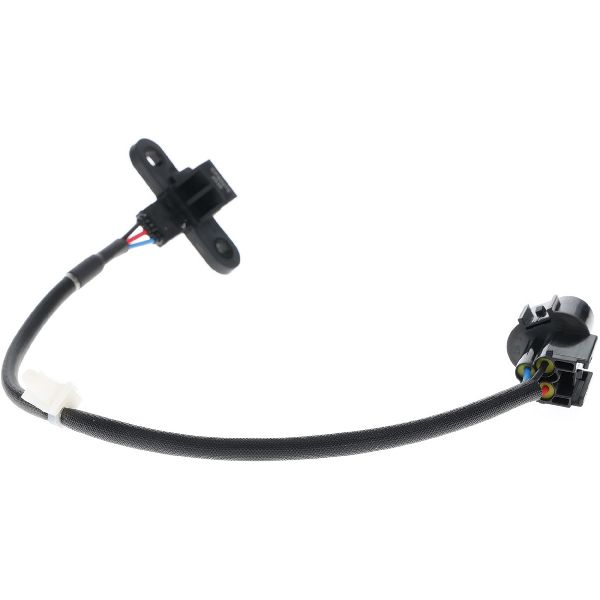
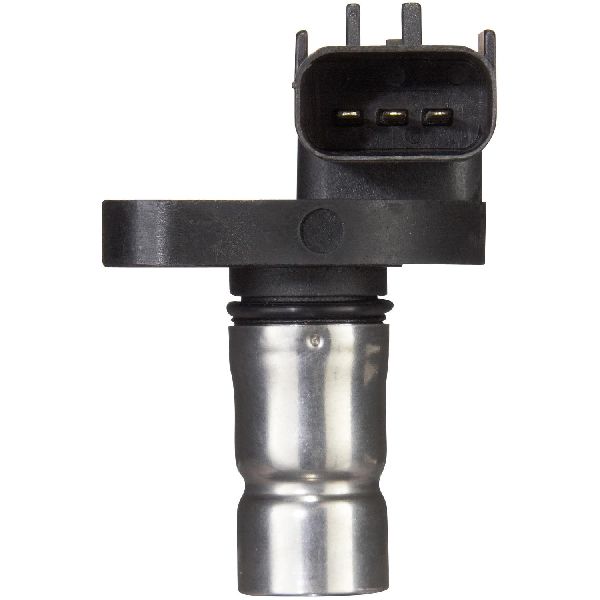
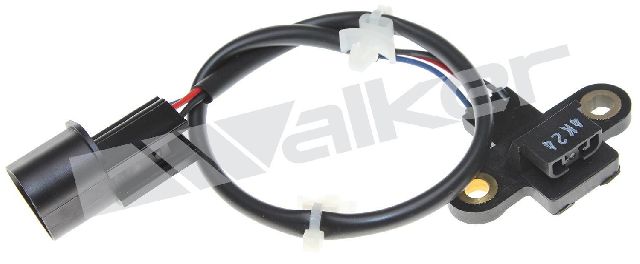
The sensor is a 3-pin Hall effect or magnetic sensor that reads the rotation of the crankshaft via a tone wheel or flywheel. The connector shape and mounting bracket vary depending on the engine (2.4L, 2.5L, 2.7L, or 3.0L) and model year.
We Have This Part in Stock


The information in this article is provided for general reference and educational purposes only. Vehicle specifications, procedures, and part compatibility can vary by production date, trim level, and region. Always consult your vehicle's factory service manual and verify part numbers before purchasing or performing repairs. Safety-critical components such as airbags, seat belts, and braking systems should be installed by a qualified professional.
- Dodge Stratus:
- 🎬 Helpful Videos
- 🛍️ Shop This Part
- Symptoms of a Failing Crankshaft Sensor in a Dodge Stratus
- Heat-Related Failure
- Choosing the Right Aftermarket Crankshaft Sensor
- Tier 1: Recommended Brands
- Tier 2: Use with Caution
- Tier 3: Economy Brands (Not Recommended for this Part)
- Why Part Quality Matters for This Sensor
- Dodge Stratus Crankshaft Sensor Cost
- Known Issues & Installation Info
- Installation by Engine
- Frequently Asked Questions (FAQ)
- 🎟️ Get 5% Off