

Volkswagen Golf Engine Thermostat Guide: 1995-2007 Models
Everything you need to know before replacing the thermostat on your Mk3, Mk4, or Mk5 Golf.
- Identify your Golf's generation (Mk3, Mk4, or Mk5) before buying parts, as the thermostat design varies significantly.
- For Mk4 (1999-2006) models, always replace the plastic thermostat housing with the thermostat to prevent future leaks.
- A thermostat stuck open is the most common failure, causing a slow warm-up, poor heat, and a P0128 trouble code.
- Always use the correct OEM-temperature thermostat and refill the system with VW-specific G12/G13 coolant.
Understanding Thermostat Failure in Your Golf

For the 1995-2007 Volkswagen Golf, which covers the Mk3, Mk4, and early Mk5 generations, the engine coolant thermostat is a common replacement item. Failures typically happen in one of two ways: stuck open or stuck closed. A thermostat stuck open is the most common issue and will prevent your engine from reaching its proper operating temperature. A thermostat stuck closed is much more dangerous, as it will cause the engine to overheat quickly.
Key Differences by Golf Generation
It is critical to identify your Golf's generation, as the thermostat and its housing are very different across these models.
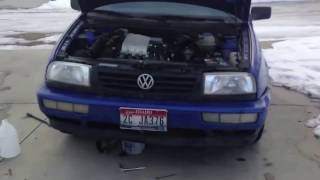
- Mk3 (1995-1999): These models use a simpler, standalone thermostat that is relatively straightforward to access and replace. 🎬 Watch this step-by-step guide for replacing a Mk3 thermostat.
- Mk4 (1999-2006): Famous for its plastic thermostat housing, which becomes brittle and cracks over time, causing coolant leaks. It is strongly recommended to replace the entire housing assembly, not just the thermostat itself. Aftermarket aluminum housings are a popular and durable upgrade.
- Mk5 (2006-2007): The thermostat is typically integrated into a larger, more complex housing assembly. On some engines, it is electronically controlled. Replacement is more involved and can be difficult for a DIY mechanic.
Common Symptoms of a Bad Thermostat


If your Golf's thermostat is failing, you will likely notice one or more of these signs:
- Engine is Slow to Warm Up: The temperature gauge takes a very long time to reach the center (90°C) mark, or it drops below 90°C when driving at highway speeds. This is a classic sign of a thermostat stuck open.
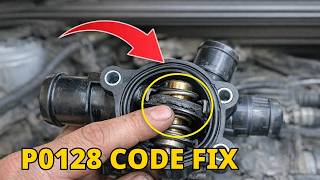
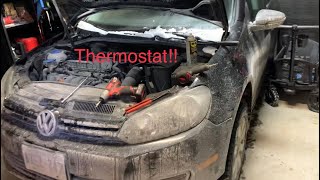
- Check Engine Light: A thermostat that is stuck open will often trigger the code P0128 (Coolant Temperature Below Thermostat Regulating Temperature). 🎬 Watch this video to understand and fix the P0128 code.
- Engine Overheating: The temperature gauge climbs into the red zone. This is a serious condition caused by a thermostat stuck closed. Pull over and shut off the engine immediately to prevent damage.
- Poor Heater Performance: If the engine isn't getting hot enough, the air blowing from your vents will be lukewarm at best, especially in winter.
- Erratic Temperature Gauge: The needle may fluctuate randomly between hot and cold.
- Coolant Leaks: For Mk4 owners, you may see pink or white crusty residue or puddles of coolant under the engine. This is often from a cracked plastic thermostat housing.
Pro Tip: The Mk4 Plastic Housing
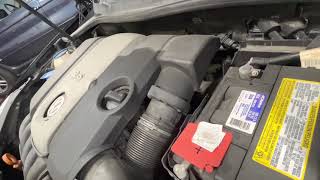
If you own a Mk4 Golf (1999-2006), do not just replace the thermostat. The original plastic housing is the primary point of failure. Replace the entire thermostat and housing assembly. 🎬 See how to replace the Mk4 thermostat and plastic housing. Consider an aftermarket aluminum housing for a permanent solution.
Choosing the Right Aftermarket Thermostat

For VWs, sticking close to the original equipment (OE) specification is often the best path.
- Tier 1: OEM-Equivalent Brands (e.g., Calorstat, Beck Arnley): These brands often supply parts directly to automakers or specialize in re-packaging OE parts. They are a reliable choice and highly recommended by VW enthusiasts for fit and correct temperature rating.
- Tier 2: Standard Aftermarket (e.g., Gates, Stant, Motorad): These are widely available and affordable. Quality can be inconsistent. While many users have no issues, some report premature failures compared to OEM parts. Motorad is a large manufacturer that produces thermostats for many other brands.
- Tier 3: Performance Brands (e.g., Mishimoto): Mishimoto offers "racing" thermostats that open at a lower temperature. The goal is to start the cooling process sooner. However, real-world reviews are mixed, with some users seeing no benefit. A lower-temperature thermostat can also negatively impact heater performance in cold climates. For a daily-driven vehicle, the factory-specified temperature is almost always the best choice.
A Note on "Fail-Safe" Thermostats
Some brands market "fail-safe" thermostats designed to lock in the open position if they fail. While this prevents overheating, many VW owners report these can fail prematurely in the open position, leading you right back to a P0128 code and poor engine performance. Sticking with an OEM-style design is often more reliable.
Cost of Replacing a Volkswagen Golf Thermostat
| Part Type | Estimated Part Cost |
|---|---|
| New Aftermarket Thermostat/Housing | $12 - $72 |
| New OEM Thermostat/Housing | $50 - $150 |
| Shop Labor | $150 - $400 |
Costs are estimates and can vary based on your vehicle's engine, generation, and local labor rates. Labor is higher on models where the thermostat is more difficult to access.
Frequently Asked Questions

What temperature thermostat should I buy for my Golf?
Always use a thermostat with the factory-specified opening temperature. For most 1995-2007 Golf models, this is between 87°C and 92°C. Using a lower temperature "racing" thermostat on a stock, daily-driven car can decrease fuel efficiency and heater performance without providing any real cooling benefit.
Do I have to replace the thermostat housing too?
If you have a Mk4 Golf (1999-2006), the answer is yes. The plastic housing is a known failure point that becomes brittle and leaks. It's a false economy to replace only the thermostat, as you will likely have to do the job again when the housing fails. For Mk3 and Mk5 models, you generally only need to replace the housing if it is visibly cracked or damaged.
What else should I replace at the same time?
Any time you replace the thermostat, you will lose coolant. It is the perfect time to do a coolant flush with the correct VW-approved G12, G13, or newer equivalent coolant. Never mix VW coolant with standard green or orange antifreeze. You should also replace the thermostat's O-ring or gasket to ensure a leak-free seal.
Is this a good DIY job?
It depends on your skill level and your Golf's generation. A Mk3 is relatively easy. A Mk4 is more challenging due to tight access around the alternator. A Mk5 can be quite difficult and may require special tools. All versions require draining the coolant, which can be messy. If you are not comfortable with this, it's best to leave it to a professional.
Helpful Videos

Technical Specifications
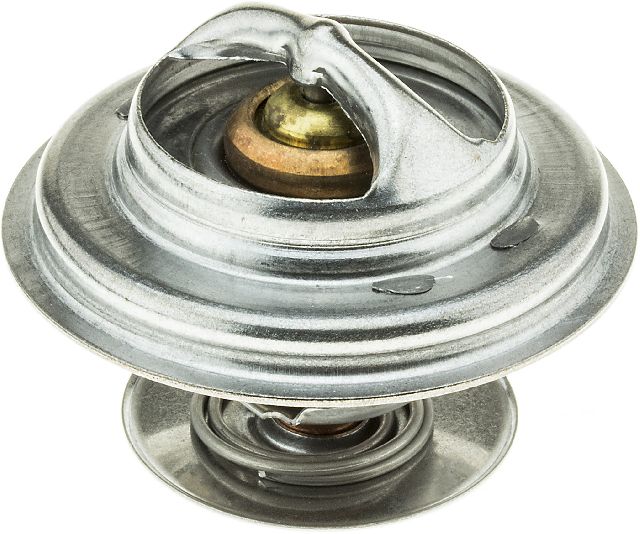
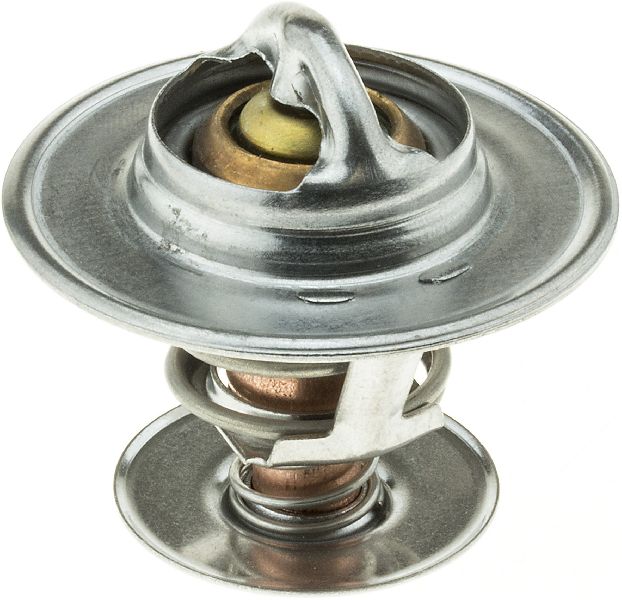
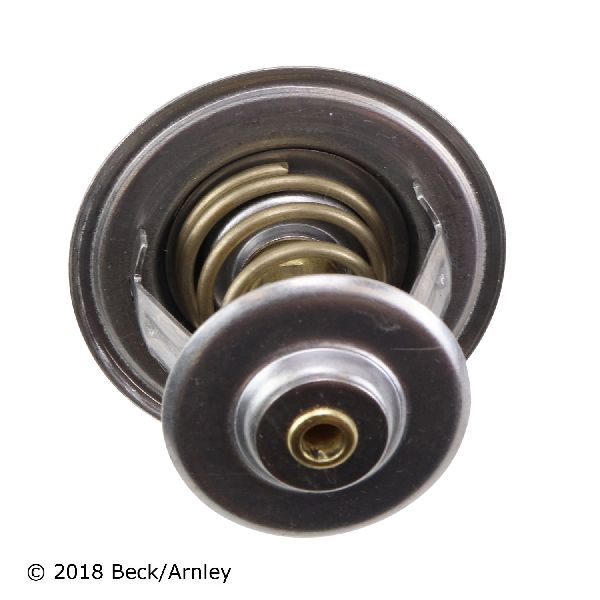
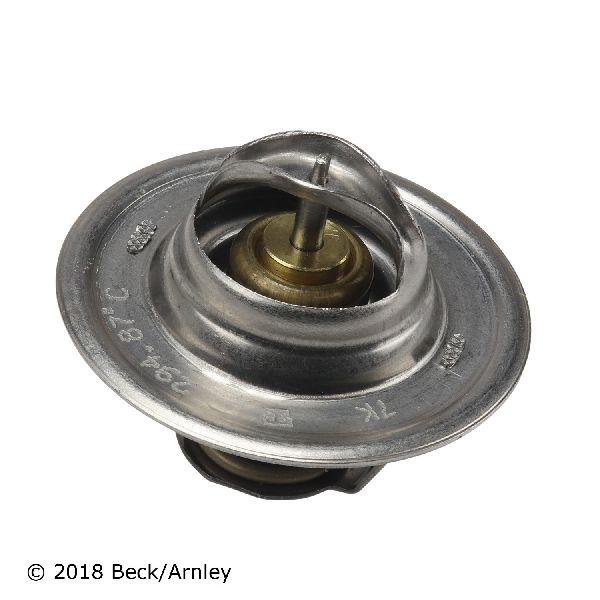
OEM Part Numbers: 06A121132 038121121 07K121113B
The correct thermostat depends on the specific engine (e.g., 1.8T, 2.0L, VR6, TDI) and model year. Most factory thermostats for this period open between 87°C and 92°C. Always verify the part number with your vehicle's VIN before purchasing.
We Have This Part in Stock


The information in this article is provided for general reference and educational purposes only. Vehicle specifications, procedures, and part compatibility can vary by production date, trim level, and region. Always consult your vehicle's factory service manual and verify part numbers before purchasing or performing repairs. Safety-critical components such as airbags, seat belts, and braking systems should be installed by a qualified professional.
- Volkswagen Golf:
- 🎬 Helpful Videos
- 🛍️ Shop This Part
- Understanding Thermostat Failure in Your Golf
- Key Differences by Golf Generation
- Common Symptoms of a Bad Thermostat
- Pro Tip: The Mk4 Plastic Housing
- Choosing the Right Aftermarket Thermostat
- A Note on "Fail-Safe" Thermostats
- Cost of Replacing a Volkswagen Golf Thermostat
- Frequently Asked Questions
- 🎟️ Get 5% Off