

Hyundai Accent Windshield Washer Pump: A Guide for 1995-2020 Models
If your washer fluid isn't spraying, here's how to diagnose and replace the pump on your Accent.
- Before buying, listen for the pump's hum. If it's silent, the pump is likely dead; if it hums with no spray, check for clogs first.
- Verify if your Accent needs a single-outlet (front only) or dual-outlet (front and rear) pump before ordering. This is the most common ordering mistake.
- Replacement is a simple DIY job that requires removing the passenger-side wheel and fender liner to access the pump.
- Aftermarket pumps from brands like Ackoja and Trico are a cost-effective and reliable alternative to OEM parts for the Accent.
Is Your Windshield Washer Pump Failing?


A faulty windshield washer pump is a common issue on many vehicles, including the Hyundai Accent. The symptoms are usually straightforward. If you activate the washers and nothing happens, or the spray is very weak, the pump is a likely suspect. This guide will help you understand the problem and choose the right replacement part.
Common Failure Symptoms
Before replacing parts, confirm the diagnosis. Here are the most common signs of a bad washer pump on a Hyundai Accent:
- No Sound, No Fluid: You pull the lever, the wipers move, but you hear no humming or buzzing sound from the front passenger side of the car. This often means the pump's electric motor has failed or there's an electrical issue, like a blown fuse.
- Pump Hums, But No Fluid Sprays: If you can hear the pump motor running but no fluid comes out, the problem could be a clog. Often, the small filter grommet where the pump pushes into the reservoir gets blocked with gel-like deposits from mixing different types of washer fluid. It could also be caused by empty fluid, disconnected hoses, or clogged nozzles.
- Weak or Uneven Spray: A dying pump may lose its ability to create strong pressure, resulting in a weak stream that doesn't effectively clean the windshield. This can also be a symptom of a clogged filter or nozzles.
Check This First!
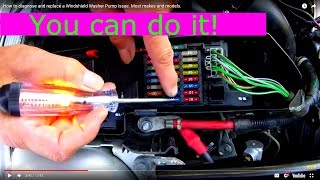
Before buying a new pump, check the fuse for the washer system. On many Accents, it is shared with the wiper motor, so if your wipers work, the fuse is likely okay. Also, make sure your washer fluid reservoir is full. A surprisingly common issue is simply running out of fluid.
Choosing the Right Aftermarket Pump
For the 1995-2020 Hyundai Accent, you don't need to pay for an expensive Original Equipment (OEM) part. Quality aftermarket pumps from brands like Ackoja and Trico offer reliable performance at a much lower cost. Ackoja specializes in parts for Asian vehicles and has positive reviews for its washer pumps. Trico is a well-established brand known for its wiper systems.
The most important step is ordering the correct part for your specific Accent:
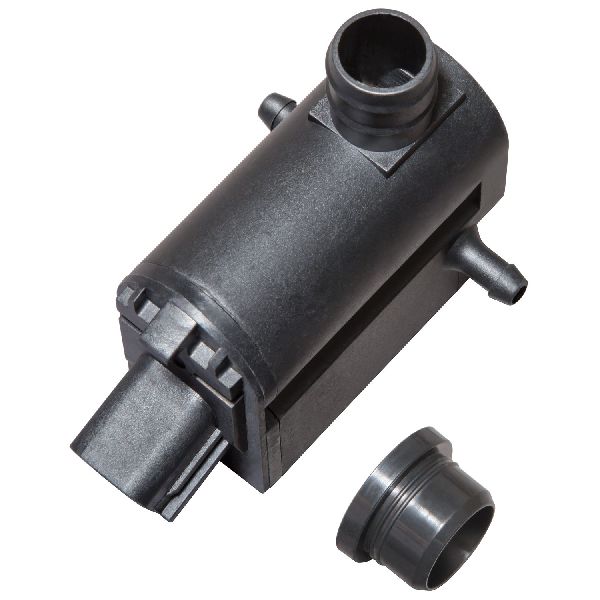
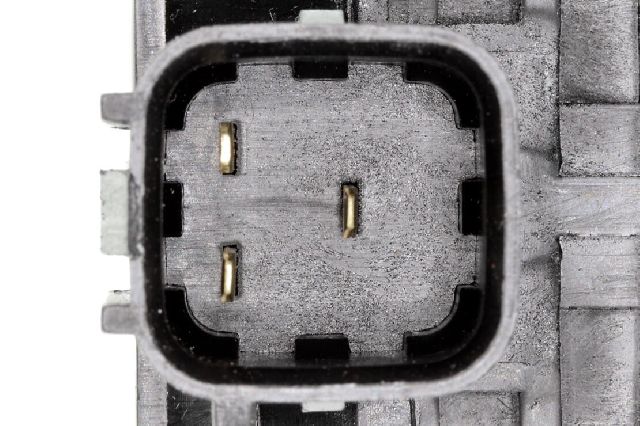
- Front vs. Front & Rear: Does your Accent have a rear wiper and washer (common on hatchbacks)? If so, you likely need a single pump with two outlets and a 3-pin connector that reverses to pump fluid to the back. Sedans without a rear washer typically use a simpler, single-outlet pump. Check your existing pump or vehicle specifications before ordering to avoid mistakes.
- Verify Part Numbers: Cross-reference the OEM part number if possible. Common numbers include 98510-1W010, 98510-1C100, and 98510-2J500, but these vary by generation.
Pro Tip: Clean the Tank
When you replace the pump, it's the perfect time to clean the washer fluid reservoir. A common cause of pump failure is a clogged inlet filter from old or mixed fluid turning into a gel. Drain the old fluid, remove the reservoir if you can, and rinse it thoroughly with water to flush out any debris. Always use a single type of washer fluid to prevent gelling.
Cost of Replacing a Hyundai Accent Washer Pump
| Part Type | Estimated Cost |
|---|---|
| New OEM | $68 - $95 |
| New Aftermarket (Ackoja, Trico) | $30 - $42 |
| Used OEM | $40 - $55 |
| Shop Labor | $55 - $80 |
| Total Professional Replacement | $161 - $244 |
Frequently Asked Questions (FAQ)
Is it hard to replace the washer pump on a Hyundai Accent?
No, it is a relatively easy DIY job for someone with basic tools. The main challenge is accessing the pump. You will likely need to jack up the front passenger side of the car, remove the wheel, and then remove screws or clips holding the plastic fender liner to get to the bottom of the washer reservoir where the pump is located. The pump itself just pulls out of a rubber grommet.
Are there any recalls for the Hyundai Accent washer pump?
No, there are no specific recalls or widespread Technical Service Bulletins (TSBs) from Hyundai for windshield washer pump failure on the 1995-2020 Accent. Any failures are considered normal wear and tear.
My rear washer works but the front doesn't. Is the pump bad?
Yes, this still points to a bad pump. On models with front and rear washers, a single pump motor is often used. It spins one way for the front and reverses direction for the rear. If one direction fails, the entire pump assembly needs to be replaced.
Can I just clean the pump instead of replacing it?
Sometimes the issue is just a clogged inlet filter. You can try removing the pump and cleaning the small filter screen at its base. If the motor itself is burned out (i.e., makes no noise), cleaning will not help and the pump must be replaced.
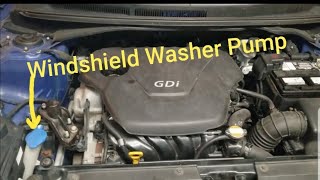
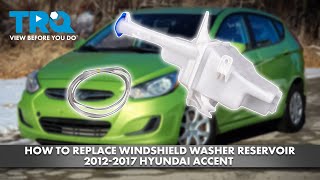
Helpful Videos

Technical Specifications
OEM Part Numbers: 98510-1W010 985101C500 98510-1C100 98510-2J500 98510-3B000
Configuration varies by model year and body style (Sedan vs. Hatchback). May be a single outlet pump for front washers only, or a dual-outlet, reversing pump for front and rear washers. Typically uses a 2-pin or 3-pin electrical connector. Mounts to the washer fluid reservoir via a push-in grommet.
We Have This Part in Stock

The information in this article is provided for general reference and educational purposes only. Vehicle specifications, procedures, and part compatibility can vary by production date, trim level, and region. Always consult your vehicle's factory service manual and verify part numbers before purchasing or performing repairs. Safety-critical components such as airbags, seat belts, and braking systems should be installed by a qualified professional.
- Hyundai Accent: