

A Guide to the Automatic Transmission Solenoid for the 1996-2000 Honda Civic
If your Civic's automatic transmission is shifting harshly or getting stuck in gear, a faulty control solenoid is a likely cause.
- A faulty solenoid typically causes harsh shifting, getting stuck in gear, and a Check Engine Light with codes P0753 or P0758.
- The solenoids are externally mounted on the transmission, making this a feasible DIY replacement for many owners.
- Check for an oil leak from the distributor O-ring above the solenoid, as this is a common cause of failure.
- For this age of Civic, a quality aftermarket brand like Standard Ignition offers a reliable and cost-effective repair compared to expensive OEM parts.
Is Your Civic's Transmission Acting Up?


A failing automatic transmission control solenoid can cause a number of noticeable problems. Because this part is responsible for managing gear shifts, symptoms are almost always related to shifting performance. Ignoring these signs can lead to more significant transmission damage over time.
Common Failure Symptoms
- Erratic and Harsh Shifting: The most common sign is a rough or jerky feeling when the transmission shifts gears. You might feel a noticeable hesitation followed by a sudden, hard shift.
- Stuck in Gear: The transmission may get stuck in a single gear, often 2nd or 3rd. This is a protective "limp mode" designed to prevent further damage while still allowing you to drive slowly to a safe location.
- Failure to Shift or Downshift: In some cases, the transmission may refuse to shift at all, or it may not downshift properly as you slow down, causing the engine to lug.
- Check Engine Light: A faulty solenoid will almost always trigger the Check Engine Light (CEL) or a flashing 'D4' indicator light on your dashboard. Common trouble codes include P0753 (Shift Solenoid A Electrical) and P0758 (Shift Solenoid B Electrical). A P0740 code may also appear, pointing to the torque converter lock-up solenoid. 🎬 Watch: How to test the TCC solenoid for code P0740.
A Common Point of Failure: Distributor O-Ring Leak
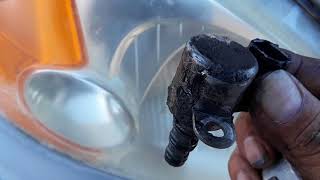
A frequent issue on this generation of Civic is an oil leak from the distributor's O-ring. The distributor is located directly above the transmission solenoids. Over time, leaking engine oil can drip down onto the solenoid's electrical connectors, causing them to short out and fail. If you are replacing your solenoid, it is critical to inspect this area and fix any oil leaks to prevent the new part from failing prematurely.
Choosing the Right Replacement Part: Aftermarket vs. OEM

When replacing the transmission solenoid on your Civic, you have two main choices: a new aftermarket part or a new Original Equipment Manufacturer (OEM) part from Honda. For a vehicle of this age, an aftermarket part is often the most practical choice.
Standard Ignition is a well-known aftermarket brand that produces replacement solenoids for the 1996-2000 Civic. These parts are designed to be direct-fit replacements and offer a cost-effective solution. While some mechanics prefer the guaranteed quality of OEM for electronic parts, the high cost of a new Honda solenoid can be hard to justify on an older car. A quality aftermarket part provides a reliable repair to get your Civic shifting smoothly again without the high price tag of an OEM component.
Can I Just Clean the Old Solenoid?
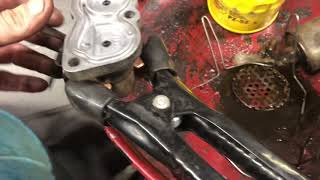
Sometimes, shifting problems are caused by clogged filter screens on the solenoid assembly. Some owners have had success removing the solenoid, cleaning the small mesh screens with brake cleaner, and reinstalling it. While this can be a temporary fix, if the solenoid's internal electronics are failing, cleaning will not solve the problem 🎬 See how to properly check and clean your solenoid screens. and replacement will be necessary.
Typical Replacement Costs
The cost to replace a transmission control solenoid can vary depending on the part brand and labor rates in your area. Since the part is externally mounted, labor costs are generally lower than for internal transmission work.
| Part/Service | Estimated Cost |
|---|---|
| New Aftermarket Solenoid (e.g., Standard Ignition) | $286.37 - $485.78 |
| New OEM Honda Solenoid | $340 - $450 |
| Shop Labor | $100 - $300 |
| Total Professional Replacement (Aftermarket) | $386 - $786 |
Frequently Asked Questions

What is the difference between a shift solenoid and a lock-up solenoid?
Your Civic's automatic transmission has multiple solenoids. The shift solenoid pack (usually containing solenoids A and B) controls the gear changes from 1st through 4th. The lock-up solenoid (or torque converter clutch solenoid) is responsible for locking the torque converter at cruising speeds to improve fuel efficiency. They are separate parts, and it's important to diagnose which one is faulty, though they are often replaced at the same time.
Is replacing the transmission solenoid a DIY job?
Yes, for many home mechanics, this is a very manageable job. The solenoids are located on the front of the transmission and are held on by a few 10mm bolts. 🎬 Watch this walkthrough for replacing the torque converter clutch solenoid. The process involves safely jacking up the car, disconnecting the electrical plugs, unbolting the old solenoid, and installing the new one. Be prepared for a small amount of transmission fluid to spill out when you remove the old part.
Do I need to drain all the transmission fluid to replace the solenoid?
No, a full drain is not required. Because the solenoid is mounted on the side of the transmission case, only a small amount of fluid will be lost when it's removed. However, it's a good idea to check your fluid level after the repair and top it off with the correct Honda ATF if needed.
Will a new solenoid fix my transmission problems?
If the diagnostic codes point to an electrical fault with the solenoid (like P0753 or P0758), then replacement has a very high chance of fixing the issue. However, these symptoms can also be caused by low or dirty fluid, or more serious internal transmission problems. Always start by checking your fluid and scanning for codes before buying parts.
Helpful Videos


Technical Specifications
OEM Part Numbers: 28200-P4R-003
This part is often sold as a shift solenoid assembly, which includes both Shift Solenoid A and Shift Solenoid B. It mounts to the exterior of the automatic transmission case with three 10mm bolts. A separate lock-up solenoid assembly is also used on the transmission.
We Have This Part in Stock


The information in this article is provided for general reference and educational purposes only. Vehicle specifications, procedures, and part compatibility can vary by production date, trim level, and region. Always consult your vehicle's factory service manual and verify part numbers before purchasing or performing repairs. Safety-critical components such as airbags, seat belts, and braking systems should be installed by a qualified professional.
- Honda Civic:
- 🎬 Helpful Videos
- 🛍️ Shop This Part
- Is Your Civic's Transmission Acting Up?
- Common Failure Symptoms
- A Common Point of Failure: Distributor O-Ring Leak
- Choosing the Right Replacement Part: Aftermarket vs. OEM
- Can I Just Clean the Old Solenoid?
- Typical Replacement Costs
- Frequently Asked Questions
- 🎟️ Get 5% Off