

Choosing the Right ABS Wheel Speed Sensor for Your 1996-2003 Audi A4 Quattro
Don't let a faulty sensor disable your Quattro's advanced safety systems; understand your replacement options.
- Crucially, diagnose whether the fault is a single sensor or the entire ABS module; module failure is very common on this model and presents similar symptoms.
- Choose OEM-tier brands like Bosch or Hella for the highest reliability in this critical safety system.
- The sensor is often seized by rust and can be difficult to remove without breaking it, so use penetrating oil and be prepared for a challenge.
- After replacement, you must use a diagnostic tool to clear the stored fault codes to turn off the ABS light.
Understanding ABS Sensor Failure on Your A4 Quattro
A failing ABS wheel speed sensor is a common issue on the B5-platform Audi A4 (1996-2001) and early B6 models (2002-2003). These sensors live in a harsh environment at the wheel hub, exposed to water, dirt, and extreme temperatures, which can cause them to fail over time. Failure disables your anti-lock brakes, traction control, and stability control, which are key safety features of your Audi.
Important: Is It the Sensor or the ABS Module?
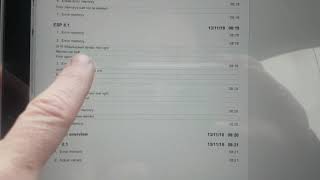
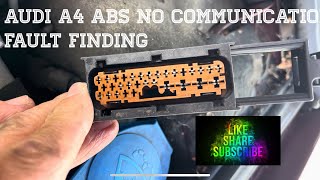
A very common problem on this generation of Audi A4 is the failure of the main ABS control module itself, not just the sensor. Symptoms are often identical, including a lit ABS light and a flashing brake light. A key indicator of a failing module is when a diagnostic scan shows errors for multiple sensors at once, or if you have trouble communicating with the ABS module at all. If you only have a fault code for a single, specific wheel sensor (e.g., 'Left Front ABS Wheel Speed Sensor'), it is more likely that the sensor or its wiring is the problem. Proper diagnosis with a VAG-COM/VCDS scanner is highly recommended 🎬 Watch: Diagnosing common ABS faults on an Audi A4 before buying parts.
Choosing the Right Aftermarket ABS Sensor
When replacing an ABS sensor, you have several quality tiers to choose from. Given the critical safety function of this part, selecting a reliable brand is important.
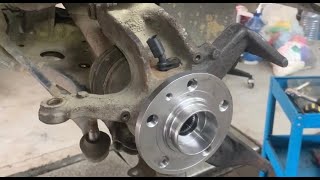
- OEM-Tier Brands (e.g., Bosch, Hella): Bosch is a frequent original equipment manufacturer for Audi. Choosing a Bosch or Hella sensor generally ensures the best fit, performance, and longevity, closely matching the part your car was built with. 🎬 See this step-by-step front ABS sensor replacement walkthrough These are highly recommended for their reliability.
- Quality Aftermarket Brands (e.g., Delphi, Febi, Bremi, Standard Ignition): Brands like Delphi and Febi offer a good balance of quality and price. They are reputable manufacturers that produce parts meeting or exceeding OEM standards, providing a reliable alternative to the most expensive options.
- Budget-Focused Brands (e.g., URO Parts, Dorman, Facet): These brands offer the most affordable solutions. While they can be a good value, owner experiences can be mixed. For a critical safety part like an ABS sensor, it's often worth spending a little more for a brand with a stronger reputation for quality control to avoid premature failure and having to do the job twice.
| Part Type | Estimated Cost |
|---|---|
| New OEM | $150 - $250+ |
| New Aftermarket | $34.75 - $408.23 |
| Shop Labor | $95 - $180 |
Installation Pro-Tip
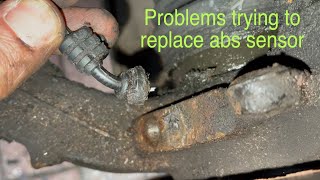
The single bolt holding the sensor in place is notorious for seizing. Worse, the sensor body itself can get stuck in the wheel bearing housing due to corrosion. Spray the sensor and bolt with penetrating oil several hours before you begin work. When removing, try to gently twist the sensor back and forth to break it free. If it breaks, the remaining piece will need to be carefully drilled out. 🎬 Watch: How to remove a broken or stuck sensor Always clean the mounting hole thoroughly with a wire brush before installing the new sensor to ensure it seats correctly.
Frequently Asked Questions (FAQ)
How do I know which wheel speed sensor is bad?
The only reliable way is to scan the ABS control module with a compatible diagnostic tool, such as VCDS (VAG-COM). The tool will read the specific fault code that identifies which sensor has failed (e.g., G44, G45, G46, G47). Guessing can lead to replacing the wrong part.
Can I replace just one ABS sensor?
Yes, you only need to replace the sensor that has failed. The sensors are sold individually and do not need to be replaced in pairs.
What happens if I don't replace a bad ABS sensor?
Your ABS, traction control (ASR), and electronic differential lock (EDL) systems will be disabled. While your standard brakes will still function, you will not have the anti-lock safety feature in an emergency stop, meaning your wheels can lock up and cause a skid. It is strongly recommended to replace the sensor to restore these important safety systems.
Why is my ABS light still on after replacing the sensor?
There are a few possibilities. First, the fault code must be cleared from the ABS module's memory with a diagnostic tool after the repair is complete. Second, the issue may not have been the sensor but rather the wiring harness or the ABS control module itself. Finally, using a very low-quality sensor could result in it being faulty out of the box.
Helpful Videos
![How to change front ABS sensor on AUDI A4 B5 Saloon [TUTORIAL AUTODOC]](https://img.youtube.com/vi/H5ldHH7VmgI/mqdefault.jpg)
Technical Specifications
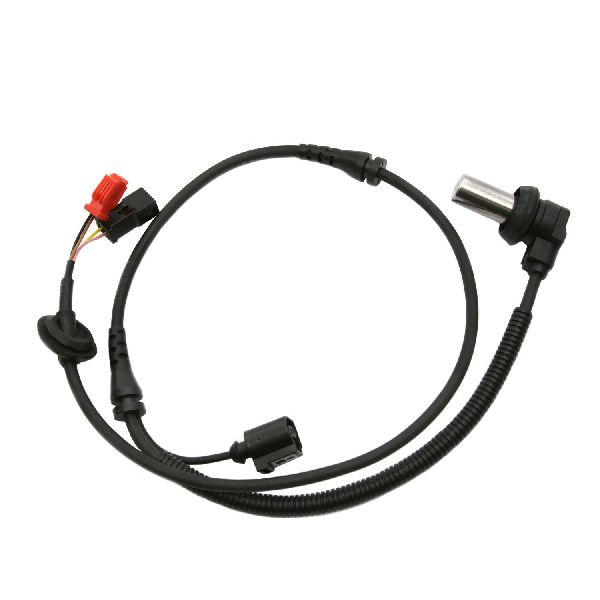
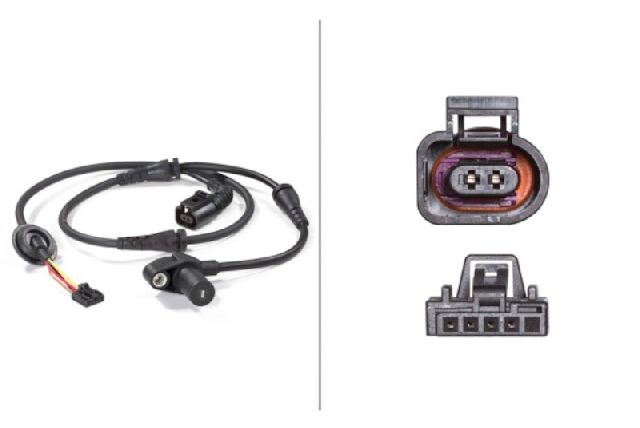
OEM Part Numbers: 8D0927803D 8D0927807C 4D0927807A 8E0927803A
Sensors are specific to front/rear and sometimes left/right. The electrical connectors and cable lengths differ. Always verify the part number for your specific vehicle's corner.
We Have This Part in Stock


The information in this article is provided for general reference and educational purposes only. Vehicle specifications, procedures, and part compatibility can vary by production date, trim level, and region. Always consult your vehicle's factory service manual and verify part numbers before purchasing or performing repairs. Safety-critical components such as airbags, seat belts, and braking systems should be installed by a qualified professional.
- Audi A4 Quattro: