

Toyota 4Runner Transmission Input Speed Sensor Guide (1996-2004)
Solve your 3rd Gen 4Runner's erratic shifting problems by understanding and replacing the correct transmission speed sensor.
- A bad input speed sensor causes harsh shifting and a P0717 code, not a bad speedometer.
- Replacement is a simple DIY job, requiring only basic tools and about an hour of time.
- A quality aftermarket brand like Standard Ignition is a reliable and cost-effective alternative to OEM.
- Confirm your diagnostic code is P0717 before purchasing to ensure you are replacing the correct sensor.
Is Your 4Runner Shifting Harshly or Incorrectly?
If your 1996-2004 Toyota 4Runner is shifting hard, late, or seems stuck in one gear, a likely culprit is a failed Automatic Transmission Input Shaft Speed Sensor. This sensor is a critical part of what tells your transmission when to shift. When it fails, it often triggers a Check Engine Light and stores a P0717 trouble code. This guide will help you understand the problem, choose the right part, and get your 4Runner shifting smoothly again.
Input Sensor vs. Output Sensor: A Common Mix-Up
Your 4Runner's A340 automatic transmission has two main speed sensors. It is very important to know which one has failed.
- Input Speed Sensor (This Part): Measures the speed of the transmission's input shaft. A failure causes poor shifting and a P0717 code. It does NOT affect the speedometer.
- Output Speed Sensor (VSS): Measures the speed of the transmission's output shaft. A failure causes the speedometer to stop working, cruise control to fail, and a P0500 code.
Before buying a part, confirm your diagnostic code. 🎬 Watch this video to diagnose and repair a P0717 code. If you have a P0717 code, this is the sensor you need.
Symptoms of a Failing Input Speed Sensor
- Harsh, erratic, or delayed automatic shifts
- Transmission feels like it's stuck in a single gear (limp mode)
- Check Engine Light is on
- Diagnostic trouble code P0717 is stored in the computer
- Possible decrease in fuel economy
Choosing the Right Aftermarket Sensor
When replacing electronic parts, you have a choice between Original Equipment (OEM) and aftermarket. For a critical sensor like this, quality is important.
- OEM (Toyota): An OEM sensor is the original part from Toyota. It guarantees perfect fit and function but comes at the highest cost. For many owners, this provides the most peace of mind.
- Premium Aftermarket (Standard Ignition): Brands like Standard Motor Products (SMP) have a long history of making quality replacement parts. They engineer their parts to meet or exceed OE standards and perform extensive testing. For an older vehicle like the 3rd Gen 4Runner, a premium aftermarket sensor from a brand like Standard Ignition offers a reliable, long-lasting repair at a much lower cost than OEM.
Pro Tip: Avoid unbranded, low-cost sensors. While the price is tempting, they have a higher failure rate that can leave you doing the same repair twice. Sticking with a known, reputable aftermarket brand like Standard Ignition is a smart investment.
Cost of Replacing the Input Speed Sensor
| Part Type | Estimated Cost |
|---|---|
| New OEM (Toyota) | $113 - $160 |
| New Aftermarket (Standard Ignition) | $68.52 |
| Shop Labor | $100 - $180 |
Frequently Asked Questions (FAQ)
Where is the input speed sensor located on a 1996-2004 4Runner?
The input speed sensor is located on the driver's side of the transmission, toward the front near the bell housing where the transmission meets the engine. The output speed sensor is located further back on the transmission or transfer case.
Can I replace this sensor myself?
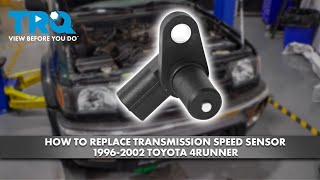
Yes, this is a DIY-friendly job for someone with basic tools. It involves safely lifting the vehicle, unplugging the electrical connector, removing a single bolt, and swapping the sensor. 🎬 See this walkthrough for replacing the transmission speed sensor. The entire job usually takes less than an hour.
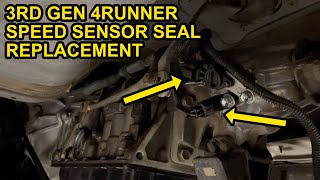
🎬 Learn how to replace the speed sensor seal while you're there.What happens if I don't replace a bad input speed sensor?
Your transmission will continue to shift poorly and may remain in a high-gear "limp mode," which causes poor acceleration and high engine RPMs. This puts extra strain on your transmission and results in poor fuel economy. It can also be unsafe in traffic when you need to accelerate.
Are there any recalls for this part?
No, there are no recalls or major Technical Service Bulletins (TSBs) from Toyota or NHTSA for a widespread failure of the transmission input speed sensor on the 1996-2004 4Runner. Failures are typically due to the age and mileage of the vehicle.
Helpful Videos

Technical Specifications
OEM Part Numbers: 89413-32010
Typically held in by a single bolt, with a 3-pin electrical connector. The sensor reads the rotation of the input shaft via a magnetic pickup.
We Have This Part in Stock


The information in this article is provided for general reference and educational purposes only. Vehicle specifications, procedures, and part compatibility can vary by production date, trim level, and region. Always consult your vehicle's factory service manual and verify part numbers before purchasing or performing repairs. Safety-critical components such as airbags, seat belts, and braking systems should be installed by a qualified professional.
- Toyota 4Runner: