

Choosing the Right Spark Plugs for Your 1997-2002 Acura Integra
Keep your Integra's B-series engine running smoothly with the correct set of spark plugs.
- Stick with the OEM brands, NGK or Denso, for the best performance and reliability on your Integra's engine.
- Identify your engine (B18B1, B18C1, or B18C5) to choose the correct spark plug type (Copper vs. Platinum).
- Replacing spark plugs is an easy DIY job, but be careful not to cross-thread or over-torque them in the aluminum head.
- Consider using inexpensive NGK copper plugs and changing them more often for a budget-friendly way to maintain peak performance.
Signs of Failing Spark Plugs
When your Integra's spark plugs are nearing the end of their life, your car will give you several clues. You might notice the engine is harder to start, especially on cold mornings. A common symptom is a rough idle, where the engine shakes or vibrates more than usual when you're stopped. During acceleration, you may feel the car hesitate or stumble. A drop in fuel economy and a noticeable loss of power are also strong indicators. If the check engine light comes on, codes like P0300, P0301, P0302, P0303, or P0304 often point to a misfire caused by a bad spark plug.
Choosing the Right Aftermarket Spark Plugs
Not all spark plugs are created equal, and the best choice depends on your specific Integra model and how you use it. Your Integra came from the factory with specific plugs designed for its engine.
Integra Engine & OEM Spark Plug Type
| Engine | Integra Models | Original Plug Material | Recommended NGK/Denso Plugs |
|---|---|---|---|
| B18B1 (Non-VTEC) | LS, GS, SE, RS | Copper | NGK: ZFR5F-11, Denso: KJ16CR-L11 |
| B18C1 (VTEC) | GS-R | Platinum | NGK: PFR6G-11, Denso: PK20PR-L11 |
| B18C5 (VTEC) | Type R | Platinum | NGK: PFR6G-11 (or colder #7 plugs for high performance use) |
Brand & Material Tiers
Tier 1: OEM Quality (NGK & Denso)
For the 1997-2002 Integra, NGK and Denso were the Original Equipment Manufacturers (OEM). This means their plugs are what your car was designed to use. You cannot go wrong by choosing the specific NGK or Denso plug recommended for your engine. They offer different materials:
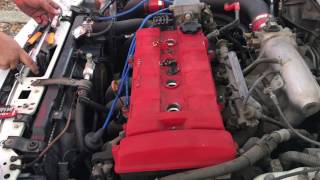
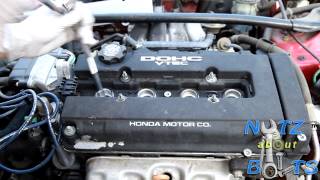
- Copper (Standard): These are the most affordable and were OEM for the non-VTEC B18B1 engine. 🎬 Watch this step-by-step guide for changing B18B1 spark plugs. They are great conductors but wear out the fastest, typically needing replacement every 10,000-15,000 miles.
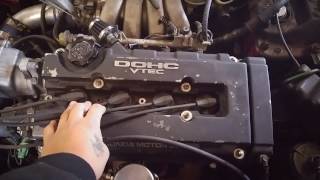
- Platinum: A step up from copper, platinum plugs were OEM for the VTEC GS-R and Type R models. 🎬 See how to replace spark plugs on a GS-R engine. They last much longer, often up to 60,000 miles.
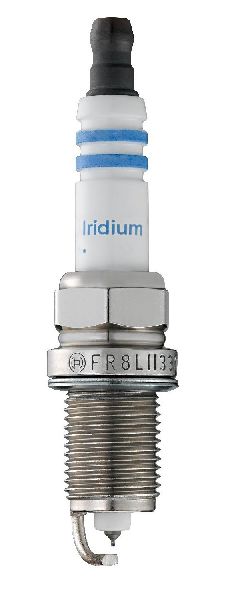
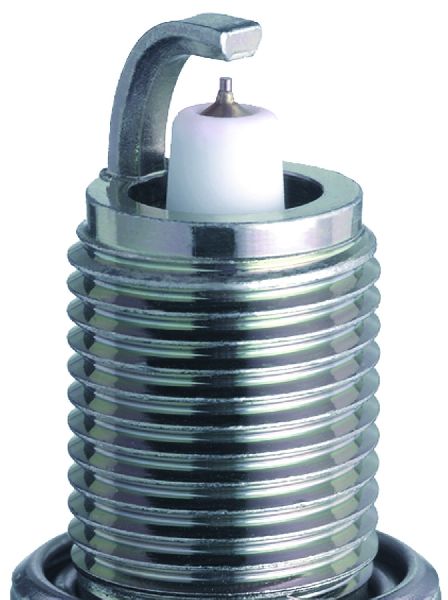
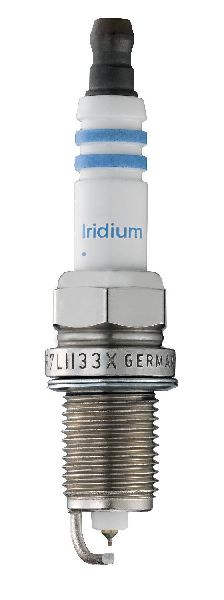
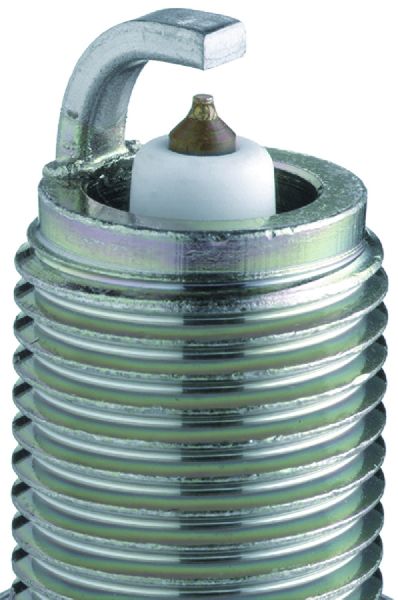
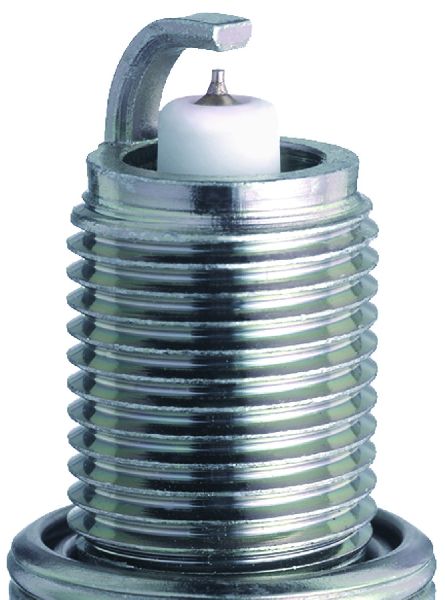
- Iridium: These are the premium, longest-lasting plugs, often good for 100,000 miles. They provide a strong, consistent spark and are a great upgrade for any model, though they are the most expensive.
Pro Tip: Many Integra enthusiasts prefer to use affordable NGK copper plugs (like BKR6E-11 for a GS-R) and simply change them more frequently, such as every other oil change. This ensures peak performance at a low cost.
Tier 2: Reputable Aftermarket (Bosch, Autolite, Champion)
Brands like Bosch, Autolite, and Champion offer compatible spark plugs that are often more budget-friendly. While they are generally reliable for daily driving, most Integra owners and mechanics strongly recommend sticking with NGK or Denso, as these B-series engines are known to perform best with their OEM-designed plugs.
Other Brands (Motorcraft, ACDelco, MSD)
Motorcraft and ACDelco are OEM brands for Ford and GM, respectively. While they may produce a plug that fits, they are not a typical choice for an Acura. MSD is a performance-oriented brand that may be suitable for highly modified or racing engines but is unnecessary for a stock or lightly modified Integra.
Beware of Counterfeits
NGK spark plugs are so popular that they are often counterfeited, especially on large online marketplaces. These fake plugs can cause poor performance, engine damage, and misfires. It is safest to buy from a reputable auto parts source.
Installation & Known Issues
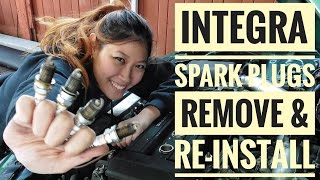
Replacing the spark plugs on a 1997-2002 Integra is a straightforward job that is very feasible for a DIY mechanic. The plugs are easily accessible on top of the engine. The most common issue owners face is not related to the part itself, but to installation errors. Cross-threading a spark plug or over-tightening it can strip the threads in the aluminum cylinder head, leading to a very expensive repair. Always thread new plugs by hand first to ensure they are going in correctly before using a wrench. 🎬 Follow this quick guide for proper removal and installation. Another potential problem is oil in the spark plug tubes, which points to a failing valve cover gasket or spark plug tube seals, a common and relatively easy fix on these cars.
Cost Comparison Table
| Part Type | Price Range (Set of 4) |
|---|---|
| New OEM (NGK/Denso Platinum/Iridium) | $40 - $85 |
| New Aftermarket (NGK/Denso Copper) | $15 - $30 |
| New Aftermarket (Other Brands) | $15 - $50 |
Frequently Asked Questions
Do I need to gap my new spark plugs?
Most NGK and Denso plugs come pre-gapped for your specific Integra engine. However, it is always a good practice to verify the gap with a feeler gauge before installation, as they can be knocked out of spec during shipping. The correct gap for most Integras is 1.1mm (0.044 inches), but the GS-R spec is slightly larger at 1.3mm (0.051 inches).
Should I use anti-seize on the spark plug threads?
This is a debated topic. NGK officially recommends NOT using anti-seize on their plugs that have a special trivalent metal plating, as it can lead to over-tightening. If you do use it, use only a very small amount and reduce the torque specification by about 15-20%.
What's the difference between a "6" and "7" heat range plug?
The number in a spark plug's part number (e.g., BKR6E-11) indicates its heat range. A higher number means a "colder" plug, which dissipates heat more quickly. Colder plugs (like a #7) are typically used for high-performance or turbocharged engines to prevent knocking. For a stock Integra, it is best to stick with the standard heat range specified by the manufacturer.
How often should I change my Integra's spark plugs?
It depends on the plug material. Copper plugs should be changed frequently, around every 10,000-15,000 miles. Platinum plugs can last up to 60,000 miles, and Iridium plugs can last up to 100,000 miles. However, for peak performance on these engines, many owners replace them sooner.
Helpful Videos
Technical Specifications
OEM Part Numbers: 98079-5514G 98079-5515G 98079-5614G 98079-5615G PFR6G-11 ZFR5F-11
Socket Size: 5/8 inch (16mm). Thread Diameter: 14mm. Gap (LS/GS/SE): 1.1mm (0.044"). Gap (GS-R): 1.3mm (0.051"). Torque Spec: 13-14 ft-lbs.
We Have This Part in Stock

The information in this article is provided for general reference and educational purposes only. Vehicle specifications, procedures, and part compatibility can vary by production date, trim level, and region. Always consult your vehicle's factory service manual and verify part numbers before purchasing or performing repairs. Safety-critical components such as airbags, seat belts, and braking systems should be installed by a qualified professional.
- Acura Integra: