

Honda CR-V Windshield Washer Pump Guide (1997-2006)
Having trouble cleaning your windshield? Your CR-V's washer pump might be the culprit.
- Failure is common with age; symptoms include no spray, weak spray, or a silent pump.
- The job is DIY-friendly, requiring access behind the driver-side fender liner.
- First-gen (97-01) CR-Vs use two separate pumps; second-gen (02-06) often use one reversible pump.
- Before replacement, always check for simple fixes like a blown fuse or clogged nozzles.
Symptoms of a Failing Windshield Washer Pump

When a washer pump starts to fail on your CR-V, the signs are usually straightforward. Look out for these common symptoms:
- No Fluid Spray: You press the button and hear nothing. If the pump doesn't make its usual humming sound, it's likely failed or not receiving power. This could be due to a bad motor or an electrical issue.
- Pump Hum, No Spray: If you can hear the pump motor running but no fluid comes out, the reservoir could be empty, the lines or nozzles could be clogged, or the pump's internal impeller might be broken.
- Weak or Uneven Spray: Fluid that barely reaches the windshield or sprays unevenly points to a weak pump that can't create enough pressure. This can also be caused by clogged nozzles, so check those first.
Check Fuses and Clogs First
Before replacing the pump, always check the simple things. Make sure your washer fluid reservoir is full. Check the related fuses to ensure the pump is getting power. Also, try cleaning the washer nozzles with a small pin to clear any debris. Sometimes a clog is the only problem.
Choosing an Aftermarket Washer Pump: Trico

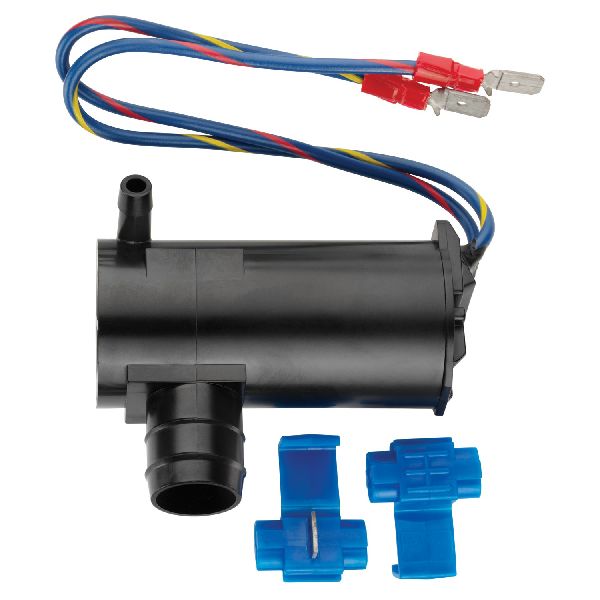
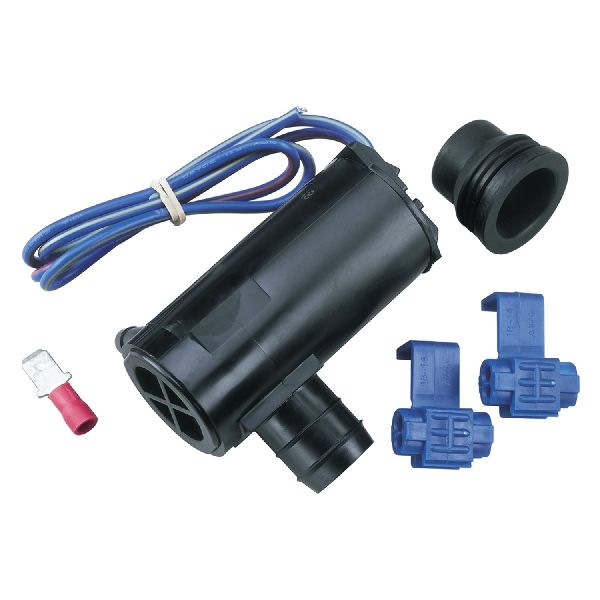
For the 1997-2006 Honda CR-V, the original OEM washer pumps were reliable, but they can fail with age. Aftermarket parts offer a cost-effective solution. Trico is a well-known brand in the wiper and washer system industry, offering direct-fit replacement pumps. Their pumps are designed to match original equipment specifications for a straightforward installation without needing modifications. While OEM parts are always a safe bet, a quality aftermarket pump from a reputable brand like Trico provides comparable performance for this specific component at a lower price point.
Pro Tip: Front vs. Rear Pumps
On first-generation CR-Vs (1997-2001), there are two separate pumps for the front and rear. They look very similar and may even be interchangeable, but it's best to confirm the correct part for the correct location. For second-generation models (2002-2006), a single pump often serves both windshields by reversing polarity. Always verify the part fitment for your specific year and whether you need a front, rear, or dual-action pump.
Honda CR-V Washer Pump Replacement Cost (1997-2006)
| Part Type | Estimated Cost |
|---|---|
| New Aftermarket (Trico, etc.) | $20 - $35 |
| New OEM (Honda) | $36 - $100 |
| Shop Labor | $80 - $118 |
| Total (DIY Aftermarket) | $20 - $35 |
| Total (Shop Replacement) | $100 - $217+ |
Frequently Asked Questions
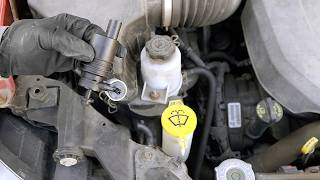
 🎬 See how to access the reservoir on 2002-2006 models. on a Honda CR-V." loading="lazy" style="max-width:100%;height:auto;border-radius:6px;display:block;box-shadow:0 2px 8px rgba(0,0,0,0.1);" />
How do I replace the washer pump on my CR-V?
The washer pump is located on the bottom of the washer fluid reservoir, which is behind the front bumper cover on the driver's side. To access it, you'll need to turn the steering wheel, remove a few screws and clips holding the fender liner, and peel it back. From there, you can disconnect the electrical connector and hoses, and pull the old pump out of the reservoir's grommet. The job is considered easy and can be done with basic hand tools.
Are there any recalls for the 1997-2006 CR-V washer pump?
No, there are no specific recalls issued by the NHTSA for the windshield washer pump on the 1997-2006 Honda CR-V. There were several major recalls for this generation, including for airbags and a power window switch that could cause a fire, but none involve the washer system.
Is the front and rear washer pump the same for my CR-V?
For the 1st generation (1997-2001), Honda used two separate pumps—one for the front and one for the rear. For the 2nd generation (2002-2006), many models use a single pump that reverses direction to spray either the front or rear glass. It is crucial to check the specific part for your vehicle's year, as fitment can vary.
How do I test my CR-V's washer pump before replacing it?
First, have a helper activate the washer switch while you listen for a humming sound from the pump, located in the driver's side wheel well. If you hear a hum but get no spray, check for clogs. If you hear nothing, check the fuse. If the fuse is good, you can access the pump's electrical connector and use a multimeter to check for voltage when the switch is pressed. If you have voltage but the pump doesn't run, the pump has failed.
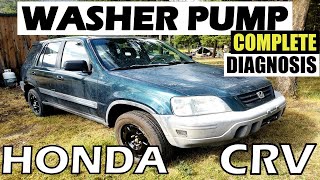
🎬 Watch a detailed circuit diagnosis for 1997-2001 CR-V models.Helpful Videos


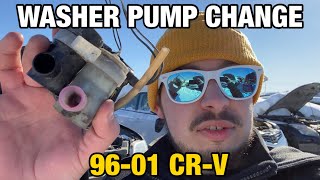
Technical Specifications
OEM Part Numbers: 76806-STK-A01 38512-SF0-J01
The pump is typically a small, 12V DC motor that press-fits into a rubber grommet on the washer fluid reservoir. First-generation models use two separate single-outlet pumps, while second-generation models often use a single pump with dual outlets or a reversible motor.
We Have This Part in Stock

The information in this article is provided for general reference and educational purposes only. Vehicle specifications, procedures, and part compatibility can vary by production date, trim level, and region. Always consult your vehicle's factory service manual and verify part numbers before purchasing or performing repairs. Safety-critical components such as airbags, seat belts, and braking systems should be installed by a qualified professional.
- Honda CR-V: