

Ford F-150 (1997-2010) Throttle Position Sensor: A Complete Guide
Solve common F-150 running issues like hesitation, rough idle, and poor shifting by understanding and choosing the right Throttle Position Sensor.
- Verify if your 2004-2010 F-150 has a separately replaceable TPS before buying; many require a full throttle body assembly from Ford, but aftermarket sensors are available.
- Symptoms like poor acceleration and erratic transmission shifting are commonly caused by a failing TPS.
- Replacement is a simple DIY task for most owners, typically requiring only basic hand tools and less than an hour.
- Choosing a premium aftermarket brand like Delphi or Standard Ignition can offer OEM-level reliability for less money.
Is it a Separately Replaceable Part? A Key Difference in F-150 Generations
Before buying a new throttle position sensor, it's critical to understand which system your F-150 uses. The 1997-2010 model years cover two distinct designs:
- 1997-2003 F-150 (and 2004 'Heritage' models): These trucks use a mechanical throttle cable. The TPS is a simple, separate sensor bolted to the side of the throttle body and is easily replaced. 🎬 Watch this step-by-step replacement guide for 1997-2003 models.
- 2004-2010 F-150: These trucks feature an Electronic Throttle Body (ETB), also known as 'drive-by-wire'. For many of these models, Ford does not sell the TPS as a separate component; they require you to replace the entire electronic throttle body assembly. However, the aftermarket offers direct-fit replacement sensors for many of these ETB-equipped trucks, allowing you to replace just the failed sensor instead of the whole expensive assembly. 🎬 See how to replace the sensor on 2004-2008 5.4L engines. Always verify your specific engine and model year before purchasing.
Common Symptoms of a Failing TPS
A bad throttle position sensor sends incorrect information to your truck's computer, leading to a variety of noticeable problems. You might experience one or more of the following issues:
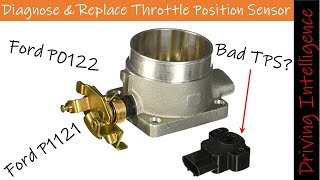
🎬 Watch a breakdown of common symptoms and how to test for failure.- Check Engine Light: The most common sign is an illuminated Check Engine Light. The codes often associated with a failing TPS are P0120, P0121, P0122, P0123, and P2135.
- Hesitation or Stumbling: Your truck may hesitate or stumble when you accelerate, feeling like it's losing power for a moment.
- Rough or High Idle: The engine may idle erratically, surging up and down, or idling much higher or lower than usual.
- Poor Shifting: The automatic transmission may shift harshly, at the wrong times, or seem to 'hunt' for the right gear. This is because the transmission control module relies on the TPS signal to time shifts.
- Limp Mode: On newer (2004+) models, a severe TPS failure can force the truck into a 'limp mode' or 'reduced power mode' to prevent engine damage, severely limiting speed and RPMs.
- Poor Fuel Economy: If the computer gets an incorrect signal, it may inject more fuel than necessary, causing your gas mileage to drop.
Choosing the Right Aftermarket Throttle Position Sensor
When replacing your F-150's TPS, you have several quality tiers to choose from. For a critical electronic part like this, opting for a higher-quality brand can prevent repeat failures.
Pro Tip: OEM vs. Aftermarket
While Motorcraft is Ford's OEM parts brand and offers guaranteed compatibility and quality, premium aftermarket brands provide a reliable alternative at a lower cost. For sensitive electronics, it's often wise to avoid the cheapest no-name options, as their internal components may not be as durable, leading to a repeat failure down the road.
- Premium Brands (OEM Quality): Brands like Delphi and Standard Ignition (SMP) are well-regarded in the industry. Delphi is a major OEM supplier for many car manufacturers, and their parts are known for reliability and performance that meets or exceeds factory specifications.
- Mid-Grade / Trusted Brands: NGK and Dorman fall into this category. NGK is a trusted name in sensors, though some user reviews can be mixed. Dorman offers a huge catalog of parts and is a popular value-oriented choice, though quality on electronic parts can sometimes be inconsistent.
- Economy Brands: Brands like Walker Products, Holstein, URO Parts, and other private labels offer the most budget-friendly options. These can be a good choice if the price is your primary concern, but they may not offer the same long-term durability as premium brands.
Typical Replacement Costs
The cost to replace a throttle position sensor on a 1997-2010 F-150 is relatively low, especially if you do the work yourself.
| Part Type | Part Cost | Shop Labor Cost |
|---|---|---|
| New Aftermarket | $34 - $112 | $100 - $150 |
| New OEM (Motorcraft) | $50 - $90 |
Frequently Asked Questions (FAQ)
Can I drive my F-150 with a bad throttle position sensor?
You can, but it's not recommended. Your truck will perform poorly, get bad gas mileage, and may stall unexpectedly. On 2004 and newer models, it could suddenly enter 'limp mode,' creating a dangerous situation if you're in traffic.
Can I just clean the throttle position sensor?
No. The TPS is a sealed electronic sensor. The failure occurs inside from wear on its internal electrical contacts. While you should clean a dirty throttle body, as that can cause similar symptoms, the sensor itself cannot be cleaned or repaired and must be replaced.
My truck is shifting erratically. Could it really be the TPS?
Yes. The Powertrain Control Module (PCM) uses the TPS signal to help determine when the automatic transmission should shift. A bad signal can lead to harsh, delayed, or incorrect shifting. It's a common symptom that is often misdiagnosed as a transmission problem.
Do I need to calibrate or 'relearn' the new TPS after installation?
For most 1997-2010 F-150s, a specific calibration procedure isn't required for just the sensor. However, it is good practice to disconnect the battery during the replacement. After reconnecting, the computer will automatically go through a 'relearn' process as you drive, adapting to the new sensor's signals.
Helpful Videos

Technical Specifications
OEM Part Numbers: 6L2Z-9B989-A F4SZ-9B989-A E7TZ-9B989-D F6TZ-9B989-AA 3L5Z9B989AA
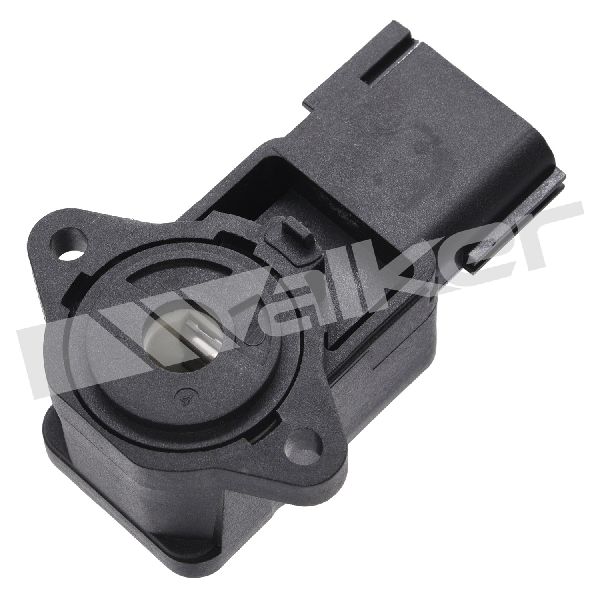
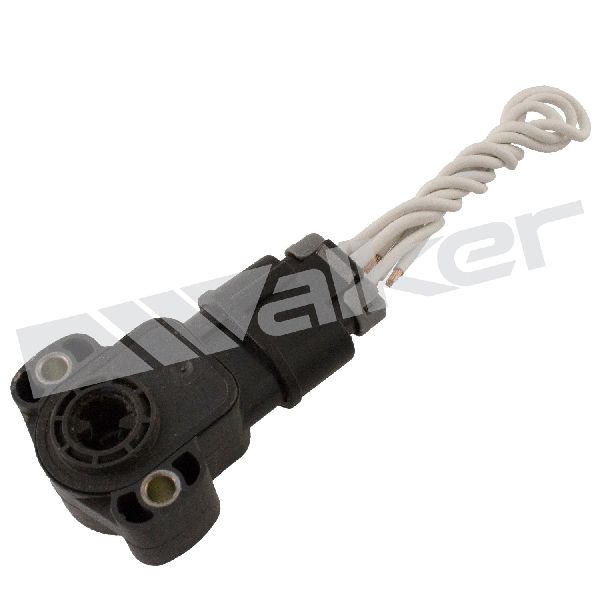
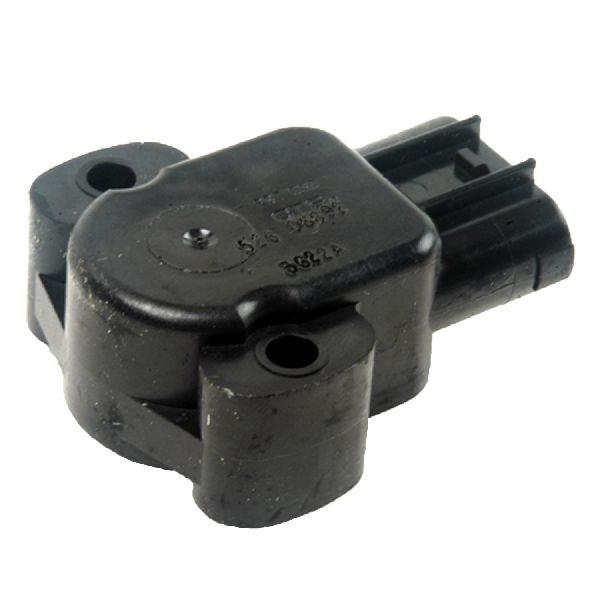
The Throttle Position Sensor for the F-150 is a potentiometer that translates the throttle blade's rotation into a voltage signal for the PCM. On 1997-2003 models, it typically uses a 3-pin connector. On 2004-2010 models, it may use a 4-wire connector. The sensor operates on a 5-volt reference signal from the PCM.
We Have This Part in Stock


The information in this article is provided for general reference and educational purposes only. Vehicle specifications, procedures, and part compatibility can vary by production date, trim level, and region. Always consult your vehicle's factory service manual and verify part numbers before purchasing or performing repairs. Safety-critical components such as airbags, seat belts, and braking systems should be installed by a qualified professional.
- Ford F-150:
- 🎬 Helpful Videos
- 🛍️ Shop This Part
- Is it a Separately Replaceable Part? A Key Difference in F-150 Generations
- Common Symptoms of a Failing TPS
- Choosing the Right Aftermarket Throttle Position Sensor
- Pro Tip: OEM vs. Aftermarket
- Typical Replacement Costs
- Frequently Asked Questions (FAQ)
- 🎟️ Get 5% Off