

A Guide to Aftermarket Spark Plugs for the 1998-2003 Subaru Forester
If your Forester is running rough or losing fuel economy, worn spark plugs are a likely and fixable cause.
- NGK is the OEM-equivalent brand and is highly recommended for reliability and performance in your Forester.
- Replacement is difficult due to tight access on the boxer engine, requiring removal of the battery and airbox.
- Platinum plugs offer the best balance of performance, longevity, and value for this vehicle generation.
- Always check the spark plug gap before installation, even if the plugs are advertised as pre-gapped.
Signs of Failing Spark Plugs

Worn spark plugs can't create a strong enough spark. This leads to incomplete combustion. You might notice one or more of these symptoms:
- Rough Idle: The engine may shake or vibrate more than usual when the car is stopped.
- Poor Acceleration: The car may feel sluggish or hesitant when you press the gas pedal.
- Engine Misfires: You might feel a stumbling or jerking sensation while driving. This can also cause the Check Engine Light to flash.
- Reduced Fuel Economy: You may find yourself filling up the gas tank more often.
- Difficulty Starting: A weak spark can make it harder for the engine to turn over, especially when cold.
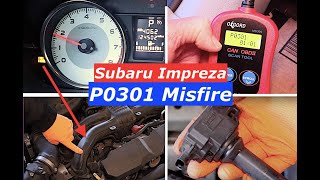
- Check Engine Light: Misfires will often trigger diagnostic trouble codes like P0301, P0302, P0303, or P0304, which correspond to the misfiring cylinder. 🎬 Watch: Understanding Subaru misfire codes and how to diagnose them.
Choosing the Right Aftermarket Spark Plugs

When it comes to spark plugs for your 1998-2003 Forester, quality matters. While many brands are available, most owners and mechanics agree that sticking close to the Original Equipment (OE) design is the best approach.
OEM vs. Aftermarket Quality
NGK is the original equipment manufacturer for Subaru, meaning your Forester came from the factory with NGK spark plugs. You can buy these same high-quality plugs from aftermarket suppliers. Denso is another Japanese brand known for excellent quality and is a trusted alternative. While other brands like Bosch or Autolite are reputable, the overwhelming consensus in the Subaru community is to use NGK or Denso for the best reliability and performance.
Brand Recommendations
Not all spark plugs are created equal. Here’s a breakdown of the brands available for your Forester:
- Top Tier (OEM Equivalent): NGK and Denso are the top choices. They are engineered specifically for Japanese vehicles and provide the most consistent, reliable performance. Your Forester's ignition system was designed with these plugs in mind.
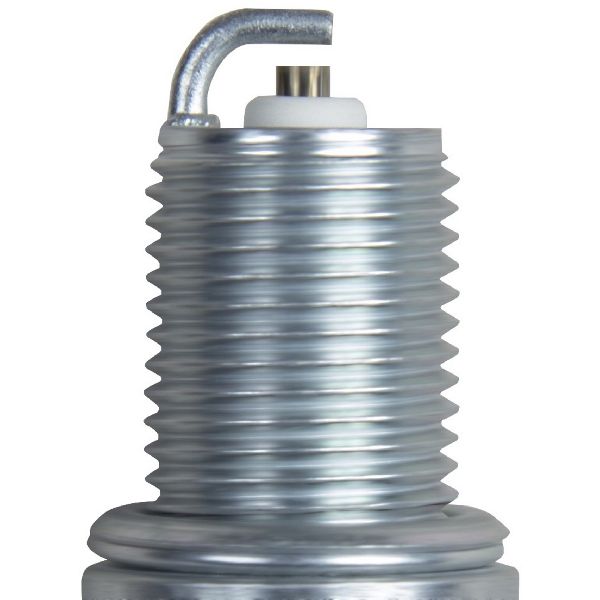
- Reputable Aftermarket: Brands like Bosch, Champion, and Autolite offer quality plugs that will work in your Forester. They can be a good budget-friendly option, but they may not offer the same longevity or perfect compatibility as NGK or Denso.
- Budget Brands: Accel, Skyward, and other less-common brands are typically not recommended. Using them can be a gamble and may even lead to performance issues.
A Note on Plug Materials
Your Forester originally came with either standard nickel (copper) or platinum spark plugs. You can safely replace nickel plugs with single platinum plugs for longer life. While more expensive Iridium plugs are available and marketed as a high-performance upgrade, they are not necessary for a stock EJ25 engine and won't provide a noticeable benefit over platinum plugs. Sticking with the OE-recommended material is a safe and cost-effective choice.
Installation and Labor Considerations

Replacing spark plugs on a Subaru boxer engine is known for being a difficult job. The plugs are located on the sides of the engine, very close to the frame rails, making access extremely tight.
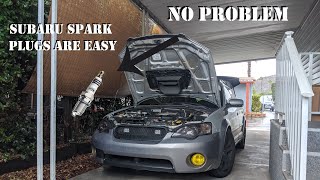
🎬 See this guide for making Subaru spark plug removal easier.To reach them, a mechanic (or you) will need to remove the air filter housing on the passenger side and the battery on the driver's side. The job requires a specific combination of tools, including a 5/8" spark plug socket, various extensions, and a swivel or universal joint. Due to this difficulty, shop labor costs can be higher than for a typical inline-4 engine.
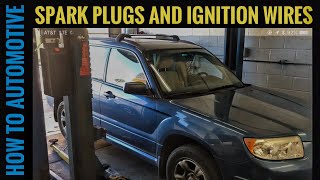
🎬 Watch: Step-by-step walkthrough for replacing plugs and ignition wires.Common Ordering Mistake
Always verify the specific plug model (e.g., NGK BKR5ES-11 or BKR6E-11) for your exact year and engine. While many plugs look similar, differences in heat range and electrode design can affect performance. Also, check the gap before installation; while most plugs come pre-gapped, it's always wise to double-check.
Frequently Asked Questions (FAQ)
How often should I replace the spark plugs on my 1998-2003 Forester?
For standard nickel/copper plugs, a replacement interval of 30,000 miles is recommended. If you use platinum or iridium plugs, you can extend that interval to 60,000 miles. However, given the age of these vehicles, checking them more frequently is a good idea.
What is the correct spark plug gap?
The recommended spark plug gap for most 1998-2003 Foresters is 0.044 inches (1.1mm). Always confirm this with your owner's manual or the plug manufacturer's specifications. Even if plugs are sold as "pre-gapped," it is crucial to verify the gap with a feeler gauge before installation.
Do I need to use anti-seize on the new spark plugs?
It depends on the brand. NGK plugs, for example, have a special trivalent metal plating that acts as its own anti-seize, and the company recommends not using additional lubricant. Using anti-seize on these plugs can cause you to over-torque them, potentially damaging the plug or the engine's cylinder head. Always check the plug manufacturer's instructions.
Is it worth paying more for iridium spark plugs?
For a stock 1998-2003 Forester, iridium plugs are generally not worth the extra cost. They offer the longest life but provide no significant performance benefit over platinum plugs in this specific engine. Platinum plugs offer a great balance of longevity and value.
Helpful Videos

Technical Specifications
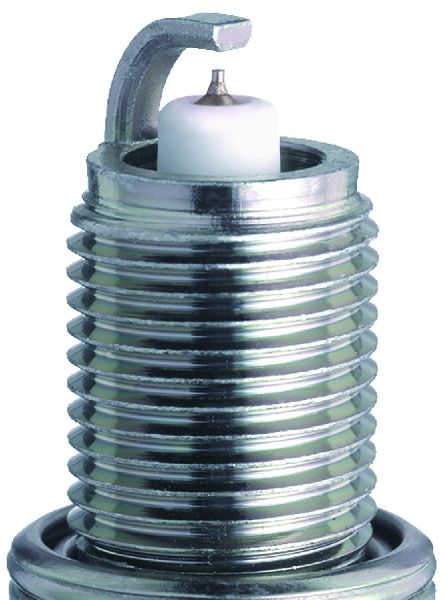
OEM Part Numbers: 22401AA310 22401AA450 22401AA570 22401AA650
Spark Plug Type: Varies by model (Nickel, Platinum) Socket Size: 5/8 inch Gap: 0.044 inches (1.1mm)
We Have This Part in Stock

The information in this article is provided for general reference and educational purposes only. Vehicle specifications, procedures, and part compatibility can vary by production date, trim level, and region. Always consult your vehicle's factory service manual and verify part numbers before purchasing or performing repairs. Safety-critical components such as airbags, seat belts, and braking systems should be installed by a qualified professional.
- Subaru Forester: