

A Practical Guide to the 1998-2004 Dodge Durango Front CV Axle Shaft
Hearing a clicking sound when you turn? This guide is for first-generation Durango owners needing to understand and replace their front CV axles.
- A clicking noise when turning is the number one symptom of a failing CV axle on your Durango.
- For this age of vehicle, a new aftermarket axle from a brand like Surtrak or DSS is a better value than a costly OEM part.
- Check for grease splattered on the inside of your front wheels, which indicates a torn CV boot and impending joint failure.
- The job is possible for a skilled DIYer, but requires specific tools like a 32mm axle nut socket and a powerful wrench.
Is Your Durango's CV Axle Failing?
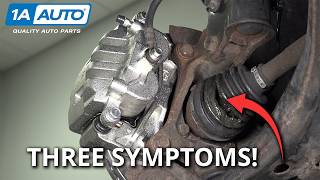
A CV axle doesn't usually fail without giving you some warning signs. The most common symptom that Durango owners notice is a distinct clicking or popping sound that happens when making a turn. This noise is often the first clue that the outer CV joint is worn out. 🎬 Watch: How to identify CV axle failure by sound Here are other signs to watch for:
- Vibrations: You might feel a vibration through the floor or steering wheel, especially when you accelerate. This can be caused by a damaged or unbalanced axle.
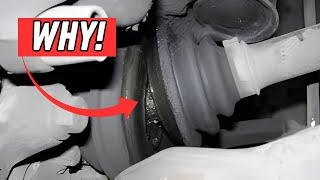
- Grease on the Wheel: The CV joints are protected by a rubber or neoprene cover called a boot. If this boot tears, the grease inside will be slung out. You may see dark, heavy grease on the inside of your tire or on nearby suspension parts. 🎬 Watch: 9 common symptoms of a failing CV axle
- Clunking Noise: A clunking sound when you shift from park to drive, or when you accelerate or decelerate, can point to excessive play in a worn inner CV joint.
Don't Ignore the Signs
A torn CV boot is the most common cause of failure. Once the protective grease is gone and dirt gets in, the joint will wear out quickly. If ignored for too long, a CV axle can break completely, leaving you stranded.
Choosing the Right Aftermarket CV Axle
For an older truck like the 1998-2004 Durango, replacing a worn CV axle with a new aftermarket part is a smart, cost-effective choice. While original equipment (OEM) Mopar axles were high quality, they are very expensive and can be hard to find new. A quality new aftermarket axle provides excellent value and restores original performance.
Aftermarket axles generally fall into two tiers:
- Standard Replacement Axles: Brands like Surtrak offer direct-fit replacement axles that meet original specifications. These are a reliable and affordable choice for daily driving and normal use. They are designed to be a straightforward replacement for the factory part.
- Heavy-Duty Axles: Brands like DSS (The Driveshaft Shop) are known for producing axles that are often stronger and more durable than the original parts. These can feature stronger materials and improved designs. A heavy-duty axle is a good investment if you use your Durango for heavy towing, off-roading, or if you have a lifted suspension which puts more stress on the axles.
Pro Tip: Replace in Pairs?
While you only need to replace the failed axle, keep in mind that both front axles have seen the same amount of use. If one has failed, the other may not be far behind. If your budget allows, replacing both at the same time can save you from having to do the same job twice.
Cost of Replacing a Durango CV Axle
The cost can be broken down into parts and labor. Aftermarket parts offer significant savings over OEM. Shop labor rates vary by location.
| Item | Estimated Cost |
|---|---|
| New Aftermarket CV Axle | $93 - $297 |
| New OEM CV Axle | $400 - $800+ |
| Shop Labor | $140 - $240 |
| Total (Aftermarket Part + Labor) | $233 - $537 |
Frequently Asked Questions
Is this a difficult job to do myself?
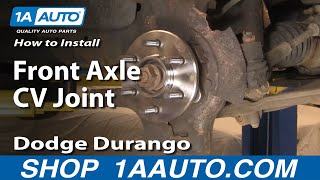
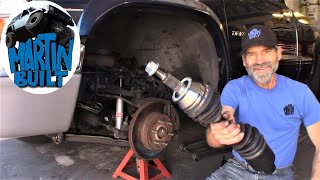
For a DIY mechanic, this job is moderately difficult. It requires safely lifting and supporting the vehicle on jack stands, and you will need specific tools like a large 32mm socket for the axle nut, a torque wrench, and possibly a breaker bar for leverage. Several helpful videos online show the process for a 1st generation Durango.
🎬 See this step-by-step front CV axle replacement walkthroughAre the left and right front axles the same?
No, the front driver side (left) and passenger side (right) CV axles are different parts and have different lengths. Always make sure you are ordering the correct side for your vehicle.
Were there any recalls for the 1998-2004 Durango CV axle?
No, there were no recalls or common Technical Service Bulletins (TSBs) issued for the front CV axle shafts on the 1998-2004 Dodge Durango. Recalls you might find online are for much newer Durango models and different parts.
What is the difference between the CV axle and the front driveshaft?
The 1st gen Durango has two front CV axles (one for each front wheel) and one front driveshaft. The CV axles transmit power from the front differential out to the wheels. The front driveshaft transmits power from the transfer case to the front differential. While both have CV-style joints that can fail, they are different parts.
Helpful Videos
Technical Specifications
The front CV axle consists of an inner joint that bolts to the front differential flange with six bolts and an outer joint that passes through the wheel hub assembly, secured by a large 32mm axle nut.
We Have This Part in Stock


The information in this article is provided for general reference and educational purposes only. Vehicle specifications, procedures, and part compatibility can vary by production date, trim level, and region. Always consult your vehicle's factory service manual and verify part numbers before purchasing or performing repairs. Safety-critical components such as airbags, seat belts, and braking systems should be installed by a qualified professional.
- Dodge Durango: