

1998-2004 Ford F-150 Hazard Warning and Turn Signal Flasher Relay Guide
If your turn signals or hazards are acting up, this simple electronic part is the most likely reason why.
- A single flasher relay controls both the turn signals and hazard lights on the 1998-2004 F-150.
- Symptoms of failure include lights not working, lights staying on solid, or intermittent operation.
- The relay is located under the driver's side dash, near the center, and requires removing a trim panel to access.
- Replacement is a simple plug-and-play task suitable for DIY repair.
Is Your F-150's Flasher Failing? Common Symptoms
A bad flasher relay in a 1998-2004 F-150 can cause some confusing electrical issues. Because this part controls both the turn signals and hazard lights, a failure can affect them together or separately. You might be dealing with a bad flasher if you experience:
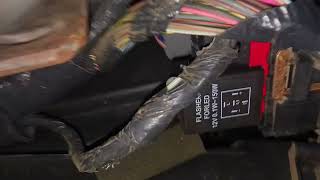
- No Turn Signals or Hazards: The most obvious sign is when your turn signals or hazard lights don't turn on at all. You'll move the stalk or press the button, but nothing happens on the dash or the exterior lights. 🎬 Watch this guide to fix non-working turn signals and hazards.
- Lights Stay On (No Flash): Your turn signal or hazard lights may illuminate but stay solid instead of flashing. This happens when the relay gets stuck in the 'on' position.
- Intermittent Operation: The lights might work sometimes and fail at other times without warning. This can be frustrating to diagnose but often points to a relay that's about to fail completely.
- Buzzing Noise: Some owners report a buzzing sound from under the dashboard when the relay starts to go bad.
A Note on Fast Blinking (Hyperflash)
If your turn signals blink much faster than usual, the most common cause is a burned-out turn signal bulb somewhere on the truck. The change in electrical resistance causes the flasher relay to cycle more quickly. However, if you've recently switched to LED bulbs without installing load resistors or an LED-compatible flasher, you will also experience hyperflash.
Choosing a New Flasher: Aftermarket vs. OEM
When it's time to replace your flasher, you have two main choices: an original equipment (OEM) part from a Ford dealer or an aftermarket part. For a simple electronic component like a flasher relay, a quality aftermarket part offers a significant cost saving without a compromise in reliability. Brands like Standard Ignition are well-established in the industry and produce dependable electrical parts that meet or exceed original specifications. Given that an OEM flasher can cost significantly more, an aftermarket unit from a trusted brand is a smart, practical choice for this repair.
| Part Type | Estimated Cost |
|---|---|
| New OEM | $28 - $55 |
| New Aftermarket (Standard Ignition) | $31.94 |
| Shop Labor | $50 - $100 |
How to Replace the F-150 Flasher Relay
Replacing the flasher is a straightforward job that most owners can do themselves. The main challenge is accessing it. The flasher relay is located under the dashboard, near the center, often to the right of the steering column. It is typically a blue or black cube plugged into a relay block, which may have a plastic cover.
Finding and Replacing the Relay
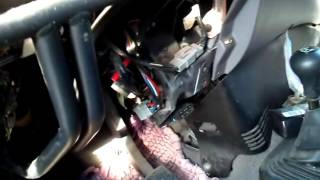
- To get to the relay, you will likely need to remove the lower dash panel 🎬 Watch this video to see how to remove the dash panels. beneath the steering wheel.
- Turn on your hazard lights (or turn signal if it's working intermittently) and listen for the clicking sound to pinpoint the relay's location. You can also feel for the click.
- Once located, the relay simply pulls straight out of its socket. There are no bolts holding it in.
- Firmly press the new relay into the empty socket, ensuring the pins are aligned correctly.
- Test the turn signals and hazard lights before reinstalling the dash panels.
Frequently Asked Questions (FAQ)
Where is the hazard flasher located on a 2003 F-150?
On a 2003 F-150, as with other 1998-2004 models, the flasher relay is under the driver's side dashboard, toward the center. You will need to remove the lower dash trim panel to see and reach the relay block where it is housed.
My turn signals don't work, but my hazards do. Is it still the flasher?
It could be, but this symptom also strongly points to a faulty multi-function switch (the turn signal stalk itself). The flasher relay has separate circuits for the turn and hazard functions, but the multi-function switch is a common failure point that can cause one system to work while the other doesn't.
Do I need a special flasher for LED bulbs?
Yes. If you upgrade your truck's incandescent turn signal bulbs to LEDs, you will need an electronic LED-compatible flasher relay. A standard relay will not work correctly with the low power draw of LEDs, resulting in hyperflashing.
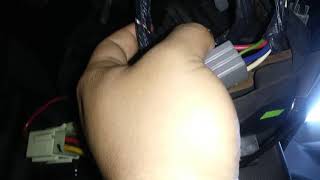
🎬 See how to install an LED-compatible flasher relay.Is replacing the flasher relay a difficult job?
No, the replacement itself is very easy. The part is plug-and-play. The only difficulty is the tight space under the dashboard and the need to remove trim panels to access it. It is considered a beginner-level DIY task.
Helpful Videos
Technical Specifications
OEM Part Numbers: F65Z-13350-AA 4L3T-13350-AA 5L3Z-13350-AA
5-Terminal Blade Type Relay
We Have This Part in Stock


The information in this article is provided for general reference and educational purposes only. Vehicle specifications, procedures, and part compatibility can vary by production date, trim level, and region. Always consult your vehicle's factory service manual and verify part numbers before purchasing or performing repairs. Safety-critical components such as airbags, seat belts, and braking systems should be installed by a qualified professional.
- Ford F-150: