

Choosing the Right Aftermarket Brake Pads for Your 2000-2006 Chevrolet Impala
Stop wondering about your brakes—here’s what you need to know to choose the right pads for your Impala.
- For most drivers, quality ceramic pads offer the best mix of quiet, low-dust performance.
- Always confirm your model year, especially for 2006, as the 'Limited' model uses different parts than the new body style.
- Replacing rotors at the same time as pads is the best practice for a complete and effective brake job.
- Properly bedding-in new pads and rotors is critical for performance and preventing vibration.
Understanding Your Impala's Brakes
The eighth-generation Chevrolet Impala, covering model years 2000-2005, uses a straightforward and reliable disc brake system on all four wheels. It's important to note that the 2006 model year was a transition. While a new generation was introduced, the previous 2005 body style was sold as the 'Impala Limited,' mainly to fleet customers. If you have a 2006 model, confirm whether you have the new body style or the Limited, as brake parts are different.
OEM vs. Aftermarket Brake Pads
When replacing brake pads, you have two main choices: Original Equipment Manufacturer (OEM) or aftermarket. OEM pads for your Impala are typically made by ACDelco. They are designed to meet the original factory standards for noise, wear, and performance. Aftermarket pads are made by many other companies and come in different quality tiers. Premium aftermarket brands like Akebono, Bosch, Wagner, and Raybestos often provide quality that is equal to or even better than OEM, sometimes with benefits like less brake dust or more stopping power. Economy aftermarket pads are cheaper but may wear faster or be noisier.
Choosing the Right Aftermarket Brake Pads
For your 2000-2006 Impala, the best choice depends on your budget and driving style. Brake pads are mainly made of two material types:
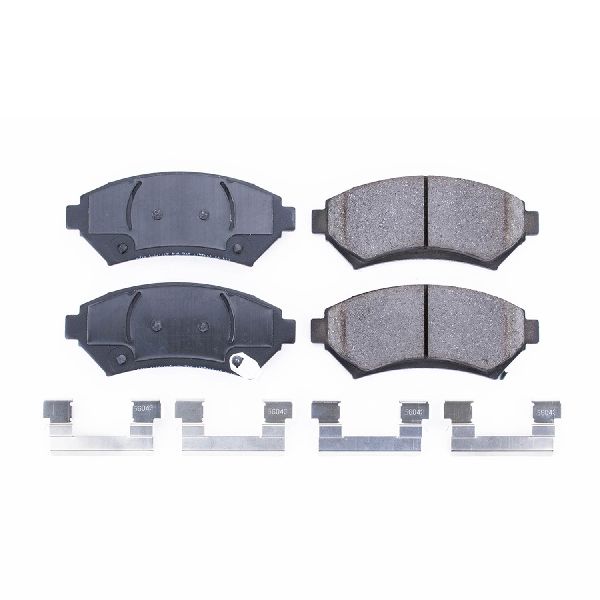
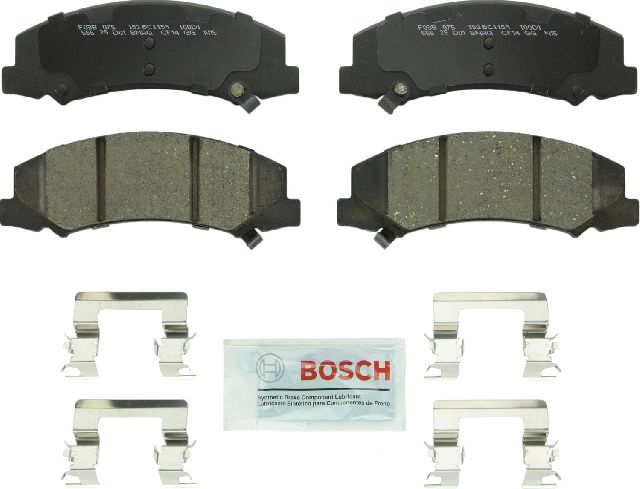
- Ceramic: These are a popular choice for daily driving. They are known for being very quiet, producing less dust (which keeps your wheels cleaner), and offering a smooth, consistent stop. Brands like PowerStop, Bosch QuietCast, and Akebono ProACT are excellent ceramic options.
- Semi-Metallic: These pads contain metal fibers, which help dissipate heat and provide a strong bite. They offer excellent performance, especially in heavy-duty use, but can be noisier and create more brake dust than ceramic pads. They are a durable and cost-effective choice.
Pro Tip: For the average Impala owner doing mostly city and highway driving, a quality set of ceramic brake pads offers the best balance of quiet operation, low dust, and reliable stopping power.
Understanding Brand Tiers
Many brands offer different levels of quality. For example, ACDelco has its top-tier GM Original Equipment, a high-quality 'Professional' line (formerly DuraStop), and a more budget-friendly 'Advantage' line. Similarly, Wagner offers premium lines like ThermoQuiet alongside more standard options. When shopping, don't just look at the brand name; consider the specific product line to ensure you're getting the quality you expect.
Known Issues and Technical Service Bulletins (TSBs)
There are no major recalls for the brake pads on this generation of Impala. However, a few service bulletins exist. TSB #010523006A noted a change in fastener requirements for the caliper brackets, while TSB #010523011A addressed a potential rattle from the front end. Another TSB, #02-05-25-006, points out that ABS can sometimes activate at low speeds due to rust buildup on the wheel speed sensor mounting surface, which can be cleaned during a brake job. This is not a pad failure but something to be aware of if you experience this symptom.
🎬 See how to diagnose and fix low-speed ABS activation issues.| Item | Estimated Cost |
|---|---|
| New Aftermarket Pads (Economy) | $23 - $45 |
| New Aftermarket Pads (Mid-Grade/Premium) | $45 - $122 |
| New OEM Pads (ACDelco) | $50 - $100 |
| Shop Labor | $120 - $225 (per axle) |
Frequently Asked Questions
How often do I need to replace my Impala's brake pads?
The lifespan of brake pads depends heavily on your driving habits. Generally, they last between 30,000 and 70,000 miles. If you do a lot of stop-and-go city driving, you'll likely be on the lower end of that range. A good practice is to have them inspected every 10,000 to 15,000 miles.
Should I replace my rotors at the same time as my pads?
It is highly recommended. While rotors can sometimes be resurfaced if they are within thickness specifications, installing new pads on old, worn rotors can cause noise, vibration, and reduced pad life. For a trouble-free brake job, replacing the pads and rotors together is the best practice.
What is 'bedding-in' and do I need to do it?
Yes. Bedding-in is the process of breaking in your new pads and rotors. It involves a series of controlled stops to transfer a thin, even layer of friction material from the pads to the rotors. This process ensures smooth, powerful braking and prevents vibration. Follow the manufacturer's specific procedure, which usually involves several moderate stops from about 40 mph and then several harder stops from a higher speed, without coming to a complete stop until the end.
🎬 Watch this video to learn how to properly bed-in your brakes.Do I need special tools to change my own brake pads?
For a 2000-2006 Impala, you'll need basic hand tools like a socket set, a large C-clamp to compress the caliper piston, and a torque wrench. The rear caliper pistons on this model are the push-in type, so a special caliper tool is not required. It is a job that is very feasible for a DIY mechanic.
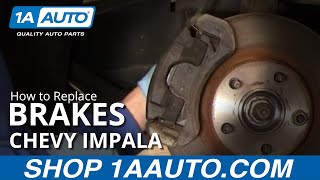
🎬 Watch this step-by-step guide to replacing your front brakes.Helpful Videos


Technical Specifications
Vehicle Year Range: 2000, 2001, 2002, 2003, 2004, 2005, 2006 (Limited models only). Common Pad Materials: Ceramic, Semi-Metallic. The rear caliper pistons are a push-in type, not a screw-in type.
We Have This Part in Stock
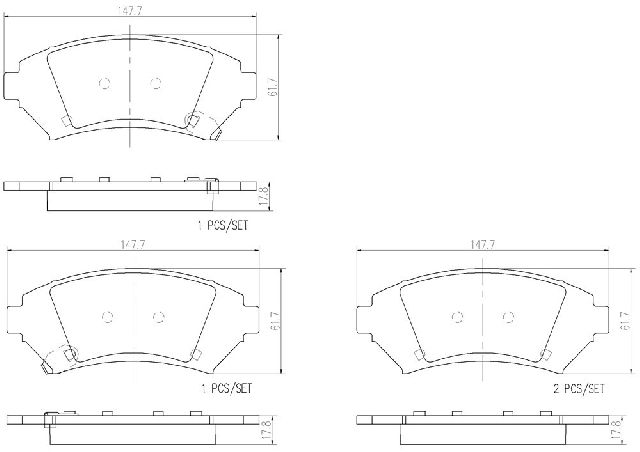

The information in this article is provided for general reference and educational purposes only. Vehicle specifications, procedures, and part compatibility can vary by production date, trim level, and region. Always consult your vehicle's factory service manual and verify part numbers before purchasing or performing repairs. Safety-critical components such as airbags, seat belts, and braking systems should be installed by a qualified professional.
- Chevrolet Impala: