

Ford Ranger (1998-2013) ABS Wheel Speed Sensor Guide
An illuminated ABS light on your Ranger often points to a bad wheel speed sensor, a common and straightforward repair.
- On 1998-2000 Rangers, an ABS light combined with a dead speedometer almost always points to the rear differential sensor.
- Replacing the rear ABS sensor is a very simple DIY task that requires only basic tools and about 15-30 minutes.
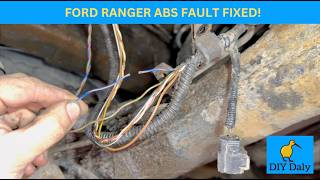
- Before replacing the sensor, always inspect the wiring and connector for damage, as broken wires are a common issue.
- For reliability, consider premium aftermarket brands like SKF, Delphi, or Standard Motor Products (SMP) over the cheapest options.
Is Your Ranger's ABS Light On?

A constant ABS warning light on your dashboard is the most common sign of a faulty wheel speed sensor. For many 1998-2013 Ford Rangers, especially earlier models, the sensor on the rear differential is a frequent point of failure. This single sensor provides speed data for both rear wheels and, in many cases, for the speedometer as well. When it fails, you'll likely see the ABS light come on and the speedometer read zero. In automatic transmission models, this can also cause shifting problems.
Common Failure Symptoms
- ABS Warning Light: The most direct indicator of a problem within the anti-lock brake system.
- Erratic or Dead Speedometer: On 1998-2000 Rangers, the rear differential sensor often controls the speedometer. A bad sensor means no speed reading.
- Brake Pedal Pulsation: At low speeds, a faulty sensor can trick the ABS module into thinking a wheel is locked, causing the pedal to pulsate as the system activates unnecessarily.
- Disabled Traction/Stability Control: If your truck is equipped with these features, they will be disabled when an ABS fault is detected.
Known Issues for 1998-2013 Rangers

The most widely reported issue for this generation of Ford Ranger is the failure of the rear ABS sensor mounted on the differential. This part is exposed to heat and road debris, and the wiring leading to it can also become damaged or corroded. Before replacing the sensor, it's a good idea to inspect the wiring and connector for any visible breaks or corrosion, as this can cause the same symptoms. Sometimes, simply cleaning the magnetic tip of the sensor can restore its function if it's covered in metallic debris from the differential. No major recalls were found for the ABS sensors themselves on 1998-2013 models, though it's always wise to check for any open recalls on your specific vehicle.
Choosing the Right Aftermarket Sensor

When it comes to electronic parts like ABS sensors, quality can vary significantly between brands. While an OEM Motorcraft part is always a safe bet, several aftermarket brands offer a good balance of quality and value.
Brand Quality Tiers
- Premium Aftermarket (High Confidence): Brands like SKF, Delphi, and NGK/NTK are known for producing parts that meet or exceed OEM specifications. They are a reliable choice for long-term durability and proper function. Standard Ignition (Standard Motor Products) is also a well-regarded brand with positive feedback from owners.
- Quality Aftermarket (Good Value): Brands such as Holstein and Walker Products offer a solid middle ground. They provide a dependable part at a more accessible price point than premium options.
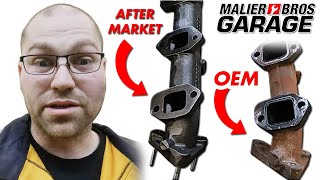
- Budget-Friendly (Use with Caution): Economy brands like Dorman or other lower-priced options can be hit-or-miss. While some users have success, others report premature failure or incorrect readings out of the box. These may be suitable for a quick fix or if budget is the primary concern, but be aware of the potential for a shorter service life. 🎬 See a comparison between Dorman aftermarket and Motorcraft OEM parts.
Pro Tip: For a critical component like the rear sensor that controls the speedometer, spending a little more on a premium aftermarket or Motorcraft part can prevent the headache of doing the job twice.
Typical Replacement Costs
The cost of replacing an ABS sensor depends on the part's brand and labor rates. The rear differential sensor is typically less expensive than the front sensors.
| Part/Service | Estimated Cost |
|---|---|
| New OEM (Motorcraft) Sensor | $95 - $165 |
| New Aftermarket Sensor | $22 - $163 |
| Shop Labor | $50 - $100 |
Frequently Asked Questions

Where is the ABS sensor located on my Ranger?
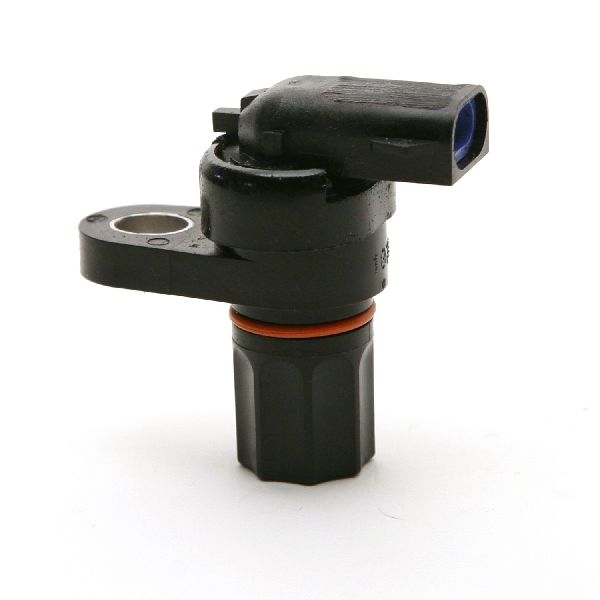
Most 1998-2013 Rangers have three sensors. There is one sensor on each front wheel hub assembly. The third, and most common to fail, is located on the top of the rear differential housing. It is held in by a single bolt.
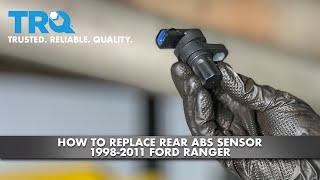
🎬 Watch this step-by-step guide on replacing the rear differential sensor.Is this a difficult repair to do myself?
Replacing the rear differential sensor is a very easy DIY job, typically taking less than 30 minutes with basic hand tools. It involves removing one bolt and a single electrical connector. Front sensors can be more involved, especially on 4WD models where they are integrated into the wheel hub assembly.
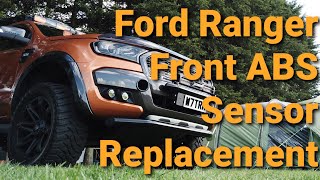
🎬 Learn how to replace a front wheel ABS sensor.Do I need to reset the computer after replacing the sensor?
On Ford vehicles of this era, the ABS light should turn off on its own after you drive the truck for a short distance, once the system confirms the new sensor is working correctly. If the light stays on, you may need a scan tool to clear the stored fault codes.
My speedometer and ABS light are both acting up. Is it the sensor?
Yes, this is a classic symptom of a failed rear ABS sensor on 1998-2000 Ford Rangers. The ABS module uses this sensor's signal for both anti-lock brake calculations and to drive the speedometer. Always check this sensor first if you experience both issues simultaneously.
Helpful Videos
Technical Specifications
OEM Part Numbers: F85Z-9E731-AB 1L5Z-2C204-AB XL2Z-2C204-AB AL5Z-2C204-B
The most common replacement is the rear axle-mounted sensor. Front sensors are specific to left or right sides and may differ between 2WD and 4WD models. The rear sensor is a single-bolt, 2-pin connector design.
We Have This Part in Stock


The information in this article is provided for general reference and educational purposes only. Vehicle specifications, procedures, and part compatibility can vary by production date, trim level, and region. Always consult your vehicle's factory service manual and verify part numbers before purchasing or performing repairs. Safety-critical components such as airbags, seat belts, and braking systems should be installed by a qualified professional.
- Ford Ranger: