

Saab 9-5 Engine Coolant Thermostat Guide for 4-Cylinder (1999-2004)
Keep your 2.0L or 2.3L turbo engine's temperature in check by choosing the right thermostat.
- The most common failure is sticking open, causing a low temperature reading and poor heat.
- Choose an OEM or OEM-supplier brand like Wahler or Calorstat for best reliability; avoid low-quality aftermarket parts.
- This is a simple DIY job on 4-cylinder models; ensure the new thermostat's bleeder valve faces up during installation.
- A failing thermostat will often trigger a P0128 Check Engine Light code.
Is Your Saab 9-5 Thermostat Failing?
The engine coolant thermostat on the 1999-2004 Saab 9-5 4-cylinder models is a common wear item. Fortunately, on these cars, it is designed to "fail-safe" by sticking in the open position. This prevents catastrophic engine overheating but creates other problems. Understanding the symptoms helps you diagnose the issue before it causes further trouble.
Common Symptoms of a Bad Thermostat
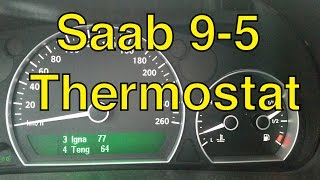
- Temperature Gauge Stays Low: The most frequent sign of failure on a Saab 9-5 is a temperature gauge that never reaches the middle (9 o'clock) position, especially during highway driving. This indicates the thermostat is stuck open, constantly cooling the engine.
- Poor Cabin Heater Performance: If your heater blows lukewarm air instead of hot, it's a strong clue. The heater uses hot engine coolant, and if the engine can't get up to temperature, the heat will be weak.
- Check Engine Light (P0128 Code): A thermostat that's stuck open will often trigger a P0128 trouble code. This code means the engine's coolant temperature is below the thermostat's regulating temperature, confirming the engine isn't warming up as expected. 🎬 Watch this video to understand the P0128 code and its causes.
- Decreased Fuel Economy: An engine that runs too cool stays in its "warm-up" mode longer, running a richer fuel mixture and reducing your gas mileage.
- Engine Overheating (Less Common): In the rare case the thermostat sticks closed, your temperature gauge will quickly climb into the red, and the engine will overheat. This is a critical situation that requires you to stop driving immediately to prevent severe engine damage.
V6 vs. 4-Cylinder Engines
This guide is specific to the 4-cylinder (2.0L B205 and 2.3L B235) engines found in most 1999-2004 Saab 9-5s. The 3.0L V6 engine (B308E) uses a different thermostat and has a more involved replacement procedure. Ensure you are purchasing the correct part for your specific engine.
Choosing the Right Aftermarket Thermostat
For many parts, aftermarket is a great choice. For the Saab 9-5 thermostat, however, quality varies significantly. Saab forums are filled with owner experiences of cheap aftermarket thermostats failing within a year. Sticking with an OEM or a proven OEM-supplier brand is highly recommended to avoid doing the job twice.
| Tier | Brands | Assessment |
|---|---|---|
| Tier 1: Recommended | Genuine Saab, Wahler, Calorstat | These are either the original parts or from known OEM suppliers. They are built to the correct 89°C specification and offer the best reliability and longevity. |
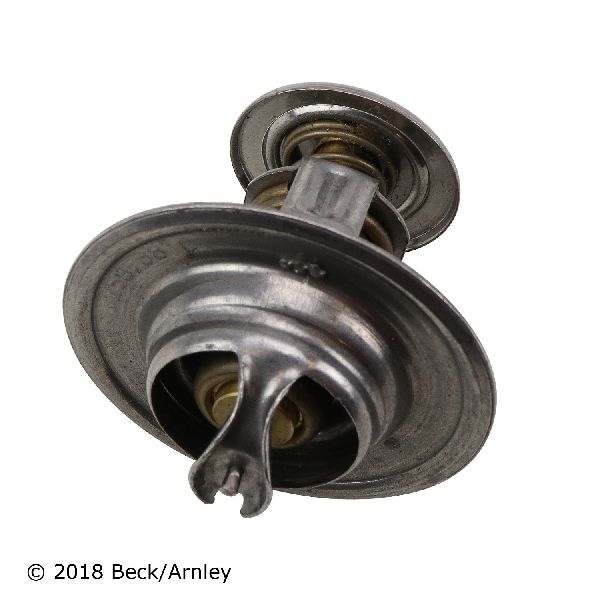
| Tier 2: Good Value | Beck Arnley, Gates, Stant, Mahle | These are reputable aftermarket brands. Beck Arnley often repackages OE parts. Gates and Stant are trusted names in cooling systems. These are generally reliable but may not have the same lifespan as a genuine part. |
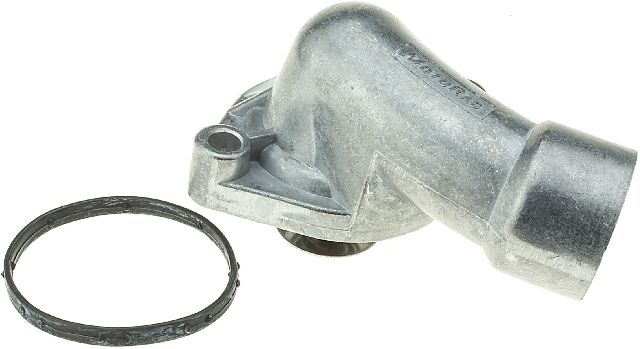
| Tier 3: Use with Caution | Motorad, Facet, Professional Parts Sweden (PPS) | While widely available and inexpensive, these brands have mixed to poor reviews in the Saab community. Professional Parts Sweden, in particular, is often cited by owners for poor quality control. Use these if budget is the absolute primary concern, but be aware of a potentially shorter service life. |
Pro Tip: Check the Temperature Rating
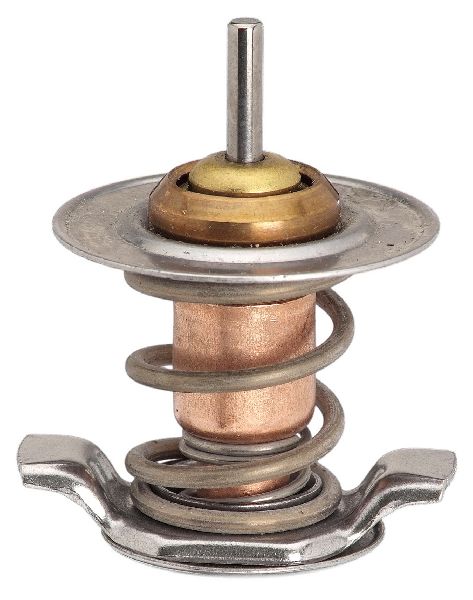
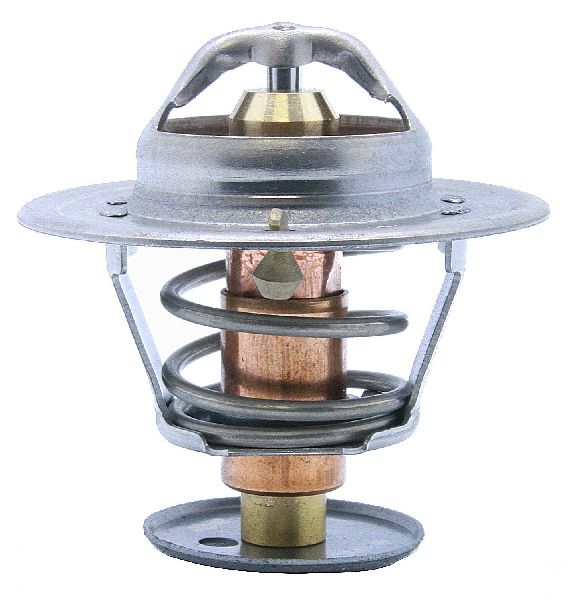
Always verify the thermostat is rated for 88°C or 89°C. Using a lower temperature thermostat can negatively impact fuel economy and emissions, while a higher temp one is unnecessary. Also, ensure your new thermostat has the small 'jiggle pin' or bleeder valve, which is critical for the cooling system to bleed air automatically.
Frequently Asked Questions
Is replacing a Saab 9-5 thermostat a DIY job?
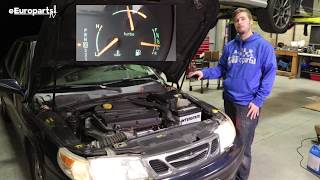
Yes, for the 4-cylinder engine, this is a very DIY-friendly job. The thermostat is located in a housing on the driver's side of the engine, right behind the upper radiator hose. The job typically takes about an hour and requires basic hand tools like 10mm and 13mm sockets. Many video tutorials are available online.
🎬 See this complete walkthrough for the replacement and coolant flush.Do I need to replace the thermostat housing?
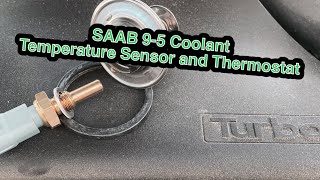
Generally, no. You only need to replace the thermostat insert and the rubber gasket that seals it. The original aluminum housing can be reused unless it is cracked or the sealing surfaces are heavily corroded. Always clean the mating surfaces on the housing and the engine block before installing the new part.
🎬 Watch how to replace both the thermostat and temperature sensor.Are there any recalls or TSBs for the thermostat?
No, there are no official recalls or Technical Service Bulletins (TSBs) from Saab or the NHTSA specifically for the engine coolant thermostat on the 1999-2004 9-5.
What coolant should I use for my Saab 9-5?
The Saab 9-5 uses a long-life OAT (Organic Acid Technology) coolant, most commonly GM Dex-Cool or an equivalent that is orange/red in color. Always use the correct type and avoid mixing coolant types. The system capacity is about two gallons, so have a 50/50 mix of coolant and distilled water ready.
Helpful Videos
Technical Specifications
OEM Part Numbers: 30577561 5958749 8817298 9194101
Fits 2.0L (B205) and 2.3L (B235) 4-cylinder turbo engines. Standard opening temperature is 89°C (192°F).
We Have This Part in Stock


The information in this article is provided for general reference and educational purposes only. Vehicle specifications, procedures, and part compatibility can vary by production date, trim level, and region. Always consult your vehicle's factory service manual and verify part numbers before purchasing or performing repairs. Safety-critical components such as airbags, seat belts, and braking systems should be installed by a qualified professional.
- Saab 9-5: