

Toyota Solara Speed Sensor Guide: 1999-2008
If your Solara's speedometer is acting up or the transmission is shifting hard, your vehicle speed sensor may be the problem.
- A bad speed sensor is a common cause of an erratic speedometer and harsh shifting; the diagnostic code is usually P0500.
- For 2004-2006 V6 models, check TSB EG045-07 first, as a computer update might be the fix instead of a new sensor.
- Replacement is simple for DIYers and located on the transmission housing, but be sure to order the correct part for your year and engine.
- Choosing a quality aftermarket brand like NTK or Denso is recommended over cheaper options to ensure reliability.
Is Your Solara's Speed Sensor Failing?

A bad vehicle speed sensor can cause problems that might seem like a major transmission failure. Because the sensor's signal is used by many different systems, a fault can create several noticeable issues at once. The most common sign is a Check Engine Light on your dashboard, which will often be accompanied by the diagnostic trouble code P0500.
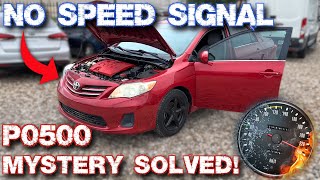
🎬 Watch this video to understand the causes and fixes for P0500.Generation Differences and Common Issues
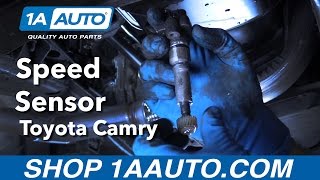
The Toyota Solara was produced across two generations in this period (1st Gen: 1999-2003, 2nd Gen: 2004-2008 🎬 See this walkthrough for replacing the sensor on first-generation models.), and there are some key differences to be aware of when dealing with speed sensors.
- Part Variations: The specific speed sensor part number can vary between the 4-cylinder and V6 engines, and between the first and second generations. It is crucial to use your vehicle's VIN to confirm you are ordering the correct part.
- TSB for 2004-2006 Models: Toyota issued a Technical Service Bulletin (TSB EG045-07) for some 2004-2006 Solaras with the V6 engine. These vehicles could trigger a P0500 code due to a software issue, not a bad sensor. The fix is a simple software update for the engine's computer performed by a dealer or qualified shop. Always check if this TSB applies before replacing the part on these specific models.
Common Ordering Mistakes
The most common mistake is confusing the main Vehicle Speed Sensor (VSS) with an ABS Wheel Speed Sensor. The VSS is located on the transmission and controls the speedometer. ABS sensors are located at each wheel and are only for the anti-lock brake and traction control systems. Another point of confusion is between the transmission's "input" and "output" speed sensors; for speedometer issues, you typically need the output sensor. Always verify the part's function and fitment for your specific year and engine.
Choosing the Right Aftermarket Speed Sensor
For an important electronic part like a speed sensor, quality matters. A cheap, low-quality sensor can provide incorrect data or fail quickly, leaving you with the same problems. Here’s how to think about your options:
- OEM-Equivalent Brands (Recommended): Brands like NTK (part of NGK) and Denso are often the original suppliers for Toyota. They are known for their reliability and are the safest bet outside of buying a part directly from the dealer. Beck/Arnley is another brand that sometimes repackages original OEM parts.
- Standard Aftermarket Brands: Brands like Dorman, Wells, and other store brands offer a more budget-friendly option. However, owner feedback suggests their quality can be inconsistent for electronic sensors. While they may work fine, there is a higher risk of receiving a part that is faulty out of the box or fails prematurely compared to an OEM-equivalent brand.
Pro Tip: Given the importance of a clean signal from this sensor for transmission health, spending a little more on a reputable brand like NTK or Denso is a wise investment to avoid having to do the job twice.
Cost to Replace a Toyota Solara Speed Sensor

The cost to replace the speed sensor is reasonable, especially if you can do it yourself. The part itself is not overly expensive, and labor is minimal for a professional.
| Part/Service | Estimated Cost |
|---|---|
| New OEM Part | $160 - $250 |
| New Aftermarket Part | $25 - $140 |
| Shop Labor | $98 - $143 |
| Total Professional Replacement | $273 - $395 |
Frequently Asked Questions (FAQ)

Where is the speed sensor located on the 1999-2008 Toyota Solara?
The main vehicle speed sensor is located on the exterior of the automatic transmission (transaxle) housing. You will need to safely lift the front of the vehicle to access it from underneath. It is a small sensor with an electrical connector, typically held in place by a single 10mm or 12mm bolt.
Can I replace the Solara speed sensor myself?
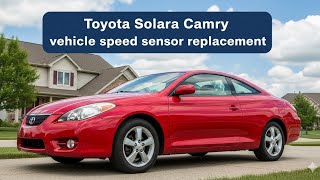
Yes, this is a very DIY-friendly repair for many home mechanics. The job involves safely lifting and supporting the vehicle, locating the sensor on the transmission, unplugging the electrical connector, removing one bolt, and swapping the sensor. The entire process 🎬 Watch this step-by-step speed sensor replacement for 2004-2008 models. usually takes less than an hour.
What is the difference between a Vehicle Speed Sensor and a Wheel Speed Sensor?
A Vehicle Speed Sensor (VSS) measures speed from the transmission's output shaft and is primarily used for the speedometer and transmission shifting. A Wheel Speed Sensor (or ABS sensor) is located at each wheel hub and measures individual wheel rotation for the Anti-lock Brake System (ABS) and traction control. A bad VSS affects your speedometer; a bad ABS sensor will typically only turn on the ABS and traction control warning lights.
Are there any recalls for the Toyota Solara speed sensor?
No, a search of the National Highway Traffic Safety Administration (NHTSA) database shows no safety recalls for the vehicle speed sensor on any 1999-2008 Toyota Solara. However, a Technical Service Bulletin (TSB) was issued for 2004-2006 models that could be related.
Helpful Videos

Technical Specifications
OEM Part Numbers: 89413-08020 89413-33020 89413-24010 89411-33010
The primary vehicle speed sensor for the 1999-2008 Toyota Solara is a magnetic sensor that mounts to the automatic transaxle case. It generates a signal based on the rotation of an internal transmission gear. It typically has a 2-pin or 3-pin electrical connector.

The information in this article is provided for general reference and educational purposes only. Vehicle specifications, procedures, and part compatibility can vary by production date, trim level, and region. Always consult your vehicle's factory service manual and verify part numbers before purchasing or performing repairs. Safety-critical components such as airbags, seat belts, and braking systems should be installed by a qualified professional.
- Toyota Solara: