

Ford Excursion 2000-2005 Water In Fuel (WiF) Sensor Replacement Guide
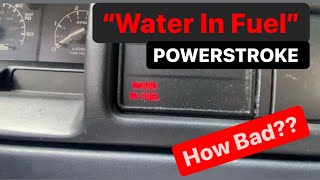
That 'Water In Fuel' light on your dash is a warning you shouldn't ignore; here's how to fix it.
- You MUST identify if you have the 7.3L or 6.0L engine, as the part location and common problems are different.
- Always drain the fuel/water separator first to see if the light turns off before assuming the sensor is bad.
- For 6.0L engines, a persistent light is often caused by sediment in the HFCM, which requires cleaning.
- Ignoring the light can lead to catastrophic and expensive damage to your fuel injectors and pump.
Is It a Bad Sensor or Just Water?
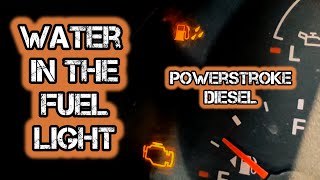
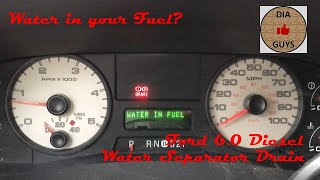
The most common symptom of a problem is the 'Water In Fuel' light illuminating on your instrument panel. Before you buy a new sensor, your first step should always be to drain the fuel/water separator. This is regular maintenance and should be done at every oil change to prevent water buildup. 🎬 Watch: How to properly drain your 6.0L fuel water separator. If you drain the separator and the light goes out, you likely just had water in the fuel. If the light stays on after draining, or if you only get clean diesel fuel out, you may have a faulty sensor or another issue.
Crucial: Identify Your Engine First!
The 2000-2005 Ford Excursion used two different Powerstroke engines, and the WiF sensor location and common issues are completely different. You must know which engine you have before buying parts.
- 7.3L Powerstroke (2000 - early 2003): The sensor is located in the engine valley, as part of the large, metal fuel filter bowl assembly. It is often integrated with the fuel heater element.
- 6.0L Powerstroke (late 2003 - 2005): The sensor is located on the driver's side frame rail, installed in the Horizontal Fuel Conditioning Module (HFCM).
Common Issues by Engine
For the 6.0L Powerstroke (2003.5-2005)
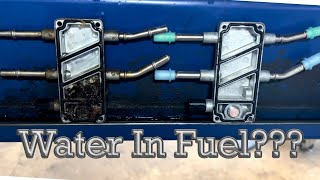
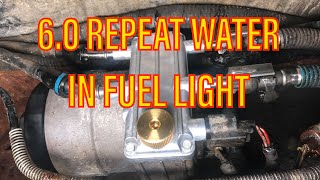
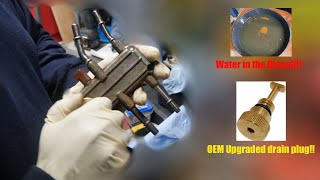
Owners of the 6.0L engine often find the 'Water In Fuel' light stays on even with no water present. This is frequently caused by a build-up of rust, sediment, and a mud-like crud in the bottom of the HFCM. This sludge can short out the sensor's probes, creating a false signal. In many cases, the sensor itself is fine. The solution is to remove the HFCM from the frame rail and thoroughly clean the inside with brake parts cleaner until all sediment is gone. 🎬 See this walkthrough on cleaning the HFCM and replacing gaskets. While the sensor is easy to replace with a quarter-turn, cleaning the housing is the more reliable fix. Ford also released an updated manifold cover for the HFCM (Part No. 6C3Z-9B249-B) that addressed issues with corrosion.
For the 7.3L Powerstroke (2000-2003)
Problems with the 7.3L WiF sensor are more straightforward. The sensor, located in the fuel bowl, can fail over time. The O-rings can also degrade and cause leaks. If the light stays on after draining the fuel bowl via the yellow drain valve, and the bowl is clean inside, the sensor itself is the likely culprit. Replacement is simple once you access the fuel filter housing.
🎬 Watch: A quick fix for 7.3L Water In Fuel lights.Choosing the Right Aftermarket Sensor
When replacing your WiF sensor, you have a few options. OEM Motorcraft is always a safe bet, but quality aftermarket brands offer a more affordable solution.
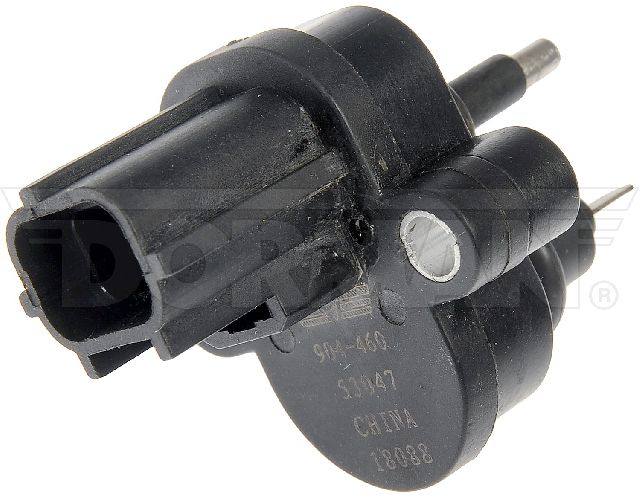
- Good Aftermarket (Dorman, Standard Ignition): Brands like Dorman and Standard Motor Products (SMP) are widely available and offer a direct-fit replacement. They are designed to meet original equipment performance and are made from durable, fuel-resistant materials. For a vehicle of this age, a quality aftermarket sensor is a practical and reliable choice that can save you money.
- OEM Motorcraft: This is the original part your truck came with. It's a guaranteed fit and is the benchmark for quality. For the 6.0L, getting an updated OEM manifold cover might be a good idea if you have persistent problems.
| Part Type | Estimated Cost |
|---|---|
| New Aftermarket (Dorman, Standard) | $52.73 - $137.53 |
| New OEM (Motorcraft) | $90 - $180 |
| Shop Labor | $100 - $200 |
Pro Tip: While you're replacing the sensor, it's the perfect time to change your fuel filters. On 6.0L models, consider upgrading the plastic HFCM drain plug to a more durable brass version to make future draining easier.
Frequently Asked Questions (FAQ)
Why is my 'Water In Fuel' light still on after I drained the separator?
This is a common problem, especially on the 6.0L Powerstroke. It's often caused by a layer of sediment at the bottom of the fuel conditioning module (HFCM) that shorts the sensor's probes. The fix is to remove and clean the housing thoroughly. If the housing is clean, the sensor itself has likely failed and needs to be replaced.
Where is the WiF sensor located on my Excursion?
It depends on your engine. For the 7.3L (2000-2003), it's in the fuel filter bowl in the engine valley. For the 6.0L (2003-2005), it's on the driver's side frame rail, inside the Horizontal Fuel Conditioning Module (HFCM).
What happens if I ignore the light?
Ignoring the light is risky. If there is actual water in your fuel, it can get past the filter and severely damage your very expensive fuel injectors and high-pressure fuel pump. This can lead to poor engine performance, stalling, and repair bills costing thousands of dollars.
Can I just unplug the sensor to turn the light off?
While you can unplug the sensor to turn the light off, this is not recommended. Doing so disables the warning system entirely. You will have no way of knowing if water is accumulating in your fuel system, putting your injectors and fuel pump at risk of major damage.
Helpful Videos

Technical Specifications
OEM Part Numbers: F81Z-9J294-BA (For 7.3L) 6C3Z-9C264-A (For 6.0L Sensor) 6C3Z-9B249-B (For 6.0L Updated Manifold Cover)
Detects water in diesel fuel via a two-probe electrical conductivity sensor. Location and design vary between 7.3L and 6.0L Powerstroke engines.
We Have This Part in Stock


The information in this article is provided for general reference and educational purposes only. Vehicle specifications, procedures, and part compatibility can vary by production date, trim level, and region. Always consult your vehicle's factory service manual and verify part numbers before purchasing or performing repairs. Safety-critical components such as airbags, seat belts, and braking systems should be installed by a qualified professional.
- Ford Excursion: