

A Ford Explorer Owner's Guide to the Vapor Canister (2000-2005)
Fix that Check Engine light and refueling hassle by understanding and replacing your Explorer's vapor canister.
- A bad vapor canister is a common cause of EVAP codes (P0455, P0442) and difficulty filling the gas tank.
- On 2002-2005 Explorers, there are typically two canisters located on a tray above the spare tire.
- Replacement is a manageable DIY job that takes 1-2 hours and requires lowering the spare tire for access.
- No specific recalls exist for this part on these models; failures are due to age and wear.
Is Your Explorer's Vapor Canister Failing?
When the vapor canister or its related parts fail on a 2000-2005 Ford Explorer, the signs are usually easy to spot. Because it's located under the truck, it's exposed to road grime and moisture, which can cause components to fail over time. Here are the most common symptoms to watch for.
1. Check Engine Light (CEL)
This is the most common sign. The vehicle's computer monitors the EVAP system for leaks. If it detects a problem, it will trigger the Check Engine Light. Common codes related to a bad canister include P0455 (Large Leak Detected) and P0442 (Small Leak Detected). A code like P0446 can also point to issues with the canister's vent circuit.
2. Gas Pump Shuts Off Constantly
If you find yourself fighting the gas pump every time you refuel, a clogged canister or a stuck-closed vent valve is a likely culprit. When the system can't vent properly, pressure builds up in the fuel tank as you're filling it. This backpressure kicks the pump nozzle off, making it incredibly slow and frustrating to add fuel.
3. Fuel Smell
A strong gasoline odor around your vehicle, especially near the rear, can be a sign of a cracked canister or a leak in one of the EVAP hoses. The charcoal inside is meant to absorb these vapors, so if you can smell them, the system isn't doing its job.
A Note for 2002-2005 Explorer Owners
The second-generation Explorer was redesigned for the 2002 model year. A key difference is that most 2002-2005 models have two vapor canisters located on a tray above the spare tire, near the gas tank and driveshaft. Earlier 2000-2001 models typically have a single canister. Always verify your vehicle's specific setup before ordering parts.
Choosing the Right Aftermarket Vapor Canister
When it comes to emissions parts, quality matters for long-term reliability and passing inspections. Here’s an honest look at the brands you'll find.
- Tier 1: Motorcraft (OEM)
This is the original part your Explorer came with from the factory. Motorcraft offers a guaranteed fit and performance, but it is also the most expensive option. If you want to be certain the repair is done right the first time, you can't go wrong with the OEM part. - Tier 2: Standard Ignition (SMP)
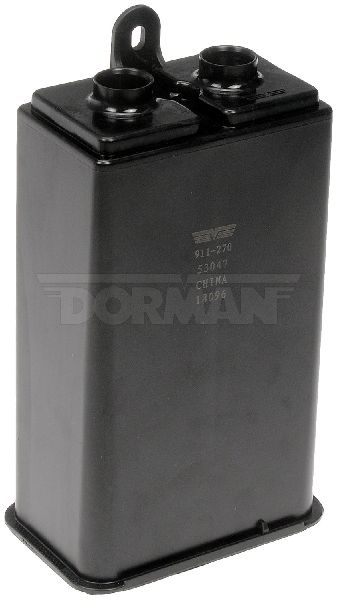
Standard Motor Products is a highly respected aftermarket manufacturer known for producing quality electronic and emissions components that often meet or exceed OEM standards. Many professional mechanics trust SMP as a reliable alternative to the dealer part. - Tier 3: Dorman
Dorman is a widely available brand that offers a cost-effective solution. While their parts provide a direct-fit replacement, some professional technicians and experienced DIYers have noted that for sensitive emissions parts, brands like SMP or Motorcraft may offer better long-term durability.
| Part Type | Price Range |
|---|---|
| New Aftermarket (Dorman, Standard) | $70 - $200 |
| New OEM (Motorcraft) | $250 - $450+ |
| Shop Labor | $120 - $250 |
Pro Tip: Check for Recalls and TSBs
Searches of the NHTSA database show no specific recalls or widespread Technical Service Bulletins (TSBs) for vapor canister failure on the 2000-2005 Ford Explorer. Problems are typically due to normal wear and tear. Always check for related parts that may have failed, like the vent or purge solenoid.
Frequently Asked Questions
Where is the vapor canister on my 2000-2005 Explorer?
The vapor canister is located underneath the vehicle, near the fuel tank. For 2002-2005 models, you will need to lower the spare tire to see a metal tray that holds the two canisters and the vent valve. The location is similar for earlier models, typically above the rear axle area.
Can I replace the vapor canister myself?
Yes, this is a DIY-feasible job for someone with basic tools. The process involves safely raising the rear of the vehicle, lowering the spare tire, and unbolting the tray that holds the canister(s). You will need to disconnect electrical connectors and press-fit hose connections. It can be done in about 1-2 hours.
What happens if I don't replace a bad vapor canister?
While your Explorer will still run, you will face several issues. You will not be able to pass an emissions test with the Check Engine Light on. Refueling will continue to be extremely difficult, and you may have a persistent fuel smell. In rare cases, a severely clogged system can affect engine performance.
Is the vapor canister the same as the purge valve or vent solenoid?
No, they are different parts of the same system. The vapor canister is the box with charcoal that stores fumes. The purge valve is usually in the engine bay and controls when fumes are sent to the engine. The vent solenoid is typically attached to or near the canister and allows fresh air into the system. Sometimes these parts are sold together as an assembly.
Technical Specifications
OEM Part Numbers: CX-1950 CX-1689 AG1Z-9D653-A
For 2002-2005 models, this is often a dual-canister system mounted on a tray. The assembly includes the canister(s) which contain activated charcoal to store fuel vapors. It connects to the fuel tank, the vent solenoid, and the purge line running to the engine.
We Have This Part in Stock


The information in this article is provided for general reference and educational purposes only. Vehicle specifications, procedures, and part compatibility can vary by production date, trim level, and region. Always consult your vehicle's factory service manual and verify part numbers before purchasing or performing repairs. Safety-critical components such as airbags, seat belts, and braking systems should be installed by a qualified professional.
- Ford Explorer: