

A/C Receiver Drier Guide for the 2000-2005 Mitsubishi Eclipse
Is your Eclipse A/C not blowing cold? The small but mighty receiver drier might be the reason.
- Replacement is not optional when the A/C system is opened; it's required to protect new parts and validate warranties.
- This is not a DIY job. It requires a certified mechanic with specialized A/C service equipment.
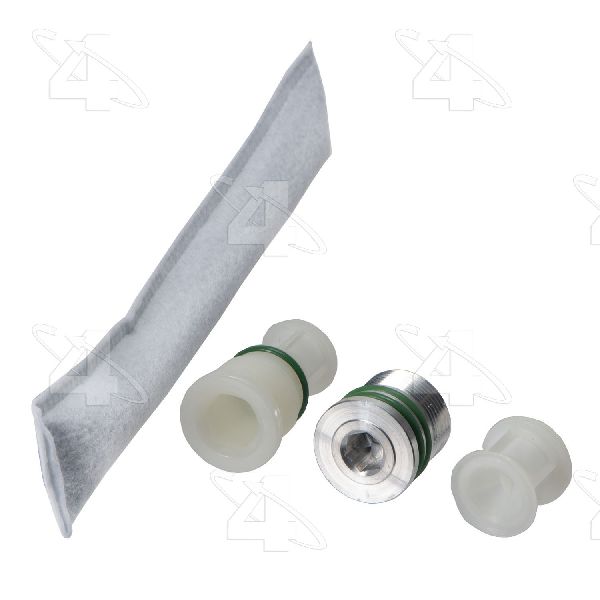
- Aftermarket driers are the most practical choice, as a separate OEM part is likely not available; it's typically sold with the condenser assembly.
- No recalls have been issued by the NHTSA for this specific part on the 2000-2005 Eclipse.
Is Your Eclipse A/C Feeling Weak?
If the air conditioning in your 2000-2005 Mitsubishi Eclipse isn't cooling like it used to, a failing A/C receiver drier could be the problem. This part is critical for the health of your entire A/C system. Over time, the desiccant material inside becomes saturated with moisture and can no longer do its job. This leads to poor cooling and can cause a chain reaction of expensive failures.
Symptoms of a Bad Receiver Drier
A bad receiver drier is often a symptom of a larger problem, like a leak or a failing compressor that has sent debris through the system. Here are the signs to watch for:
- Poor Cooling Performance: Air from the vents is only slightly cool or warm. This can happen if the drier is clogged with debris, blocking the flow of refrigerant.
- Musty or Moldy Smell: When the desiccant is saturated with moisture, it can lead to mold and mildew growth inside the A/C system, causing a bad smell.
- Rattling Noises: If the desiccant bag inside the drier breaks apart or other internal parts come loose, you might hear a rattling sound from the engine bay when the A/C is on.
- Visible Refrigerant Leaks: While less common, the drier canister or its fittings can develop leaks. You might see an oily residue on or around the part.
Always Replace, Never Reuse
🎬 See a professional demonstration on how to replace a receiver drier.The receiver drier is a one-time-use part. It must be replaced any time the A/C system is opened for service, such as when replacing a compressor or condenser. The old drier's desiccant is already exposed to air and saturated. Failing to replace it will introduce moisture into the system, quickly damaging your new parts and likely voiding their warranty.
Choosing the Right Aftermarket Drier
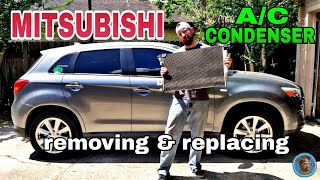
For a vehicle like the 2000-2005 Eclipse, finding a separate, new OEM receiver drier can be difficult. Mitsubishi often services this part as part of the complete A/C condenser assembly 🎬 Watch this video to see a Mitsubishi condenser repair walkthrough. (part numbers like MR568225 or MZ690930), which is a much more expensive part. Because of this, a new aftermarket drier is the most practical and cost-effective choice.
Here’s a look at the available aftermarket brands:
- Four Seasons: This is a very common and well-known aftermarket brand. They are generally considered a reliable and budget-friendly option. However, online reviews are mixed, with some users experiencing premature failures or noisy parts. It's a cost-effective choice, but quality can be inconsistent.
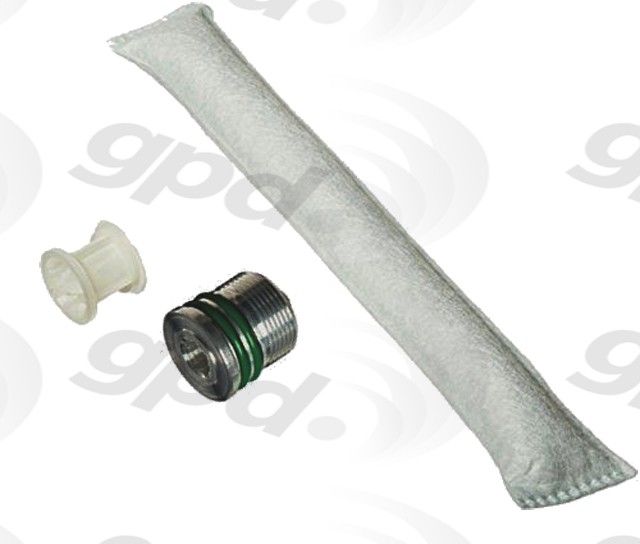
- Global Parts Distributors (GPD): GPD is another major aftermarket supplier with a wide range of A/C components. The company promotes its quality control, including leak and durability testing. They are a solid alternative to consider for your Eclipse.
Pro Tip: It's Not a DIY Job
Replacing the receiver drier requires specialized equipment to safely recover the old refrigerant and then pull a vacuum and recharge the system. 🎬 Learn how a shop will vacuum and recharge your A/C system. This is not a job for a home mechanic. The system must be serviced by a certified A/C professional to prevent damage and comply with environmental regulations.
Cost of Replacing the A/C Receiver Drier
| Part Type | Estimated Cost |
|---|---|
| New Aftermarket Part | $21 - $29 |
| Shop Labor | $270 - $397 |
| Total Professional Replacement | $291 - $426 |
Frequently Asked Questions (FAQ)
Do I really have to replace the drier when I replace my compressor?
Yes, absolutely. The new compressor's warranty will be void if you don't. The primary reason is that once the system is open to the air, the old drier's desiccant is immediately contaminated and can't protect your new compressor from moisture.
Why can't I find a separate OEM receiver drier?
For many vehicles, including the 3rd generation Eclipse, the manufacturer services the receiver drier as an integrated part of the A/C condenser. This means to get a new OEM drier, you may have to purchase the entire condenser assembly, which is why standalone aftermarket driers are the preferred repair option.
Are there any recalls for the Eclipse A/C receiver drier?
No. A search of the National Highway Traffic Safety Administration (NHTSA) database shows no recalls or technical service bulletins (TSBs) specifically for the A/C receiver drier on the 2000-2005 Mitsubishi Eclipse.
What's the difference between a receiver drier and an accumulator?
They do similar jobs but are used in different A/C systems. Your Eclipse uses an expansion valve system, which requires a receiver drier on the high-pressure side. Systems with an orifice tube use an accumulator on the low-pressure side.
Helpful Videos
Technical Specifications
OEM Part Numbers: MR568225 (Condenser Assembly) MZ690930 (Condenser Assembly)
The A/C Receiver Drier for the 2000-2005 Mitsubishi Eclipse is designed for R134a refrigerant systems. It is located on the high-pressure side of the A/C loop. Aftermarket options are readily available as standalone components.
We Have This Part in Stock

The information in this article is provided for general reference and educational purposes only. Vehicle specifications, procedures, and part compatibility can vary by production date, trim level, and region. Always consult your vehicle's factory service manual and verify part numbers before purchasing or performing repairs. Safety-critical components such as airbags, seat belts, and braking systems should be installed by a qualified professional.
- Mitsubishi Eclipse: