

Engine Coolant Thermostat Guide for the 2000-2006 Mitsubishi Eclipse
Is your Eclipse engine running too hot or taking forever to warm up? Your thermostat is the likely culprit.
- Use the correct temperature thermostat: 180°F for the 2.4L 4-cylinder and 190°F for the 3.0L V6.
- An OEM thermostat is highly recommended for reliability and is priced competitively with aftermarket options.
- If using an aftermarket part, test it in hot water before installation to ensure it opens at the correct temperature.
- When installing, make sure the thermostat's jiggle pin or air bleed hole is positioned at the top (12 o'clock).
Is Your Eclipse Thermostat Failing?
A thermostat is a wear item and typically lasts about ten years. When it fails, it usually gets stuck in either the open or closed position. Each failure mode has distinct symptoms.
Symptoms of a Bad Thermostat
- Engine Overheating: If the thermostat is stuck closed, coolant can't get to the radiator to be cooled. This will cause your engine's temperature gauge to climb into the red very quickly, especially when idling or in stop-and-go traffic. You may also hear gurgling or boiling sounds from the radiator.
- Engine Not Warming Up: If the thermostat is stuck open, coolant flows to the radiator all the time. This makes it take a very long time for the engine to reach its normal operating temperature, or it may never warm up fully. Symptoms include the temperature gauge staying low, poor heater performance, and a decrease in fuel efficiency.
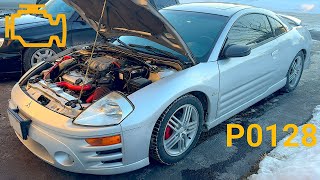
- Check Engine Light: A thermostat stuck open will often trigger a Check Engine Light with the code P0128 - Coolant Temperature Below Thermostat Regulating Temperature.
- Temperature Gauge Fluctuates: If the thermostat is opening and closing erratically, you might see the temperature gauge needle moving up and down unpredictably.
Choosing the Right Aftermarket Thermostat
When shopping for a new thermostat for your Eclipse, you will find several options. The most important factor is selecting the correct temperature rating for your specific engine.
| Engine | OEM Temperature | OEM Part Number |
|---|---|---|
| 2.4L 4-Cylinder (4G64) | 180°F (82°C) | MD315301 |
| 3.0L V6 (6G72) | 190°F (88°C) | MD351861 |
Using a thermostat with the wrong temperature can affect engine performance and fuel economy. While aftermarket brands offer different temperature options like 170°F, it is strongly recommended to use the OEM-specified temperature for a daily driven vehicle.
Brand Quality & Tiers
While many aftermarket brands are available, owner experiences suggest that quality can be inconsistent.
- OEM / Genuine Mitsubishi: This is the most recommended option. The original parts are known for their reliability and correct calibration. Given that the price is often very close to aftermarket options, OEM is the safest choice.
- Premium Aftermarket (Mishimoto): Brands like Mishimoto are geared towards performance applications. They are well-made but are typically more expensive and may offer lower temperature ratings intended for modified, high-performance engines.
- Standard Aftermarket (Gates, Stant): Gates and Stant are well-known brands. Gates has a decent reputation, with some users noting their good design and flow characteristics. Stant was once a top name, but quality is now considered more inconsistent by some users. If choosing one of these brands, it is a very good idea to test the part before installation.
- Economy Aftermarket (Motorad, Store Brands): Motorad and various parts store house brands are the most affordable but have the most mixed reviews. Some users report premature failures. In particular, avoid "fail-safe" thermostats, which are designed to lock open permanently if the engine overheats once, forcing you to replace the part again.
Pro Tip: Test Before You Install. Many experienced mechanics recommend testing any new thermostat, especially from aftermarket brands, before installing it. You can do this by suspending the thermostat in a pot of water with a thermometer. Heat the water and watch to see that the thermostat begins to open at its rated temperature.
Cost of Replacing Your Eclipse Thermostat
The thermostat itself is an inexpensive part. The main cost of a professional repair is the labor to access it and refill the coolant.
| Part / Service | Estimated Cost |
|---|---|
| New OEM Thermostat | $15 - $30 |
| New Aftermarket Thermostat | $16 - $70 |
| Shop Labor | $120 - $250 |
| Total Professional Replacement | $150 - $300 |
Installation Notes
Replacing the thermostat on a 2000-2006 Eclipse is a feasible DIY job for those with some mechanical experience. The estimated time is between 1 to 2 hours.
- The system must be cool and the coolant partially drained before you begin.
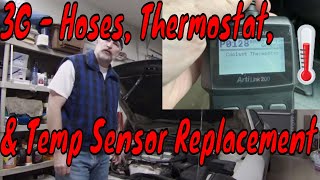
- On 4-cylinder models, you will likely need to remove the airbox and battery to get enough room 🎬 See this 2.4L thermostat replacement walkthrough to work.
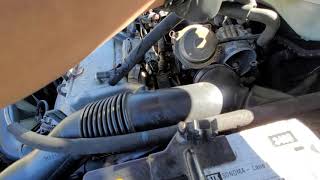
- On V6 models, removing the air intake tube provides access 🎬 Watch: How to change the thermostat on a V6 model to the thermostat housing.
- The thermostat housing is held on by two or three bolts.
- Crucial Step: When installing the new thermostat, make sure the small jiggle pin (air bleed valve) is facing up, at the 12 o'clock position. This allows trapped air to escape the system.
- Always use a new gasket or O-ring. After reassembly, you will need to refill and bleed the cooling system to remove any air pockets.
Frequently Asked Questions
Why are there different temperature thermostats available?
Aftermarket companies often produce thermostats in a few common temperatures (e.g., 170°F, 180°F, 190°F). Lower temperature thermostats are sometimes used in high-performance or racing applications to keep the engine slightly cooler. However, for a stock, daily-driven car, using a thermostat that is cooler than the OEM spec can hurt fuel economy and engine efficiency, and may keep the check engine light on.
Do I need to replace the thermostat housing?
Usually, no. You only need to replace the housing if it is cracked, corroded, or leaking. The plastic and metal housings on the Eclipse are generally durable, but it's important to inspect it for damage when you have it off.
What is the jiggle pin and why is it important?
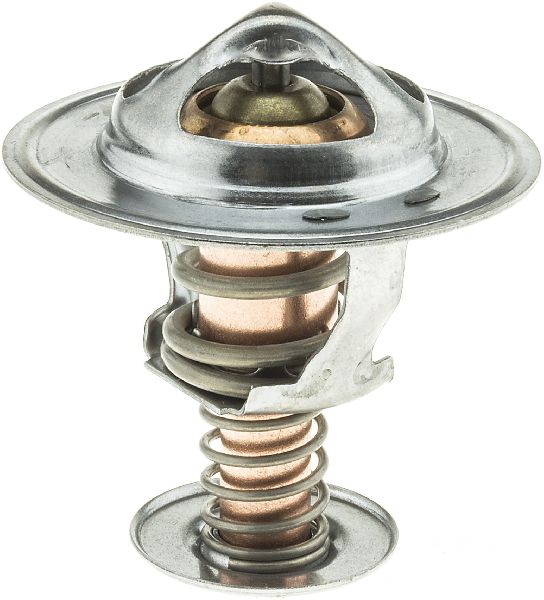
The jiggle pin is a small valve on the flange of the thermostat that allows a small amount of air and coolant to bleed through, even when the thermostat is closed. This is critical for purging air from the cooling system when you refill it. Installing it in the upward position ensures air, which rises to the top, can escape.
Should I use an OEM or aftermarket thermostat?
For the 3G Eclipse, the OEM thermostat is highly recommended. It is not significantly more expensive than aftermarket options and is calibrated specifically for your vehicle's engine management system, ensuring proper performance and avoiding potential issues with incorrect temperature readings or premature failure.
Helpful Videos


Technical Specifications
OEM Part Numbers: MD351861 MD315301
V6 (6G72) Opening Temperature: 190°F / 88°C. 4-Cylinder (4G64) Opening Temperature: 180°F / 82°C. Includes jiggle pin for air bleeding.
We Have This Part in Stock


The information in this article is provided for general reference and educational purposes only. Vehicle specifications, procedures, and part compatibility can vary by production date, trim level, and region. Always consult your vehicle's factory service manual and verify part numbers before purchasing or performing repairs. Safety-critical components such as airbags, seat belts, and braking systems should be installed by a qualified professional.
- Mitsubishi Eclipse: