

A Guide to Replacing the Radiator in Your 2001-2005 Nissan Maxima
If you're seeing puddles under your car or the temperature gauge is climbing, your Maxima's radiator may be the culprit.
- The most common failure is a leak from the plastic end tanks where they are crimped to the aluminum core.
- Crucially, verify your model year; radiators for 2001-2003 models are different from 2004-2005 models.
- While replacing the radiator, inspect the lower metal support for rust, as this is a known weak point on these cars.
- For most owners, a quality aftermarket brand like Denso or Spectra offers the best balance of price and reliability.
Is Your Maxima Radiator Leaking? Here's Why
The most common failure point on the 2001-2005 Nissan Maxima radiator is a leak where the plastic side tanks are crimped onto the aluminum center core. Over time, the plastic becomes brittle from constant heat cycles and can crack, or the gasket between the plastic and aluminum fails. This typically results in coolant weeping or dripping from the top or bottom seams of the radiator, leading to overheating and coolant loss.
CRITICAL: Check Your Year! 2003 and 2004 are Different
The 2001-2005 date range spans two different generations of the Nissan Maxima, and they do not use the same radiator. Ordering the wrong part is a common and frustrating mistake.
- 2001, 2002, 2003 Maxima (5th Gen): These models use one specific type of radiator.
- 2004, 2005 Maxima (6th Gen): These models use a different radiator.
Always verify the exact year of your vehicle before ordering. The parts are not interchangeable.
Choosing the Right Aftermarket Radiator
When your original radiator fails, you have several aftermarket options that range in price and performance. Since an OEM radiator can be very expensive, a new aftermarket part offers the best value for most owners.
OEM-Equivalent Brands (Best Value)
These brands build radiators to match the original factory specifications. They typically feature a plastic tank and aluminum core construction, just like the stock unit. They are reliable, drop-in replacements for a daily driven vehicle.
- Denso: Denso is a well-known OEM supplier for many Japanese vehicles and is often considered a top-tier replacement part that mirrors factory quality.
- Spectra: A very popular and trusted aftermarket brand that provides quality radiators known for their reliability and fit.
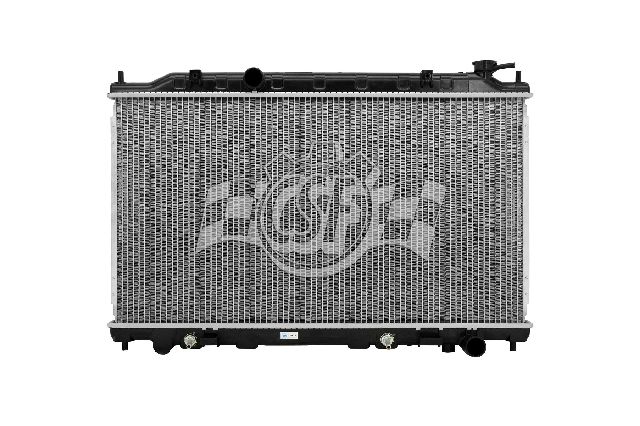
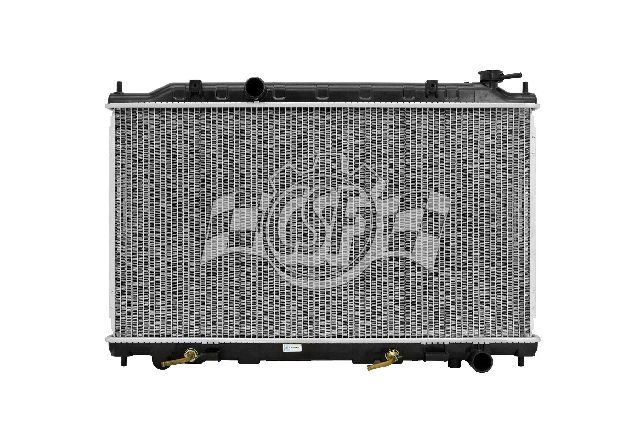
- CSF Radiator: CSF offers dependable OEM-style plastic/aluminum radiators that are a solid choice for a standard replacement.
Performance Brands (Upgrade Option)
For those seeking enhanced cooling or durability, a full aluminum radiator is a popular upgrade. These eliminate the failure-prone plastic end tanks.
- Mishimoto & Koyorad: These brands specialize in performance cooling. Their all-aluminum radiators offer improved cooling capacity and durability thanks to TIG-welded construction. However, be aware that many performance radiators are designed for manual transmission cars and may require you to install a separate, external transmission cooler if you have an automatic. 🎬 See how to install a Mishimoto performance radiator in a 2004 Maxima.
Economy Brands
Brands like APDI, Global Parts, Onix, and One Stop Solutions provide the most budget-friendly options. These radiators are designed to meet basic cooling requirements and can be a good choice if the price is your main concern.
A Related Problem to Check: Rusted Lower Radiator Support
While you are inspecting or replacing your radiator, take a close look at the metal support structure underneath it. The lower radiator support on this generation of Maxima is known to be a weak spot that can rust out completely, especially in areas where road salt is used. A rusted support can cause the radiator to sag and can even affect the hood latch mounting. Aftermarket supports are available if yours is damaged.
🎬 Watch this guide on inspecting and fixing a rusted lower radiator support.Aftermarket vs. OEM Radiator Cost
| Part Type | Estimated Cost |
|---|---|
| New OEM Radiator | $550 - $750 |
| New Aftermarket Radiator | $105 - $316 |
| Shop Labor for Installation | $250 - $450 |
Frequently Asked Questions
Is an all-aluminum radiator better for my Maxima?
For a standard daily driver, a quality OEM-style radiator with plastic tanks is perfectly adequate and cost-effective. An all-aluminum radiator from a brand like Mishimoto is more durable and offers better cooling, which is beneficial for modified cars or those driven in very hot climates, but it's often not necessary for stock vehicles.
Do I need to replace my radiator cap and hoses?
Yes, it is highly recommended. A new radiator cap is essential to ensure the system holds the correct pressure. Old hoses can become soft or brittle and are a common failure point. Replacing the upper and lower radiator hoses and the radiator cap at the same time as the radiator is cheap insurance against future leaks.
What about the automatic transmission cooler lines?
If you have an automatic transmission, two small lines run from the transmission to the radiator. These must be disconnected and reconnected to the new radiator. Be prepared for a small amount of transmission fluid to leak out when you disconnect them. It's a good idea to have a small pan ready and to check your transmission fluid level after the job is complete.
How difficult is it to replace the radiator myself?
For a DIY mechanic with basic tools, this is a very manageable job. It involves draining the coolant, removing some plastic shields, disconnecting hoses, and unbolting the fan assembly and radiator brackets. The process is straightforward and can be completed in an afternoon.
Helpful Videos
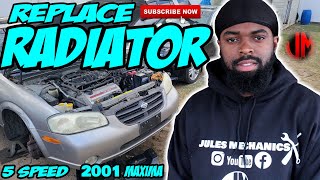
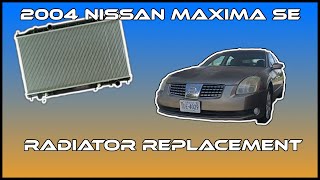

Technical Specifications
OEM Part Numbers: 21460-2Y603 21460-2Y607 21460-5Y700 21460-2Y600
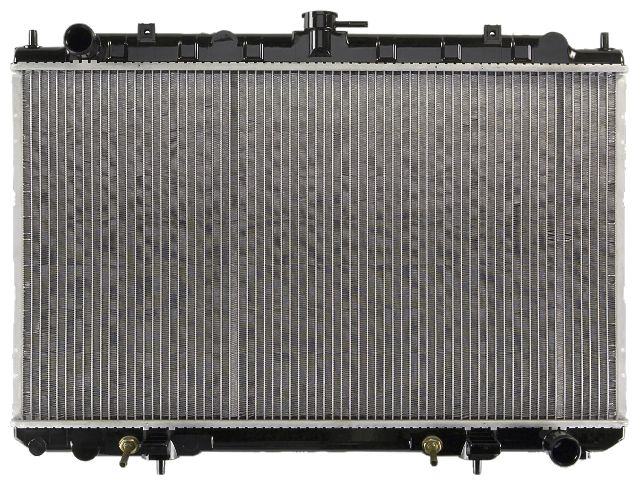
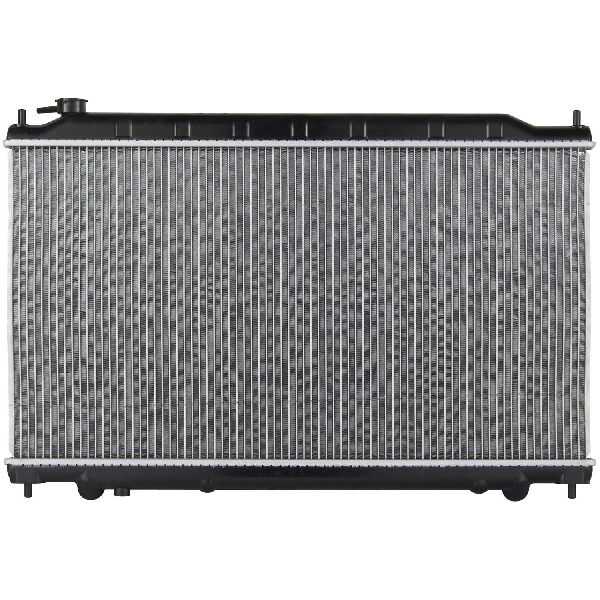
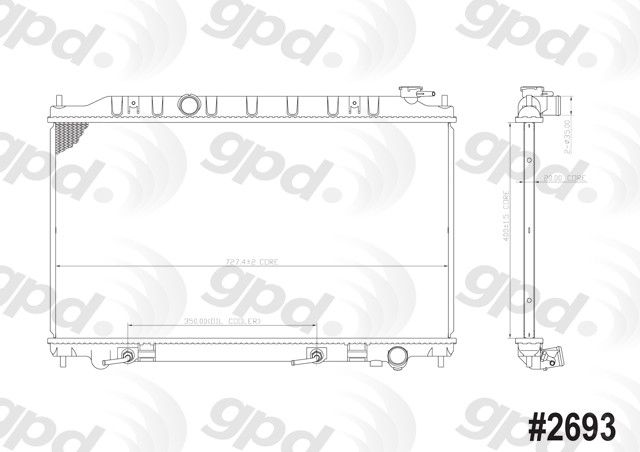
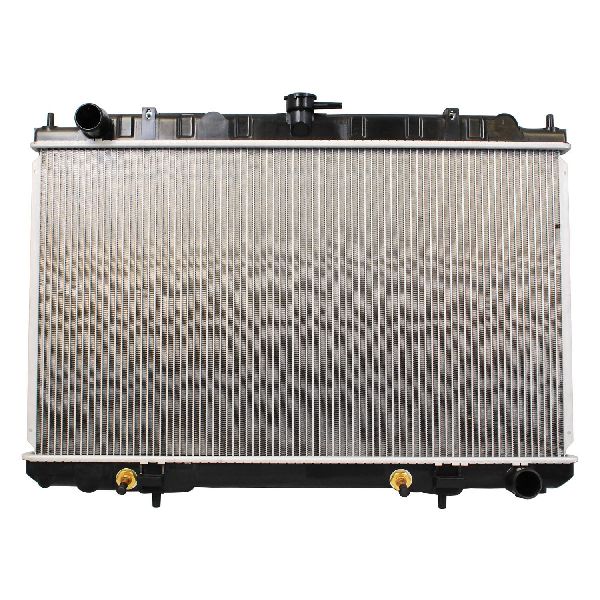
The standard radiator for the 2001-2005 Nissan Maxima features an aluminum core with plastic tanks. It includes an integrated engine coolant and automatic transmission fluid cooler. Core dimensions vary between the 2001-2003 and 2004-2005 models, so verifying the correct application is essential.
We Have This Part in Stock

The information in this article is provided for general reference and educational purposes only. Vehicle specifications, procedures, and part compatibility can vary by production date, trim level, and region. Always consult your vehicle's factory service manual and verify part numbers before purchasing or performing repairs. Safety-critical components such as airbags, seat belts, and braking systems should be installed by a qualified professional.
- Nissan Maxima:
- 🎬 Helpful Videos
- 🛍️ Shop This Part
- Is Your Maxima Radiator Leaking? Here's Why
- CRITICAL: Check Your Year! 2003 and 2004 are Different
- Choosing the Right Aftermarket Radiator
- OEM-Equivalent Brands (Best Value)
- Performance Brands (Upgrade Option)
- Economy Brands
- A Related Problem to Check: Rusted Lower Radiator Support
- Aftermarket vs. OEM Radiator Cost
- Frequently Asked Questions
- 🎟️ Get 5% Off